Sphinx egypt face
1344×768 · AVIF · CC BY 4.0
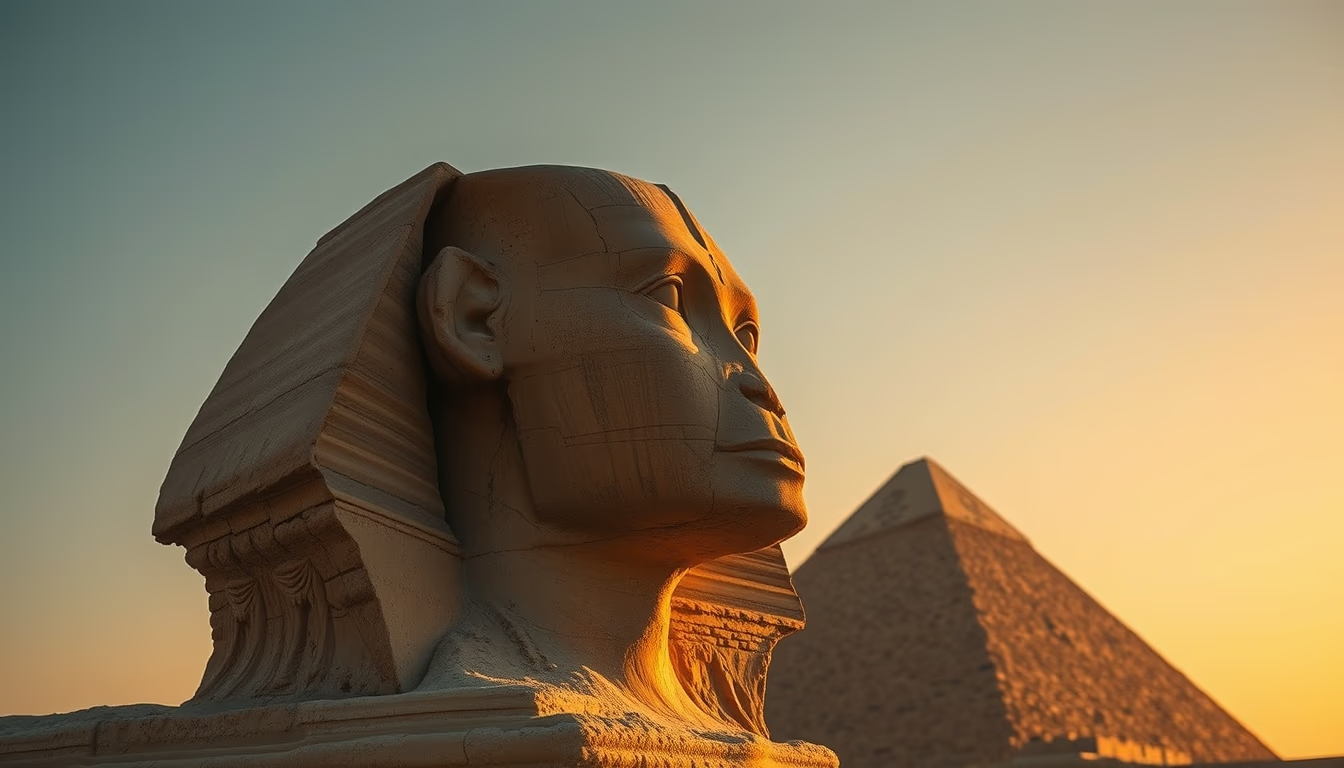
The Great Sphinx of Giza, Egypt, is a colossal limestone statue with a lion's body and a human face, an ancient symbol of Egypt.
About this subject
The Great Sphinx of Giza is located on the Giza Plateau, on the west bank of the Nile, near Cairo. Carved from a single block of limestone, it measures about 73 meters long, 20 meters high, and 19 meters wide. It is believed to represent Pharaoh Khafre (or Chephren), who ruled during the Fourth Dynasty of the Old Kingdom, around 2558, 2532 BCE. The Sphinx is one of the largest monolith statues in the world and the oldest known monumental sculpture.
The figure combines the body of a lion, symbolizing strength and power, with a human head, representing intelligence and royalty. Originally, the Sphinx was painted in vivid colors: traces of red pigment were found on the face, and blue and yellow on other parts. The nose is missing; studies suggest its removal may have been due to human action over centuries, such as vandalism or use as a target by Mamluk soldiers, but there is no historical consensus.
Over millennia, the statue was buried by desert sand several times. In the early 19th century, excavations led by Giovanni Battista Caviglia and later by modern archaeologists completely uncovered it. Today, the Sphinx undergoes constant restoration and conservation projects, facing threats such as air pollution and water infiltration. It attracts millions of tourists annually and is a global cultural icon, often associated with the mystery and engineering of Ancient Egypt.
Frequently Asked Questions
How old is the Great Sphinx of Giza?
The Sphinx was built during the reign of Pharaoh Khafre, approximately between 2558 and 2532 BCE, making it about 4,500 years old.
Why is the Sphinx's nose broken?
There is no definitive explanation. Some theories point to vandalism by Mamluk soldiers in the 15th century who used the Sphinx as a cannon target. Others suggest natural erosion or religious iconoclasm.
Is the Great Sphinx carved from a single block of stone?
Yes, it was carved directly from a natural limestone outcrop, making it a monolithic statue. Additional parts, such as the paws and tail, were built with stone blocks.
Direct URL
https://pub-c7d6a6ea828543ac903a74a341ccb2e1.r2.dev/imagens/sphinx-egypt-face-cinematic-wide-shot-p2.avifHow to credit
Include a visible link back to UtilizAí. Copy one of the snippets below:
<a href="https://xn--utiliza-eza.com/en/midia/imagens/sphinx-egypt-face-cinematic-wide-shot-p2">Sphinx egypt face</a> by <a href="https://xn--utiliza-eza.com">UtilizAí</a>, licensed under <a href="https://creativecommons.org/licenses/by/4.0/">CC BY 4.0</a>.
[Sphinx egypt face](https://xn--utiliza-eza.com/en/midia/imagens/sphinx-egypt-face-cinematic-wide-shot-p2) by [UtilizAí](https://xn--utiliza-eza.com), CC BY 4.0
License: CC-BY-4.0