Speaker stack rock concert
1344×768 · AVIF · CC BY 4.0
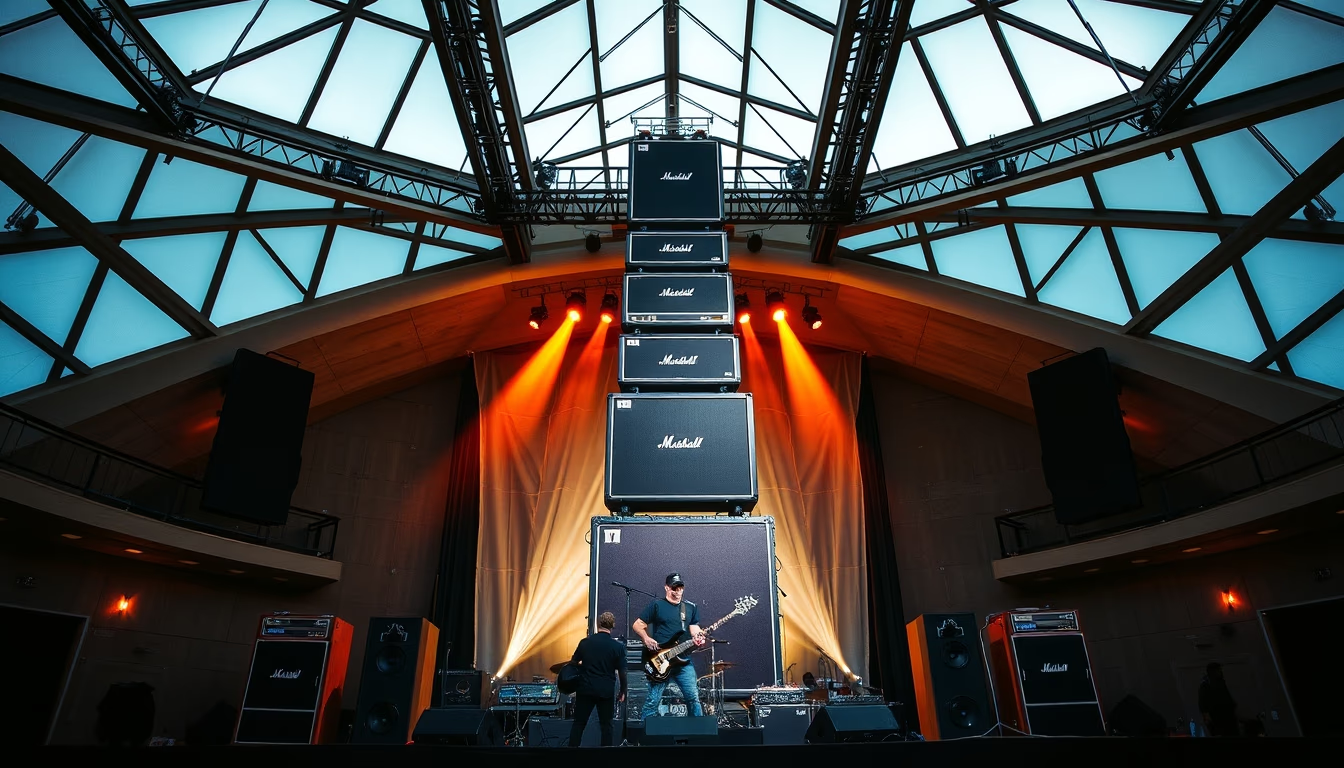
Speaker stacks at rock concerts are visual and sonic landmarks that have defined the live experience since the 1960s.
About this subject
Speaker stacks are an iconic element of rock concerts, consisting of multiple speaker cabinets stacked vertically, each containing woofers, mid-range drivers, and tweeters. This configuration allows for high sound pressure levels needed in large venues. The practice began in the 1960s with bands like The Who and Jimi Hendrix, who used Marshall amplifier stacks to create powerful sound and a commanding stage presence.
Technically, a typical stack may include cabinets rated at up to 1000 watts each, with modern systems using digital processing for equalization and protection. The vertical arrangement helps distribute sound evenly, reducing dead zones. Large systems like the L-Acoustics K1 or d&b audiotechnik J-Series are designed for major concerts, often using line arrays that have replaced traditional stacks in many cases, but stacks remain common for smaller events and vintage aesthetics.
Culturally, speaker stacks symbolize the power of rock and roll. Historic photos from Woodstock (1969) or Live Aid (1985) feature massive walls of sound. In architectural photography, stacks are admired for their symmetry, repetitive patterns, and imposing scale. They represent the intersection of audio engineering and industrial design, a recurring subject in visual essays on music culture.
Frequently Asked Questions
Why are speaker stacks stacked vertically?
The vertical arrangement helps project sound more evenly across the audience, reducing dead zones. Stacking modules also increases total power and acoustic coverage.
What is the typical power of a sound system for rock concerts?
Professional systems for large shows can exceed 100,000 watts RMS. Individual cabinets may range from 500 to 2000 watts, depending on the model. Total power depends on the number of stacked modules.
How did the concept of 'wall of sound' originate?
The term 'wall of sound' was popularized by producer Phil Spector in the 1960s, but in live sound it traces back to bands like The Who and Jimi Hendrix, who used large stacks of amplifiers to create a dense and powerful sound.
Direct URL
https://pub-c7d6a6ea828543ac903a74a341ccb2e1.r2.dev/imagens/speaker-stack-rock-concert-architectural-photography-p1.avifHow to credit
Include a visible link back to UtilizAí. Copy one of the snippets below:
<a href="https://xn--utiliza-eza.com/en/midia/imagens/speaker-stack-rock-concert-architectural-photography-p1">Speaker stack rock concert</a> by <a href="https://xn--utiliza-eza.com">UtilizAí</a>, licensed under <a href="https://creativecommons.org/licenses/by/4.0/">CC BY 4.0</a>.
[Speaker stack rock concert](https://xn--utiliza-eza.com/en/midia/imagens/speaker-stack-rock-concert-architectural-photography-p1) by [UtilizAí](https://xn--utiliza-eza.com), CC BY 4.0
License: CC-BY-4.0