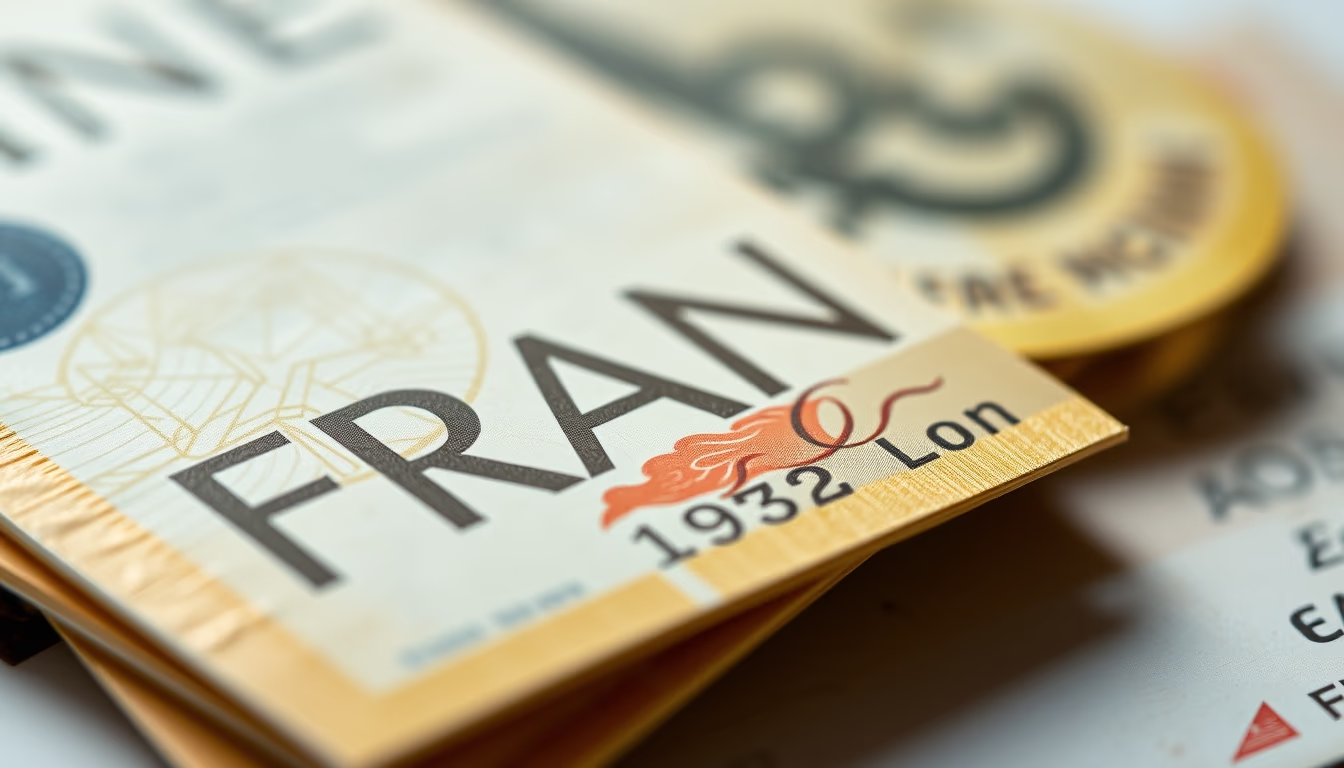
Spanish doubloon gold
1344×768 · AVIF · CC BY 4.0

Spanish gold doubloons were minted from the 16th to 19th centuries, circulating widely in the Americas and Europe.
About this subject
Spanish gold doubloons, known as 'doblon' in Spanish, were high-value gold coins minted by the Spanish Empire. The term 'doubloon' comes from the Spanish 'doblón', meaning 'double', referring to its value of two gold escudos. These coins were primarily produced in mints in Spain and its American colonies, such as Mexico, Peru, and Colombia. During the 17th and 18th centuries, doubloons were among the most important coins in Atlantic trade, used to finance the exchange of spices, silk, and slaves.
Doubloons were made of approximately 22-karat gold (91.7% purity) and weighed about 6.77 grams. The coins often featured the Spanish coat of arms on the obverse and the Jerusalem cross or the Pillars of Hercules on the reverse. Production was centralized in Seville, but after the discovery of gold in the Americas, colonial mints began striking their own versions. Mexican doubloons, for example, were renowned for their quality and purity.
The history of doubloons is closely tied to pirate lore. Many tales of buried treasure involve Spanish doubloons, such as the gold coins of the infamous pirate Blackbeard. In reality, doubloons were frequently transported in Spanish treasure fleets, which were prime targets for pirates and privateers. Shipwrecks of these galleons, like the 1715 fleet off Florida, yielded thousands of doubloons that are now highly sought after by collectors.
Today, original Spanish doubloons are highly valuable numismatic items. Well-preserved specimens can fetch tens of thousands of dollars. Modern replicas are common in jewelry and auctions, but authenticity is key. Numismatics studies these coins not only as objects of value but as witnesses to Spain's economic and colonial history.
Frequently Asked Questions
What is the origin of the name 'doubloon'?
The name 'doubloon' comes from the Spanish 'doblón', meaning 'double', because the coin was worth two gold escudos.
Can Spanish doubloons still be found today?
Yes, but they are rare. Many have been recovered from shipwrecks or preserved in collections. Modern replicas are also common.
How much pure gold did a doubloon contain?
Doubloons were made of approximately 22-karat gold, with a purity of about 91.7%.
Direct URL
https://pub-c7d6a6ea828543ac903a74a341ccb2e1.r2.dev/imagens/spanish-doubloon-gold-film-grain-authentic-fresh11.avifHow to credit
Include a visible link back to UtilizAí. Copy one of the snippets below:
<a href="https://xn--utiliza-eza.com/en/midia/imagens/spanish-doubloon-gold-film-grain-authentic-fresh11">Spanish doubloon gold</a> by <a href="https://xn--utiliza-eza.com">UtilizAí</a>, licensed under <a href="https://creativecommons.org/licenses/by/4.0/">CC BY 4.0</a>.
[Spanish doubloon gold](https://xn--utiliza-eza.com/en/midia/imagens/spanish-doubloon-gold-film-grain-authentic-fresh11) by [UtilizAí](https://xn--utiliza-eza.com), CC BY 4.0
License: CC-BY-4.0