Old portuguese escudos
1344×768 · AVIF · CC BY 4.0

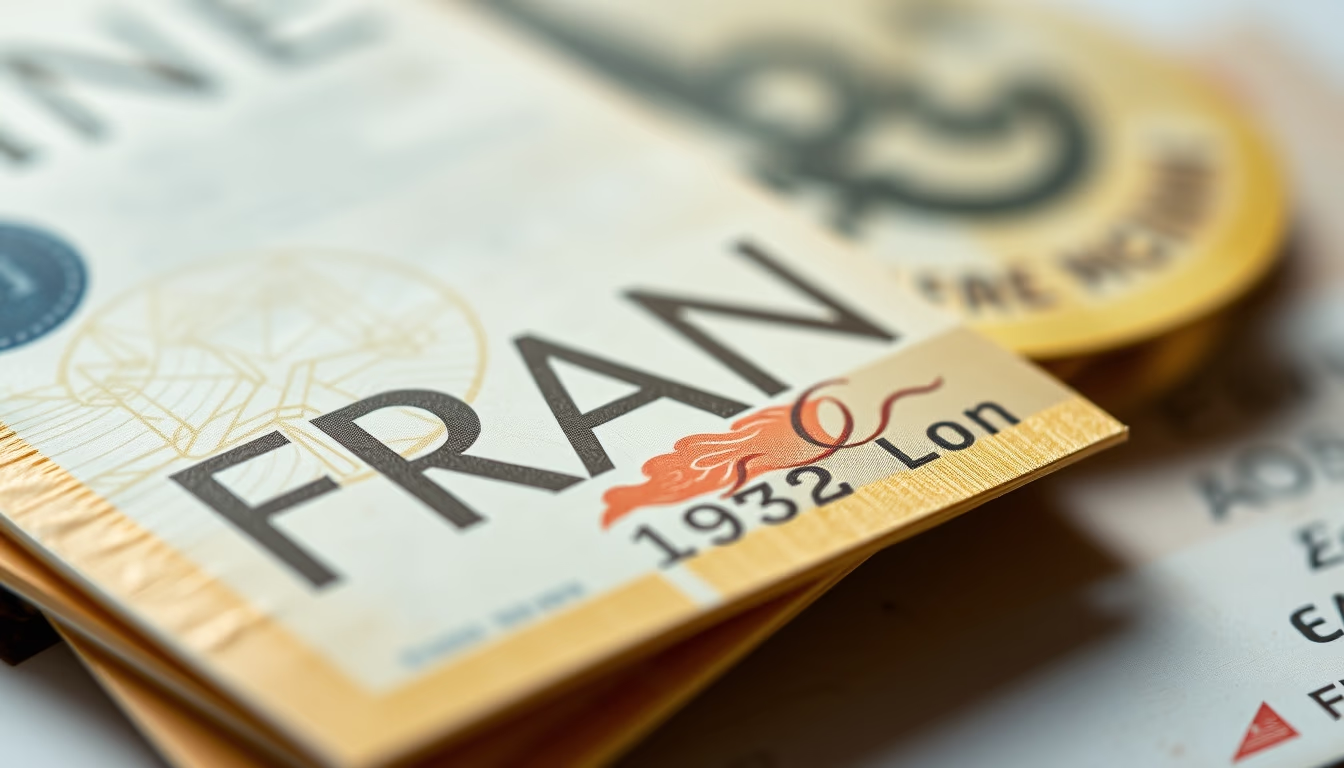
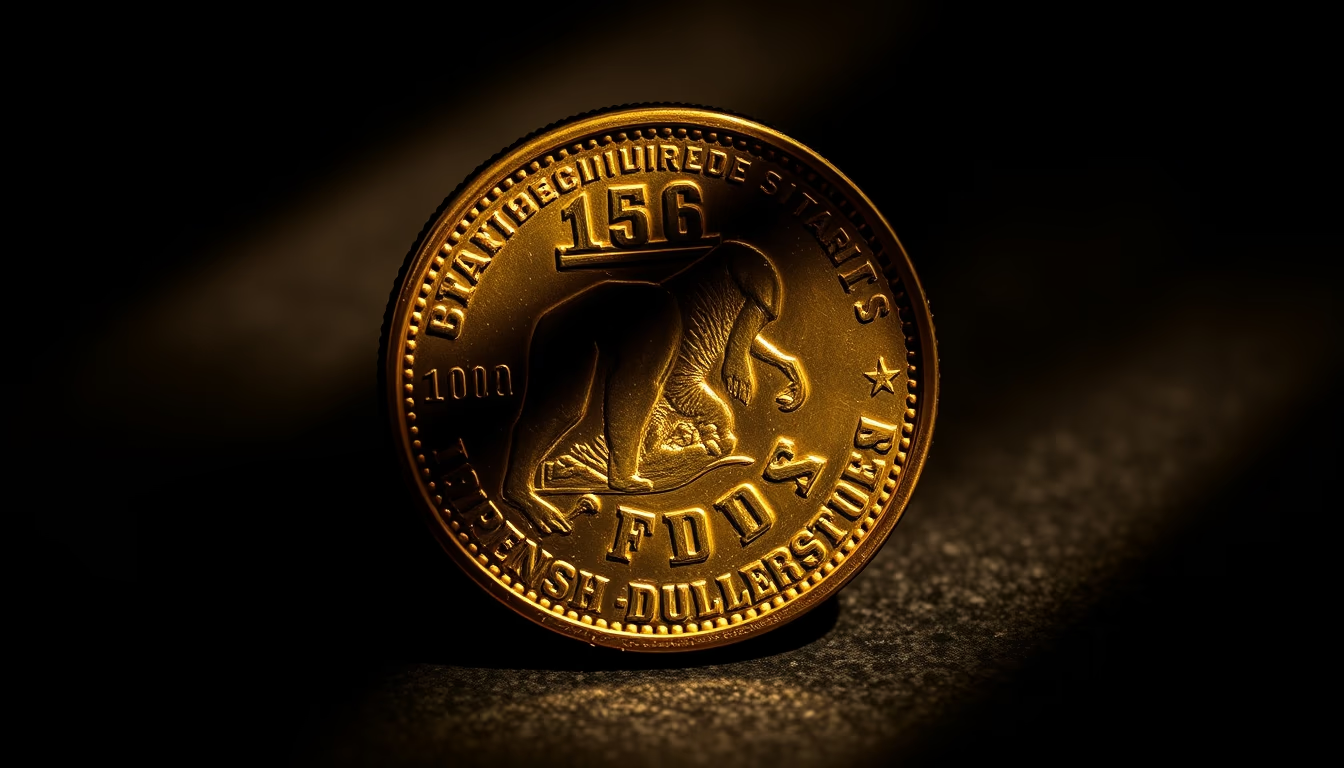
Portuguese escudos, gold and silver coins that circulated for centuries, mark the economic history of Portugal and its colonies.
About this subject
Portuguese escudos are coins that have been part of Portugal's monetary history since the 15th century until the adoption of the euro in 2002. Initially, the term 'escudo' referred to a gold coin minted from the reign of King Afonso V in 1455, valued at 10 réis. Over time, the escudo became the country's official currency after the establishment of the Republic in 1911, replacing the real. Escudo coins varied in denominations from centavos to higher values like 10, 20, and 50 escudos, and were made of different metals including cupronickel, bronze, and silver.
The designs of escudo coins reflect Portuguese history and culture. Early republican series featured the effigy of the Republic, while commemorative coins, such as those for the Age of Discoveries, highlighted historical figures and national symbols like the Cross of the Order of Christ. During the Estado Novo, coins displayed the coat of arms and face value. A milestone was the minting of 100-escudo coins in silver starting in 1969, which became coveted collector's items.
In 1999, Portugal joined the European Economic and Monetary Union, and the escudo became a subdivision of the euro until 2002, when it was permanently replaced. The fixed exchange rate was 200.482 escudos to 1 euro. Millions of escudo coins were withdrawn from circulation and melted down, but many are still found in private collections and in circulation in Portuguese-speaking countries like Cape Verde, which also used the escudo until 1914.
Today, old Portuguese escudos are objects of numismatic study and collecting. Rare coins, such as gold coins from the 18th century or early republican issues, can be worth hundreds of euros at auctions. The interest in these coins reflects not only their material value but also the economic and cultural history of Portugal, making them essential pieces for understanding the country's development.
Frequently Asked Questions
What is the origin of the name 'escudo' for the Portuguese currency?
The name 'escudo' derives from the Latin scutum, meaning shield. Initially, it was a gold coin that bore the royal coat of arms (shield) on its obverse, hence the name.
How long was the escudo the official currency of Portugal?
The escudo was Portugal's official currency from 1911 to 2002, although coins with that name had circulated since the 15th century. After 2002, it was replaced by the euro.
Do Portuguese escudo coins still have value today?
Yes, many old escudo coins have numismatic value. Rare coins or those in good condition can be worth much more than their face value, being sold at auctions or in specialized shops.
Direct URL
https://pub-c7d6a6ea828543ac903a74a341ccb2e1.r2.dev/imagens/old-portuguese-escudos-minimalist-composition-fresh18.avifHow to credit
Include a visible link back to UtilizAí. Copy one of the snippets below:
<a href="https://xn--utiliza-eza.com/en/midia/imagens/old-portuguese-escudos-minimalist-composition-fresh18">Old portuguese escudos</a> by <a href="https://xn--utiliza-eza.com">UtilizAí</a>, licensed under <a href="https://creativecommons.org/licenses/by/4.0/">CC BY 4.0</a>.
[Old portuguese escudos](https://xn--utiliza-eza.com/en/midia/imagens/old-portuguese-escudos-minimalist-composition-fresh18) by [UtilizAí](https://xn--utiliza-eza.com), CC BY 4.0
License: CC-BY-4.0