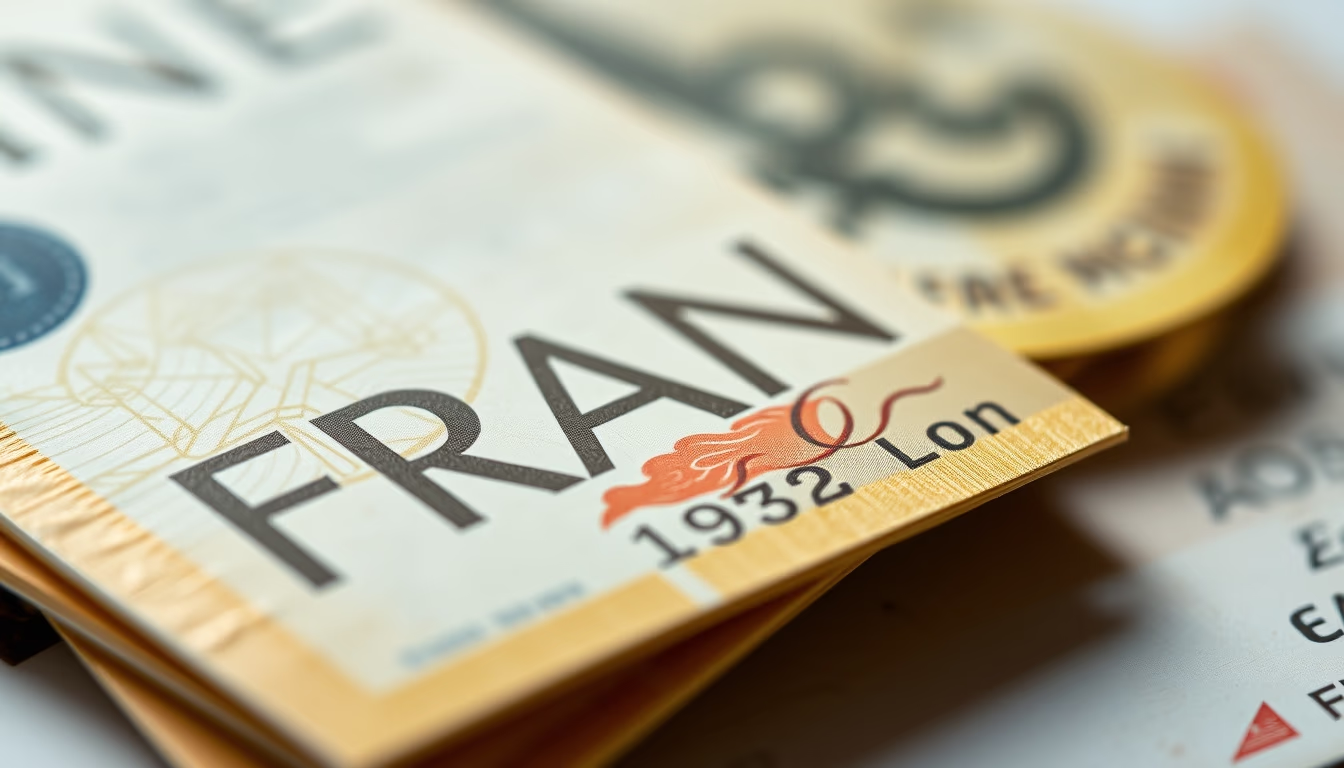
Spanish doubloon gold
1344×768 · AVIF · CC BY 4.0

The Spanish doubloon, a gold coin minted from the 16th to 19th centuries, became a global symbol of wealth and maritime power.
About this subject
The Spanish doubloon, a gold coin minted by Spain from the 16th to the 19th centuries, played a pivotal role in global trade. Its name comes from the Spanish "doblón," meaning "double," as it was worth two gold escudos. Weighing about 6.77 grams and made of 22-karat gold, the doubloon circulated throughout the Spanish Empire, from Europe to the Americas. It was a preferred currency for transatlantic commerce and for paying naval fleets, underpinning Spain's economic dominance.
Minting took place at major mints in Mexico City, Lima, and Potosí, using gold from American colonies. The obverse typically featured the Spanish royal coat of arms, while the reverse displayed a cross or the Pillars of Hercules, symbolizing Spain's control over the New World. Due to its high value, the doubloon became intertwined with pirate lore and shipwreck treasures. The famous wreck of the galleon "Nuestra Señora de Atocha" (1622) yielded thousands of these coins, now highly sought after by collectors.
Culturally, the doubloon has appeared in literature and film, notably in Robert Louis Stevenson's "Treasure Island" and countless pirate movies, where it represents ultimate wealth. In numismatics, well-preserved specimens can fetch high prices at auction, especially those from the 18th century. Their rarity and historical context make them valuable for historians and investors alike.
Notably, the doubloon inspired other currencies, such as the Portuguese dobra and the Argentine doblón. Although Spain ceased minting them in the 19th century, the legacy endures as a symbol of the global gold trade and Spanish imperial power. Today, these coins are protected under cultural heritage laws in Spain and Latin America, and they are rarely traded without authentication.
Frequently Asked Questions
What was the value of the Spanish doubloon relative to other coins at the time?
The doubloon was worth two gold escudos or about 32 Spanish silver reals. It was a high-value coin, often used in large trade transactions and treasuries.
Where were doubloons minted and how can their origin be identified?
The main mints were in Mexico City, Lima, and Potosí. Origin can be identified by mint marks on the obverse, such as the city initial (M for Mexico, L for Lima, P for Potosí).
Why are doubloons so rare and valuable today?
Many doubloons were melted down or lost in shipwrecks. Surviving specimens in good condition are rare. Factors like date, mint location, and preservation affect value, with top examples selling for tens of thousands of dollars.
Direct URL
https://pub-c7d6a6ea828543ac903a74a341ccb2e1.r2.dev/imagens/spanish-doubloon-gold-cinematic-wide-shot-fresh0.avifHow to credit
Include a visible link back to UtilizAí. Copy one of the snippets below:
<a href="https://xn--utiliza-eza.com/en/midia/imagens/spanish-doubloon-gold-cinematic-wide-shot-fresh0">Spanish doubloon gold</a> by <a href="https://xn--utiliza-eza.com">UtilizAí</a>, licensed under <a href="https://creativecommons.org/licenses/by/4.0/">CC BY 4.0</a>.
[Spanish doubloon gold](https://xn--utiliza-eza.com/en/midia/imagens/spanish-doubloon-gold-cinematic-wide-shot-fresh0) by [UtilizAí](https://xn--utiliza-eza.com), CC BY 4.0
License: CC-BY-4.0