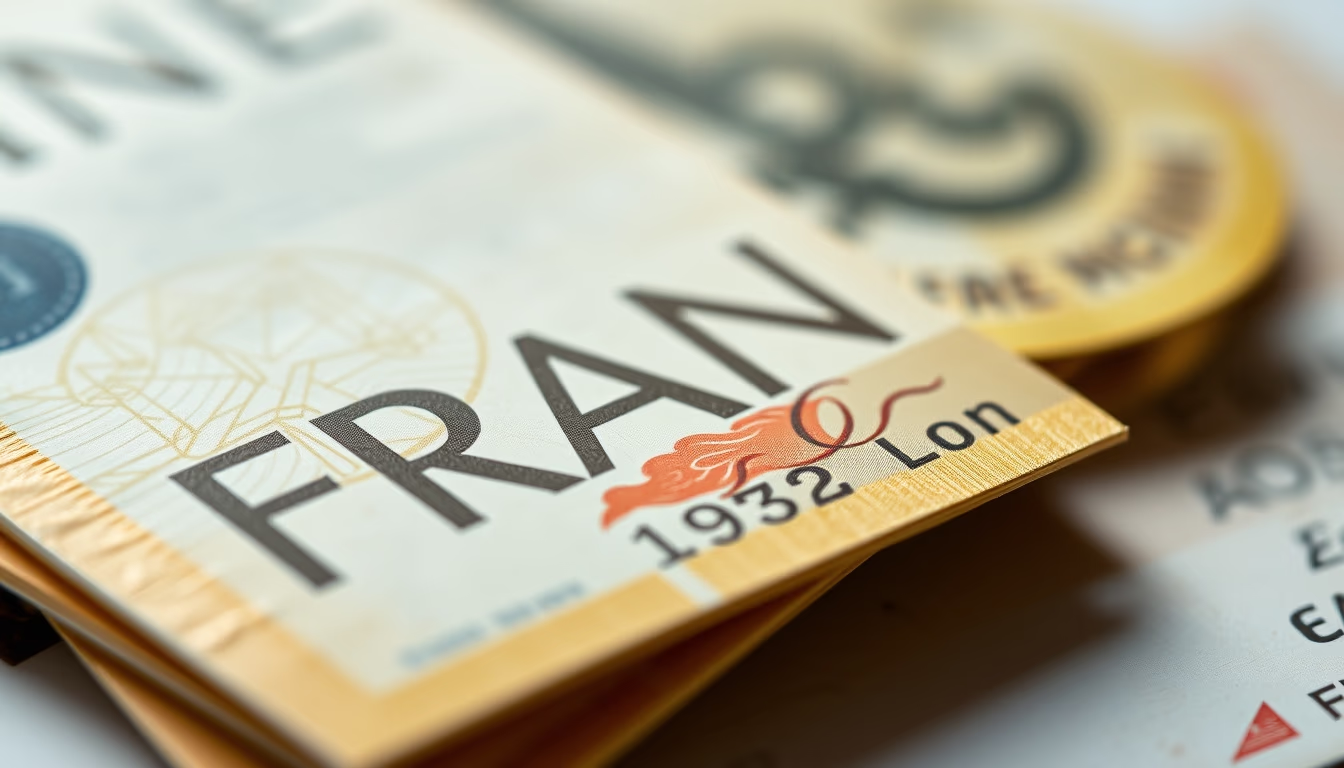
Spanish doubloon gold
1344×768 · AVIF · CC BY 4.0

Spanish doubloon, a gold coin from the 16th to 19th centuries, was widely used in global trade and became an icon of the age of exploration.
About this subject
The Spanish doubloon, known in Spanish as doblon, was a gold coin minted in Spain and its American colonies from the 16th to the 19th centuries. Its name derives from the double value relative to the escudo, being equivalent to two gold escudos or 32 silver reales. The coin was typically made of 22-karat gold, weighing between 6.7 and 6.8 grams for the two-escudo version. Major mints included Seville, Madrid, Mexico City, and Lima, among others.
Production of the doubloon reflected the immense gold wealth extracted from the Americas, especially from Peru and Mexico. The coins often featured the Spanish coat of arms on the obverse and a Jerusalem cross or a portrait of the reigning monarch on the reverse. Starting in the 18th century, with the Bourbon reforms, the design became more standardized, including the king's bust. Due to its high purity and consistent weight, the doubloon was widely accepted in international trade, used from Europe to Asia, particularly along the Manila Galleon route.
Culturally, the doubloon became a lasting symbol of treasure and adventure, immortalized in pirate stories and literature, such as Robert Louis Stevenson's Treasure Island. In modern numismatics, well-preserved specimens are highly valued, with prices often exceeding tens of thousands of dollars at auction. The rarity of each piece depends on the year, mint location, and condition; doubloons from American colonial mints are especially sought after due to their connection to exploration and colonial trade.
Frequently Asked Questions
What was the composition of the Spanish doubloon?
The doubloon was made of 22-karat gold (91.7% purity), with the remainder typically being silver and copper to increase the coin's durability.
Until when was the doubloon minted?
Minting of the doubloon continued until the mid-19th century, when monetary reforms in Spain and Latin America introduced new systems based on the silver real and later the peseta.
What is the current value of a Spanish doubloon?
Value varies greatly depending on year, mint, and condition. Common specimens can be worth a few thousand dollars, while rare and well-preserved pieces can fetch tens of thousands at auction.
Direct URL
https://pub-c7d6a6ea828543ac903a74a341ccb2e1.r2.dev/imagens/spanish-doubloon-gold-aerial-drone-shot-fresh2.avifHow to credit
Include a visible link back to UtilizAí. Copy one of the snippets below:
<a href="https://xn--utiliza-eza.com/en/midia/imagens/spanish-doubloon-gold-aerial-drone-shot-fresh2">Spanish doubloon gold</a> by <a href="https://xn--utiliza-eza.com">UtilizAí</a>, licensed under <a href="https://creativecommons.org/licenses/by/4.0/">CC BY 4.0</a>.
[Spanish doubloon gold](https://xn--utiliza-eza.com/en/midia/imagens/spanish-doubloon-gold-aerial-drone-shot-fresh2) by [UtilizAí](https://xn--utiliza-eza.com), CC BY 4.0
License: CC-BY-4.0