Montanha com pico nevado peak sunrise
1344×768 · AVIF · CC BY 4.0
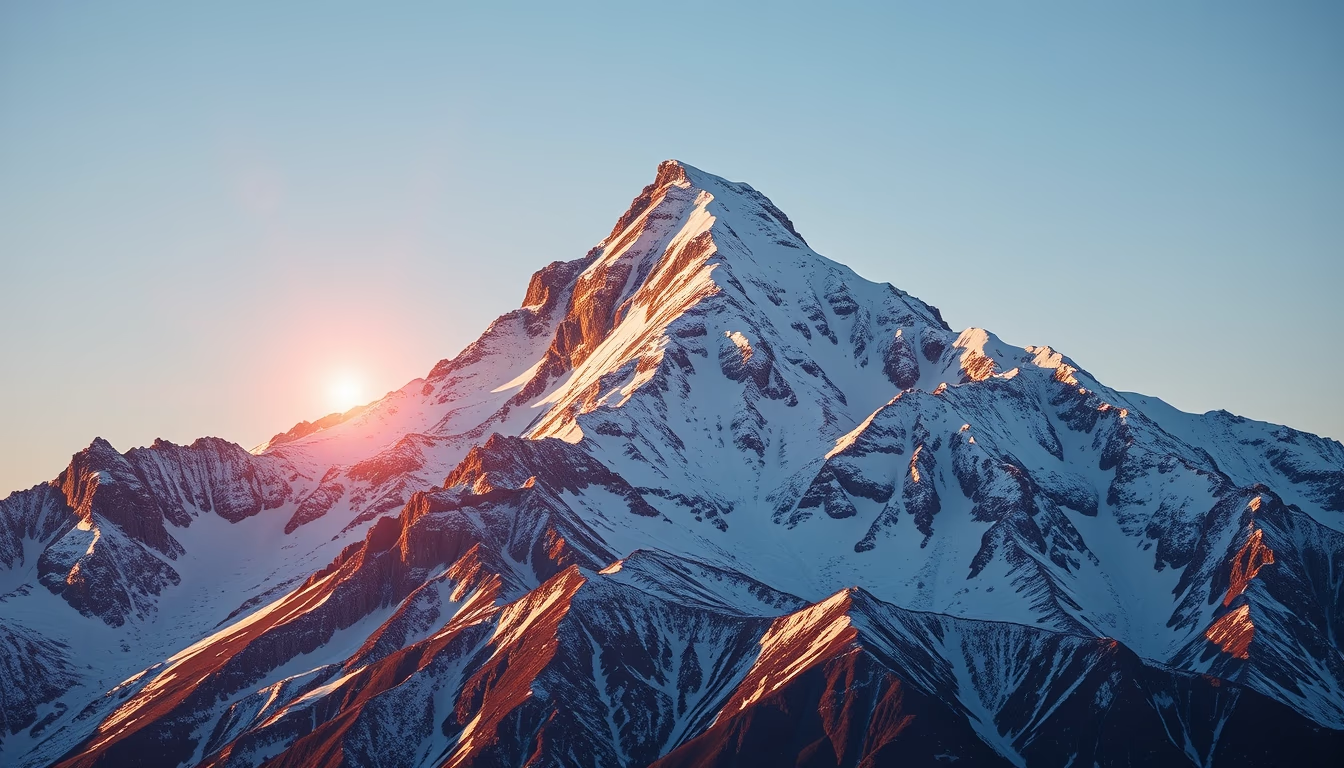
Pico nevado banhado pelo sol do amanhecer, mostrando a beleza das montanhas em regiões de alta altitude e clima frio.
Sobre o tema
Picos nevados são formações geológicas que ocorrem em altitudes elevadas, onde a temperatura média anual é suficientemente baixa para permitir a acumulação permanente de neve. A linha de neve, altitude a partir da qual a neve persiste durante todo o ano, varia conforme a latitude e a proximidade do oceano. Nos trópicos, como na Cordilheira dos Andes, a linha de neve situa-se acima dos 4.500 metros; já em regiões polares, pode estar ao nível do mar. O Monte Everest, no Himalaia, é o pico mais alto do mundo com 8.848 metros, e sua neve perpétua é alimentada por monções e ventos de altitude.
O nascer do sol em picos nevados cria um fenômeno visual chamado 'alpen glow' ou brilho alpino, quando a luz solar reflete na neve e nas nuvens, produzindo tons de laranja e rosa. Esse efeito é mais intenso em dias de céu limpo e baixa umidade, comuns em regiões montanhosas. Montanhas como o Monte Fuji no Japão, o Matterhorn nos Alpes e o Aconcágua na Argentina são destinos icônicos para observação desse espetáculo matinal.
Além da beleza cênica, os picos nevados têm importância ecológica e hidrológica. Eles funcionam como reservatórios de água doce, liberando degelo gradual que abastece rios e ecossistemas ribeirinhos. Na América do Sul, o degelo da Cordilheira dos Andes fornece água para milhões de pessoas em países como Peru e Bolívia. No entanto, as mudanças climáticas estão acelerando o recuo das geleiras, ameaçando esse recurso vital.
O turismo de montanha, incluindo escalada e fotografia, movimenta economias locais em regiões como os Alpes europeus e o Parque Nacional do Himalaia. Escalar um pico nevado exige preparo físico, equipamento adequado e conhecimento de técnicas de alpinismo, além de respeito às condições climáticas extremas. Para muitos, a vista do topo ao amanhecer é uma recompensa inesquecível.
Perguntas frequentes
Por que os picos das montanhas permanecem cobertos de neve mesmo no verão?
Isso ocorre porque a temperatura diminui com a altitude. Acima da linha de neve, a média anual fica abaixo de zero, mantendo a neve acumulada mesmo durante o verão.
Qual a melhor época para fotografar o nascer do sol em montanhas nevadas?
O outono e a primavera oferecem céus mais limpos e temperaturas amenas. Em regiões de alta montanha, o inverno pode ter neve excessiva e dias mais curtos.
O degelo dos picos nevados afeta o abastecimento de água?
Sim, muitas comunidades dependem do degelo sazonal para água potável, agricultura e geração de energia. O recuo das geleiras devido às mudanças climáticas reduz essa disponibilidade.
URL direta
https://pub-c7d6a6ea828543ac903a74a341ccb2e1.r2.dev/imagens/snow-capped-mountain-peak-sunrise-commercial-product-photography-v9.avifComo creditar
Inclua um link visível de volta pro UtilizAí. Copie um dos snippets abaixo:
<a href="https://xn--utiliza-eza.com/midia/imagens/snow-capped-mountain-peak-sunrise-commercial-product-photography-v9">Montanha com pico nevado peak sunrise</a> by <a href="https://xn--utiliza-eza.com">UtilizAí</a>, licensed under <a href="https://creativecommons.org/licenses/by/4.0/">CC BY 4.0</a>.
[Montanha com pico nevado peak sunrise](https://xn--utiliza-eza.com/midia/imagens/snow-capped-mountain-peak-sunrise-commercial-product-photography-v9) by [UtilizAí](https://xn--utiliza-eza.com), CC BY 4.0
Licença: CC-BY-4.0