Smart traffic signal
1344×768 · AVIF · CC BY 4.0
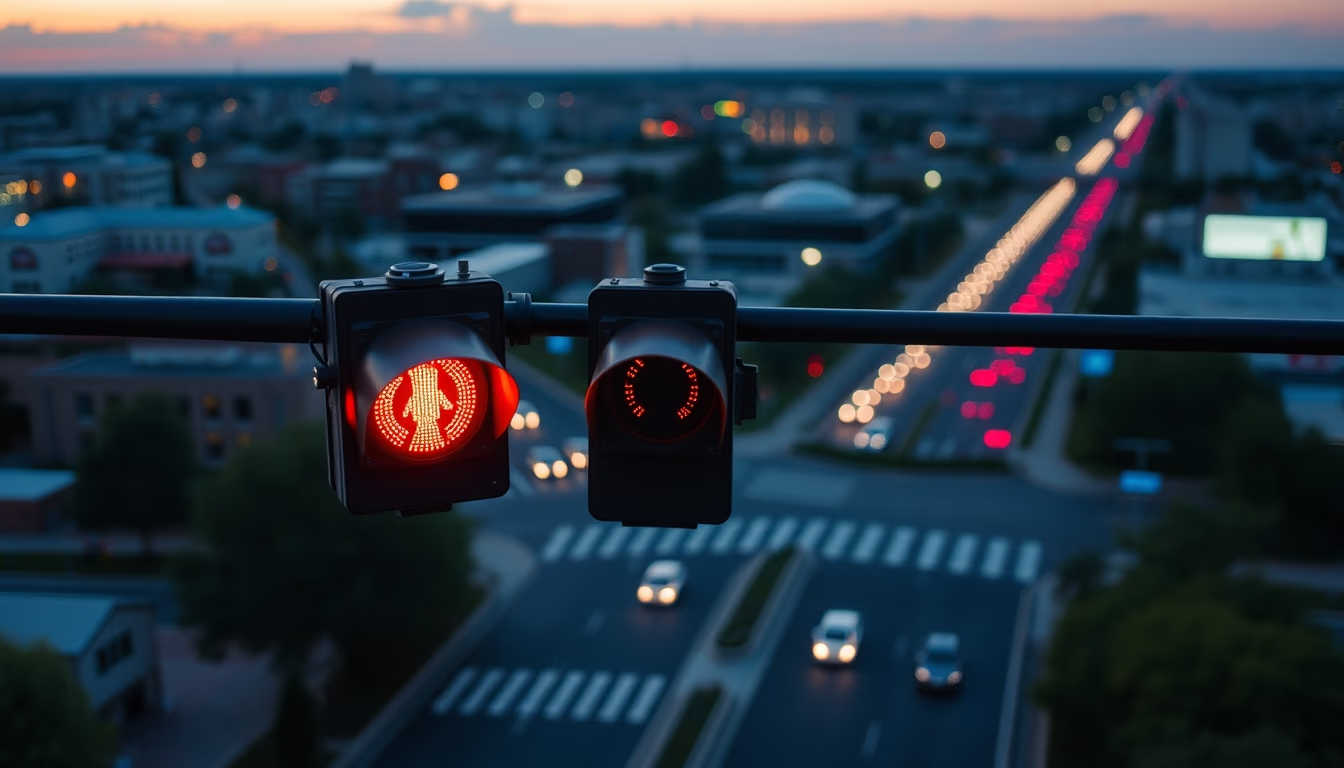
Smart traffic signals optimize traffic flow in modern cities, reducing congestion and pollutant emissions through sensors and adaptive algorithms.
About this subject
Smart traffic signals represent an evolution from traditional fixed-timer systems that operated independently of actual vehicle volume. These modern devices use inductive loop sensors embedded in pavement, computer vision cameras, radar, and vehicle-to-infrastructure (V2I) communication to monitor traffic in real time. Artificial intelligence algorithms process the data and dynamically adjust signal timings, prioritizing high-demand lanes, bus corridors, or emergency vehicle passage. Systems such as SCATS (Australia) and SCOOT (United Kingdom) are global benchmarks, adapted in cities like São Paulo, Curitiba, and Recife in Brazil.
Deploying these systems yields measurable benefits. In Pittsburgh, USA, the Surtrac system reduced travel time by 25% and pollutant emissions by 21%. In Belo Horizonte, Brazil, the intelligent traffic signal center decreased congestion by up to 30% during peak hours. Beyond improving urban mobility, smart signals enhance road safety by detecting pedestrians and cyclists, adjusting crossing times, and synchronizing with speed cameras. Fuel savings and reductions in noise and air pollution directly improve quality of life in cities.
Looking ahead to 2026, trends point to full integration with autonomous and connected vehicles, edge computing for faster local processing, and 5G communication for low latency. However, challenges remain: high infrastructure costs, ongoing maintenance needs, and cybersecurity vulnerabilities that require robust protocols. Ensuring equitable distribution of benefits across neighborhoods is also critical. Despite these hurdles, cities investing in this technology see significant economic and social returns, cementing smart traffic signals as a cornerstone of future urban mobility.
Frequently Asked Questions
How do smart traffic signals work?
They use sensors (inductive loops, cameras, radar) to detect vehicles and pedestrians in real time. Algorithms adjust signal timings based on traffic flow, prioritizing busy lanes, public transport, or emergencies.
Which Brazilian cities have adopted smart traffic signals?
São Paulo, Belo Horizonte, Curitiba, and Recife have implemented adaptive systems. Belo Horizonte, for instance, reported congestion reductions of up to 30% during peak hours.
What are the main environmental benefits?
Reductions of CO2 and local pollutant emissions by up to 20%, lower fuel consumption, and decreased noise pollution due to optimized traffic flow and fewer unnecessary stops.
Direct URL
https://pub-c7d6a6ea828543ac903a74a341ccb2e1.r2.dev/imagens/smart-traffic-signal-aerial-drone-shot-p2.avifHow to credit
Include a visible link back to UtilizAí. Copy one of the snippets below:
<a href="https://xn--utiliza-eza.com/en/midia/imagens/smart-traffic-signal-aerial-drone-shot-p2">Smart traffic signal</a> by <a href="https://xn--utiliza-eza.com">UtilizAí</a>, licensed under <a href="https://creativecommons.org/licenses/by/4.0/">CC BY 4.0</a>.
[Smart traffic signal](https://xn--utiliza-eza.com/en/midia/imagens/smart-traffic-signal-aerial-drone-shot-p2) by [UtilizAí](https://xn--utiliza-eza.com), CC BY 4.0
License: CC-BY-4.0