Sitar indian carved
1344×768 · AVIF · CC BY 4.0
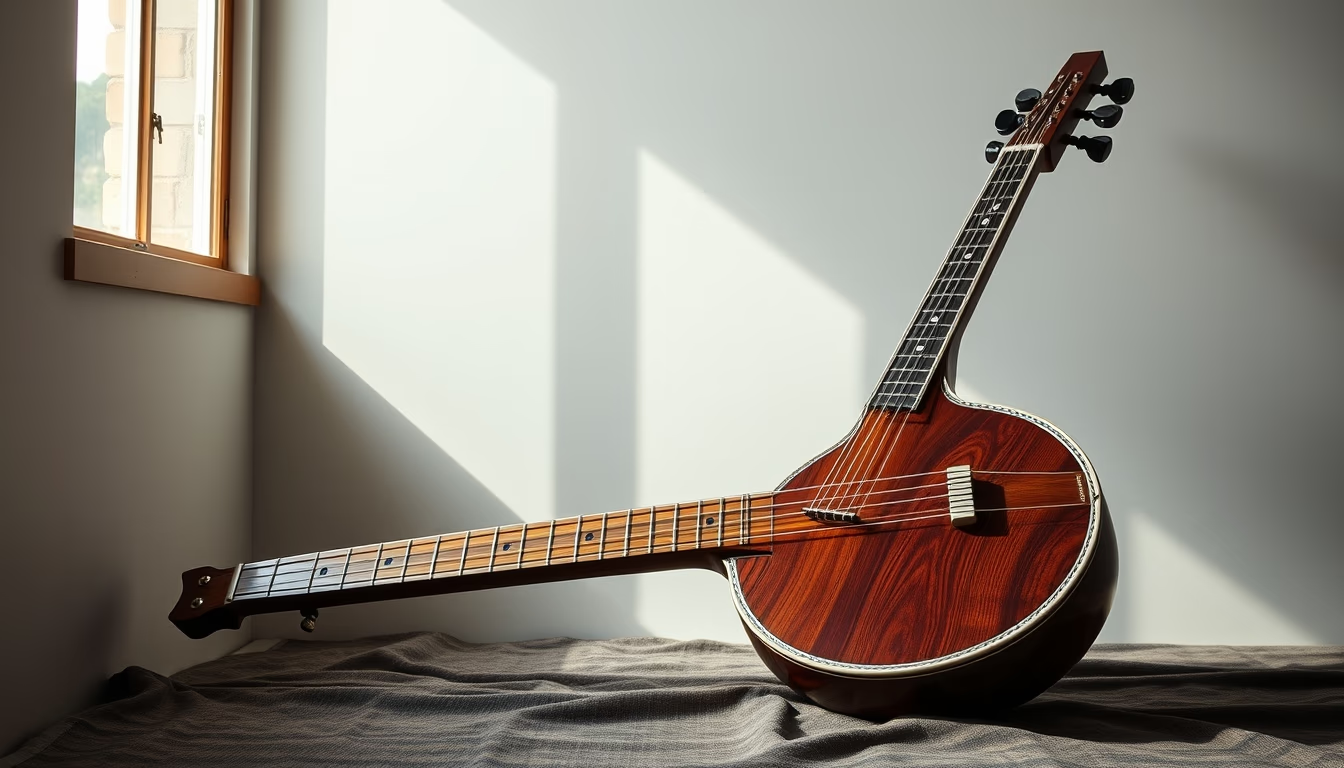
The sitar is a plucked string instrument from Indian classical music, renowned for its rich resonance and intricate wood carvings.
About this subject
The sitar, an iconic instrument of Indian classical music, emerged in the Indian subcontinent around the 18th century, evolving from the Persian setar. Its construction is a work of art: the body is carved from teak wood or gourd, with a long hollow neck and a resonance chamber covered by a thin goat skin. The decorative carvings, often floral or geometric, are hand‑carved and reflect regional craftsmanship traditions.
The instrument has 18 to 20 strings, with 6 or 7 playing strings and the rest sympathetic strings that vibrate sympathetically, creating a hypnotic, sustained sound. The movable metal frets allow microtones essential to Indian music. The player uses a metal plectrum called mizrab to pluck the strings, producing melodies embellished with glissandos (meend) and rapid notes (taans).
Famous in the West thanks to virtuoso Ravi Shankar, the sitar became a symbol of 1960s counterculture, influencing artists like George Harrison (The Beatles) and psychedelic bands. Today, it remains central to Hindustani concerts, performing ragas that follow rhythmic cycles (talas). The minimalist example in the photograph emphasizes the pure carved shapes without excess, highlighting the wood and the functional design of the instrument.
Frequently Asked Questions
What is the difference between a sitar and a zither?
The sitar is an Indian plucked string instrument with resonators and movable frets, while the zither is an ancient European instrument with strings struck or plucked, usually without frets and with a flat soundbox.
How is the sitar tuned?
Sitar tuning depends on the raga, but typically the main strings are tuned to the tonic and perfect fifth (e.g., C# and G#), while the sympathetic strings follow the scale of the raga.
Why does the sitar have sympathetic strings?
Sympathetic strings vibrate in sympathy with the main strings, creating a continuous resonance that enriches the timbre and sustains the notes, a hallmark of the sitar's sound.
Direct URL
https://pub-c7d6a6ea828543ac903a74a341ccb2e1.r2.dev/imagens/sitar-indian-carved-minimalist-composition-p3.avifHow to credit
Include a visible link back to UtilizAí. Copy one of the snippets below:
<a href="https://xn--utiliza-eza.com/en/midia/imagens/sitar-indian-carved-minimalist-composition-p3">Sitar indian carved</a> by <a href="https://xn--utiliza-eza.com">UtilizAí</a>, licensed under <a href="https://creativecommons.org/licenses/by/4.0/">CC BY 4.0</a>.
[Sitar indian carved](https://xn--utiliza-eza.com/en/midia/imagens/sitar-indian-carved-minimalist-composition-p3) by [UtilizAí](https://xn--utiliza-eza.com), CC BY 4.0
License: CC-BY-4.0