Sitar indian carved
1344×768 · AVIF · CC BY 4.0
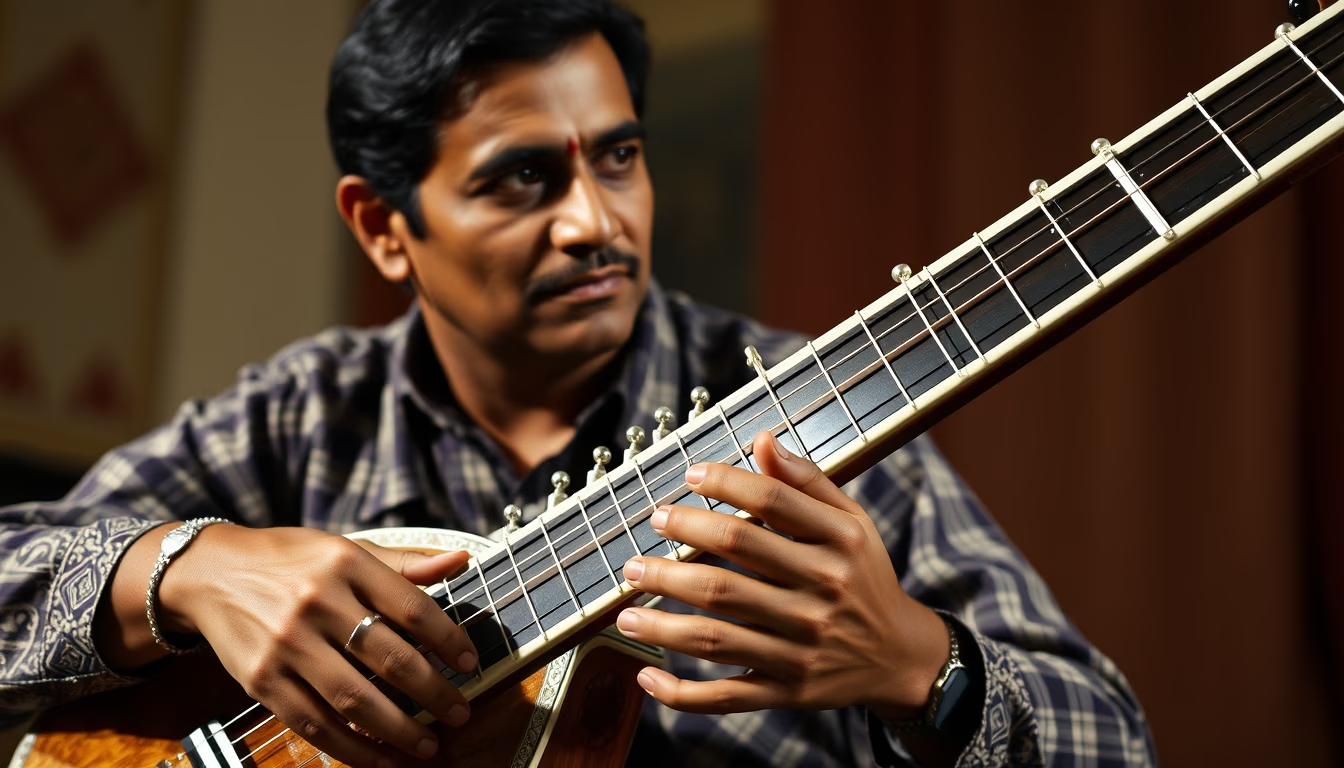
O sitar indiano esculpido é um instrumento de cordas dedilhadas, símbolo da música clássica hindustani, conhecido por seu braço longo e ressonância hipnótica.
Sobre o tema
O sitar é um dos instrumentos mais emblemáticos da música clássica do norte da Índia, a tradição hindustani. Sua construção é complexa: um corpo feito de cabaça esculpida (tumba), um braço longo de madeira e uma segunda cabaça ressonadora perto do topo. Possui de 18 a 20 cordas, sendo 6 ou 7 cordas principais dedilhadas e o restante cordas simpáticas que vibram por simpatia, criando o timbre característico. O sitar deriva do persa setar (três cordas) e foi desenvolvido no subcontinente indiano por volta do século XIII, ganhando sua forma atual no século XVIII.
Culturalmente, o sitar é inseparável da figura de Ravi Shankar, que o popularizou no Ocidente nos anos 1960, influenciando músicos como George Harrison dos Beatles. Na música clássica indiana, o sitar é usado para interpretar ragas, estruturas melódicas que evocam emoções e estações específicas. Cada raga tem regras rigorosas de notas e ornamentos, e o sitarista desliza os dedos sobre os trastes curvos para produzir microtons e glissandos.
A arte de esculpir um sitar é passada por gerações de luthiers, especialmente em cidades como Miraj e Calcutá. A cabaça é seca, cortada e entalhada com desenhos florais ou geométricos, depois envernizada. As cravelhas de madeira ajustam a tensão das cordas de aço e bronze. O músico usa uma palheta de metal chamada mizrab presa ao dedo indicador. A afinação mais comum é Dó, Fá, Dó, Sol, Dó, Ré, Ré, mas varia conforme o raga.
Curiosamente, apesar de ser um instrumento de concerto, o sitar também aparece em gravações lo-fi e experimentais. O termo lo-fi disposable camera associado a esta imagem sugere uma estética vintage e granulada, contrastando com a riqueza sonora do instrumento. O sitar continua a ser um ícone da cultura indiana e uma ponte entre tradições musicais.
Perguntas frequentes
Como o sitar é tocado?
O sitarista senta-se no chão com o instrumento apoiado no colo. Usa uma palheta de metal (mizrab) no dedo indicador para dedilhar as cordas principais, enquanto os outros dedos abafam ou pressionam as cordas simpáticas. Os trastes são curvos e móveis, permitindo deslizes e microtons.
Qual a diferença entre sitar e veena?
Embora ambos sejam instrumentos de cordas indianos, o sitar tem corpo de cabaça e cordas simpáticas, enquanto a veena tem corpo de madeira e geralmente menos cordas. O sitar é mais associado à música do norte da Índia e a veena ao sul, com técnicas e sonoridades distintas.
Quem são os maiores tocadores de sitar da história?
Ravi Shankar é o mais famoso globalmente. Outros incluem Vilayat Khan, Nikhil Banerjee, Shahid Parvez e Kushal Das. Cada um desenvolveu estilos únicos dentro da tradição hindustani.
URL direta
https://pub-c7d6a6ea828543ac903a74a341ccb2e1.r2.dev/imagens/sitar-indian-carved-lo-fi-disposable-camera-p12.avifComo creditar
Inclua um link visível de volta pro UtilizAí. Copie um dos snippets abaixo:
<a href="https://xn--utiliza-eza.com/midia/imagens/sitar-indian-carved-lo-fi-disposable-camera-p12">Sitar indian carved</a> by <a href="https://xn--utiliza-eza.com">UtilizAí</a>, licensed under <a href="https://creativecommons.org/licenses/by/4.0/">CC BY 4.0</a>.
[Sitar indian carved](https://xn--utiliza-eza.com/midia/imagens/sitar-indian-carved-lo-fi-disposable-camera-p12) by [UtilizAí](https://xn--utiliza-eza.com), CC BY 4.0
Licença: CC-BY-4.0