Silk road spices arrayed
1344×768 · AVIF · CC BY 4.0
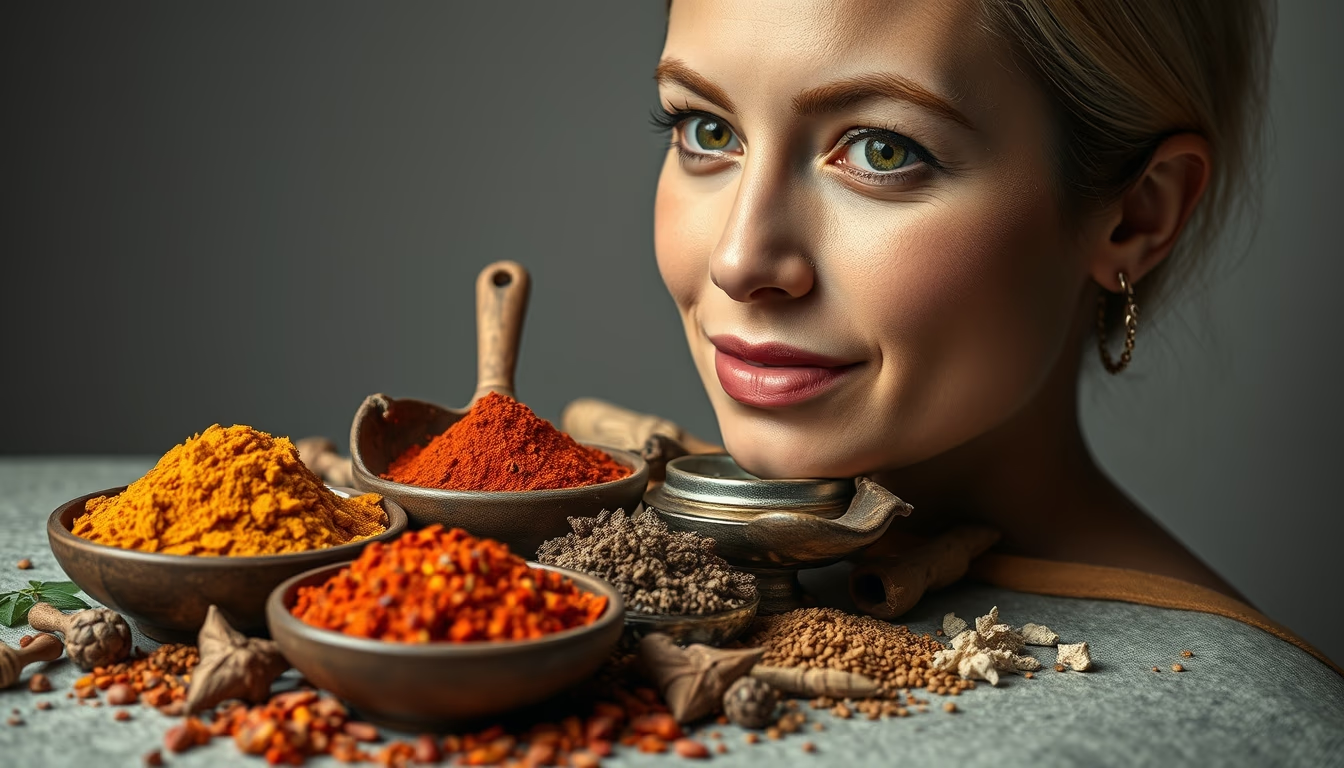
Especiarias da Rota da Seda, como canela, pimenta e cravo, transformaram economias e cozinhas ao longo dos séculos.
Sobre o tema
As especiarias foram um dos motores econômicos mais importantes da Rota da Seda, a rede de rotas comerciais que ligava a Ásia Oriental ao Mediterrâneo desde cerca de 130 a.C. Produtos como canela da China, pimenta da Índia e cravo das Ilhas Molucas (Indonésia) eram transportados por milhares de quilômetros, passando por mãos de comerciantes persas, árabes e venezianos. O valor dessas especiarias era tão alto que equivalia a ouro, e seu controle motivou explorações marítimas e conflitos.
A canela, por exemplo, era extraída da casca de árvores do gênero Cinnamomum, nativas do Sri Lanka e do sul da Ásia. Os romanos antigos a importavam em grandes quantidades, pagando preços exorbitantes. Já a pimenta-do-reino, originária do sul da Índia, era tão cobiçada que os europeus a chamavam de "grão do paraíso" e era usada como moeda para pagar impostos e dívidas. O cravo-da-índia, por sua vez, era cultivado apenas em algumas ilhas indonésias, e sua colheita era rigidamente controlada por sultões locais.
O comércio de especiarias não apenas enriqueceu reinos, mas também estimulou avanços náuticos e cartográficos. A busca por uma rota marítima direta para as fontes de especiarias levou Vasco da Gama a contornar a África em 1498 e Cristóvão Colombo a cruzar o Atlântico em 1492. Além do valor culinário, muitas especiarias tinham usos medicinais, cosméticos e religiosos: o incenso e a mirra eram queimados em templos, enquanto o açafrão tingia tecidos e a noz-moscada era usada como conservante.
Hoje, as especiarias são tão comuns que seu custo é baixo, mas o legado da Rota da Seda persiste na fusão de sabores globais e na importância cultural de ingredientes como pimenta, canela e cravo em pratos típicos brasileiros, indianos e árabes. A preservação desse conhecimento histórico é essencial para entender a globalização que moldou o mundo moderno.
Perguntas frequentes
Por que as especiarias eram tão valiosas na Rota da Seda?
As especiarias eram altamente valorizadas por seu uso culinário, medicinal e conservante. Além disso, a longa distância de transporte e os riscos envolvidos em sua obtenção tornavam-nas raras e caras, muitas vezes valendo mais que ouro.
Qual especiaria era conhecida como 'grão do paraíso'?
A pimenta-do-reino (Piper nigrum) era chamada de 'grão do paraíso' pelos europeus medievais, que a usavam como moeda e para temperar alimentos.
Como o comércio de especiarias influenciou a Era das Grandes Navegações?
A busca por rotas marítimas diretas para as fontes de especiarias na Ásia motivou expedições portuguesas e espanholas, culminando na circum-navegação da África e na descoberta da América.
URL direta
https://pub-c7d6a6ea828543ac903a74a341ccb2e1.r2.dev/imagens/silk-road-spices-arrayed-studio-editorial-portrait-fresh9.avifComo creditar
Inclua um link visível de volta pro UtilizAí. Copie um dos snippets abaixo:
<a href="https://xn--utiliza-eza.com/midia/imagens/silk-road-spices-arrayed-studio-editorial-portrait-fresh9">Silk road spices arrayed</a> by <a href="https://xn--utiliza-eza.com">UtilizAí</a>, licensed under <a href="https://creativecommons.org/licenses/by/4.0/">CC BY 4.0</a>.
[Silk road spices arrayed](https://xn--utiliza-eza.com/midia/imagens/silk-road-spices-arrayed-studio-editorial-portrait-fresh9) by [UtilizAí](https://xn--utiliza-eza.com), CC BY 4.0
Licença: CC-BY-4.0