Silk road spices arrayed
1344×768 · AVIF · CC BY 4.0
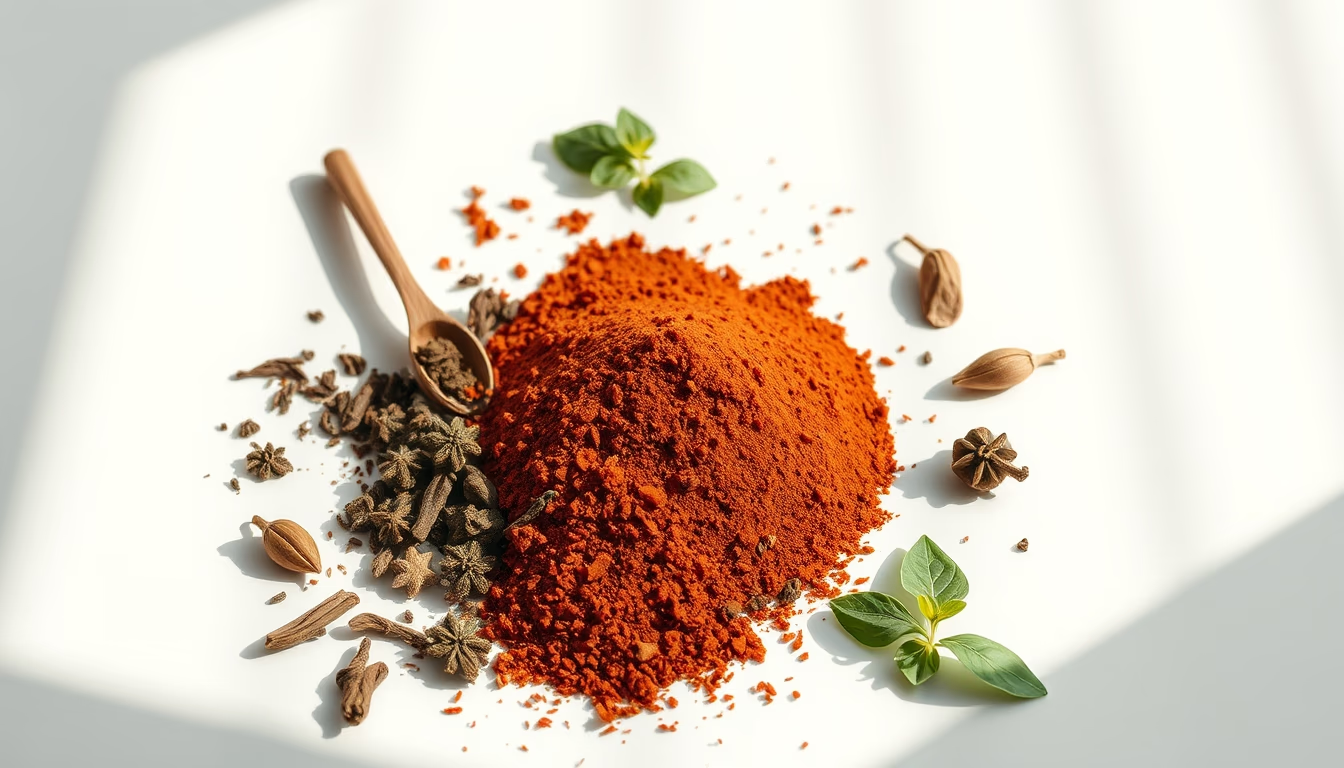
Spices like black pepper, cloves, and cinnamon traveled the Silk Road, connecting Asia and Europe in a millennia-old trade that shaped economies and cultures.
About this subject
The Silk Road, a network of overland and maritime routes linking China to the Mediterranean from roughly 130 BC to 1453 AD, was the main corridor for the spice trade. These products, extracted from exotic plants, were so valuable that they often equaled gold. Black pepper, originating from India, was used as currency and food preservative, while cloves, native to the Maluku Islands (Indonesia), and cinnamon from Sri Lanka dominated transactions.
Spice trade was not limited to flavors: they had recognized medicinal properties at the time. Saffron, for instance, was used as an antiseptic and dye, and nutmeg, originating from the Banda Islands, was considered an aphrodisiac. The Silk Road also transported ginger, cardamom, and star anise, each with its own production center and network of intermediaries. Cities like Samarkand, Baghdad, and Constantinople flourished as entrepôts, where Persian, Arab, and Venetian merchants traded these goods.
The quest for spices drove the Age of Discovery and European colonization. Christopher Columbus sought an alternative route to the Indies, and Vasco da Gama rounded Africa to reach Calicut, India, in 1498. The spice monopoly sparked conflicts among Portugal, Spain, the Netherlands, and England. Nutmeg, cultivated exclusively in the Banda Islands, was the subject of wars and massacres until the Dutch established full control in the 17th century.
Interestingly, many spices today are common and cheap, but their historical impact is immense. Black pepper was sold at the price of silver in ancient Rome, and cloves were used in Chinese ceremonies since the Han dynasty. This trade not only spread flavors but also ideas, religions, and technologies across continents, leaving a legacy still reflected in global cuisine.
Frequently Asked Questions
Which spices were most traded on the Silk Road?
The main ones were black pepper (India), cloves (Maluku Islands), cinnamon (Sri Lanka), nutmeg (Banda Islands), ginger, cardamom, and saffron. They traveled via overland and maritime routes.
Why were spices so valuable in ancient times?
They were used to preserve food in hot climates, mask odors of spoiled meat, prepare medicines, and make perfumes. Their rarity and long transport distances drove prices up, making them luxury goods.
How did the spice trade influence the Age of Discovery?
The quest for direct routes to spice sources motivated Portuguese and Spanish expeditions. Vasco da Gama reached India in 1498, and Christopher Columbus discovered America in 1492 while trying to reach the Indies.
Direct URL
https://pub-c7d6a6ea828543ac903a74a341ccb2e1.r2.dev/imagens/silk-road-spices-arrayed-minimalist-composition-fresh12.avifHow to credit
Include a visible link back to UtilizAí. Copy one of the snippets below:
<a href="https://xn--utiliza-eza.com/en/midia/imagens/silk-road-spices-arrayed-minimalist-composition-fresh12">Silk road spices arrayed</a> by <a href="https://xn--utiliza-eza.com">UtilizAí</a>, licensed under <a href="https://creativecommons.org/licenses/by/4.0/">CC BY 4.0</a>.
[Silk road spices arrayed](https://xn--utiliza-eza.com/en/midia/imagens/silk-road-spices-arrayed-minimalist-composition-fresh12) by [UtilizAí](https://xn--utiliza-eza.com), CC BY 4.0
License: CC-BY-4.0