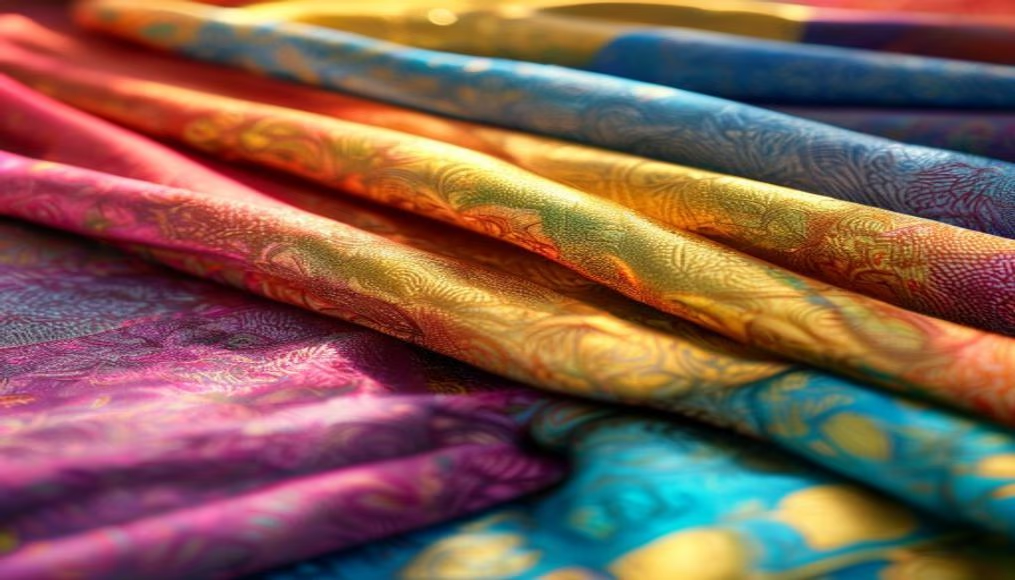
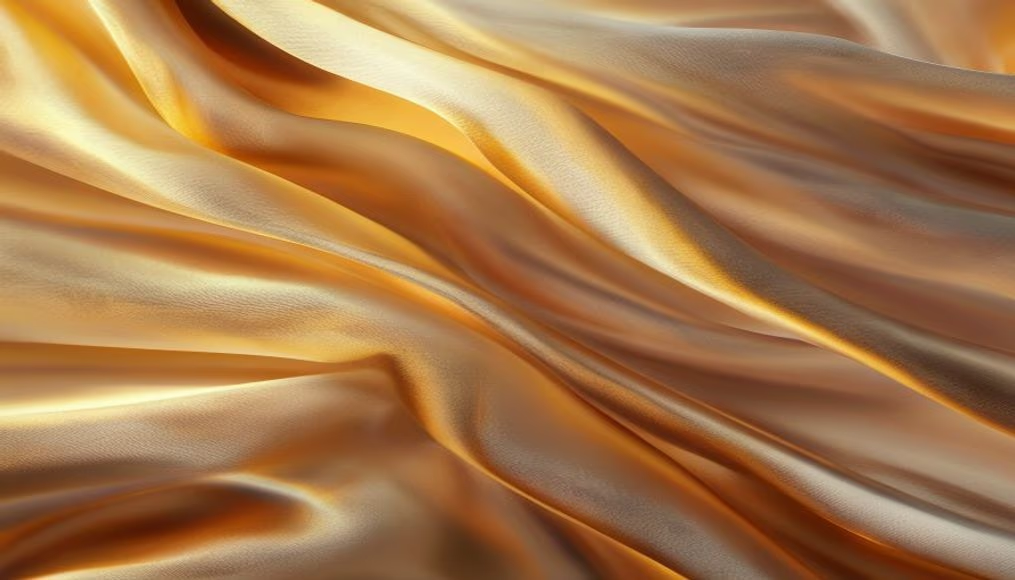
Silk fabric flowing close-up
1344×768 · AVIF · CC BY 4.0
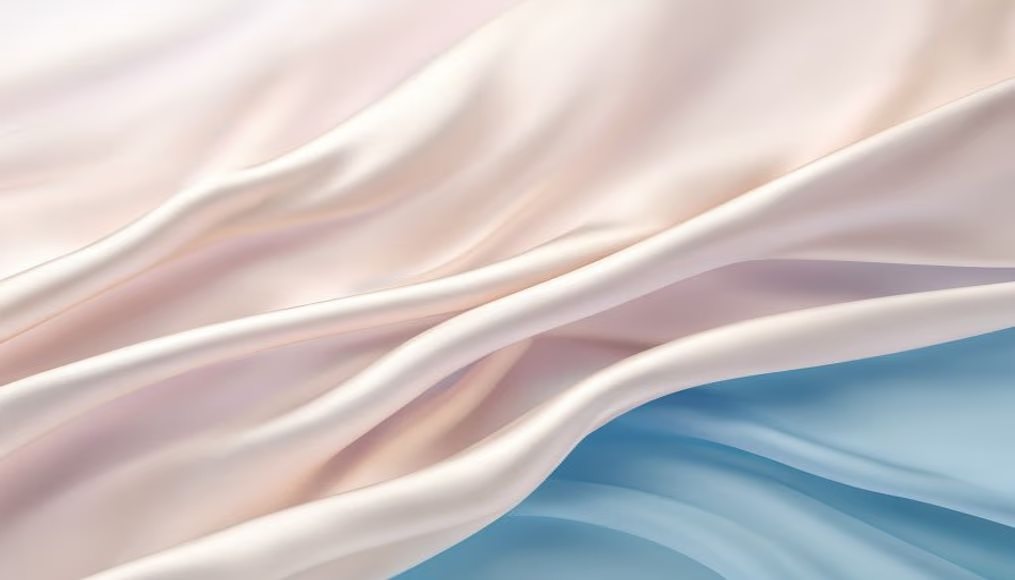
Flowing silk fabric: texture, luster, and fluidity defining textile luxury in global fashion.
About this subject
Silk is a natural protein fiber produced by silkworms (Bombyx mori). Its history dates back to ancient China, where sericulture remained a state secret for millennia. The Silk Road, a network of trade routes connecting East and West, was driven by the demand for this luxurious textile. Today, China accounts for about 80% of global production.
The sericulture process involves raising silkworms that feed exclusively on mulberry leaves. Cocoons are boiled to soften the sericin, allowing a continuous filament up to 1,600 meters to be unwound. Each cocoon yields a very fine thread, which is twisted with others to form commercial yarn. Silk is prized for its natural sheen, softness, and ability to absorb dyes vividly.
There are several types of silk: mulberry (from Bombyx mori, the most common), tussar (from wild silkworms, with a coarser texture), eri (produced without killing the animal), and muga (golden, from India). In fashion, silk is used in evening gowns, scarves, lingerie, shirts, and accessories. Its fluidity creates elegant drapes, while its natural thermoregulation makes it comfortable in various climates.
In Brazil, silk production is concentrated in the states of Minas Gerais and São Paulo, with brands like RenauxView. The fiber is hypoallergenic and biodegradable, but requires special care: hand washing, drying in the shade, and ironing with a warm iron. Silk is also used in technical applications, such as surgical sutures, due to its strength and biocompatibility.
Frequently Asked Questions
Why is silk considered a luxury fabric?
Because of its natural luster, softness, and labor-intensive production. Each cocoon yields a continuous filament up to 1,600 meters, requiring specialized knowledge and skilled labor.
What is the difference between natural and synthetic silk?
Natural silk is a protein fiber, breathable, thermoregulating, and biodegradable. Synthetic silk (polyester) mimics the shine but lacks the same softness, moisture absorption, and eco-friendly properties.
How to care for silk garments?
Hand wash in cold water with mild soap. Do not wring; dry in the shade on a towel. Iron on low heat on the reverse side. Avoid prolonged sun exposure and harsh chemicals.
Direct URL
https://pub-c7d6a6ea828543ac903a74a341ccb2e1.r2.dev/imagens/silk-fabric-flowing-close-up-commercial-product-photography-v9.avifHow to credit
Include a visible link back to UtilizAí. Copy one of the snippets below:
<a href="https://xn--utiliza-eza.com/en/midia/imagens/silk-fabric-flowing-close-up-commercial-product-photography-v9">Silk fabric flowing close-up</a> by <a href="https://xn--utiliza-eza.com">UtilizAí</a>, licensed under <a href="https://creativecommons.org/licenses/by/4.0/">CC BY 4.0</a>.
[Silk fabric flowing close-up](https://xn--utiliza-eza.com/en/midia/imagens/silk-fabric-flowing-close-up-commercial-product-photography-v9) by [UtilizAí](https://xn--utiliza-eza.com), CC BY 4.0
License: CC-BY-4.0