Shamisen japanese
1344×768 · AVIF · CC BY 4.0
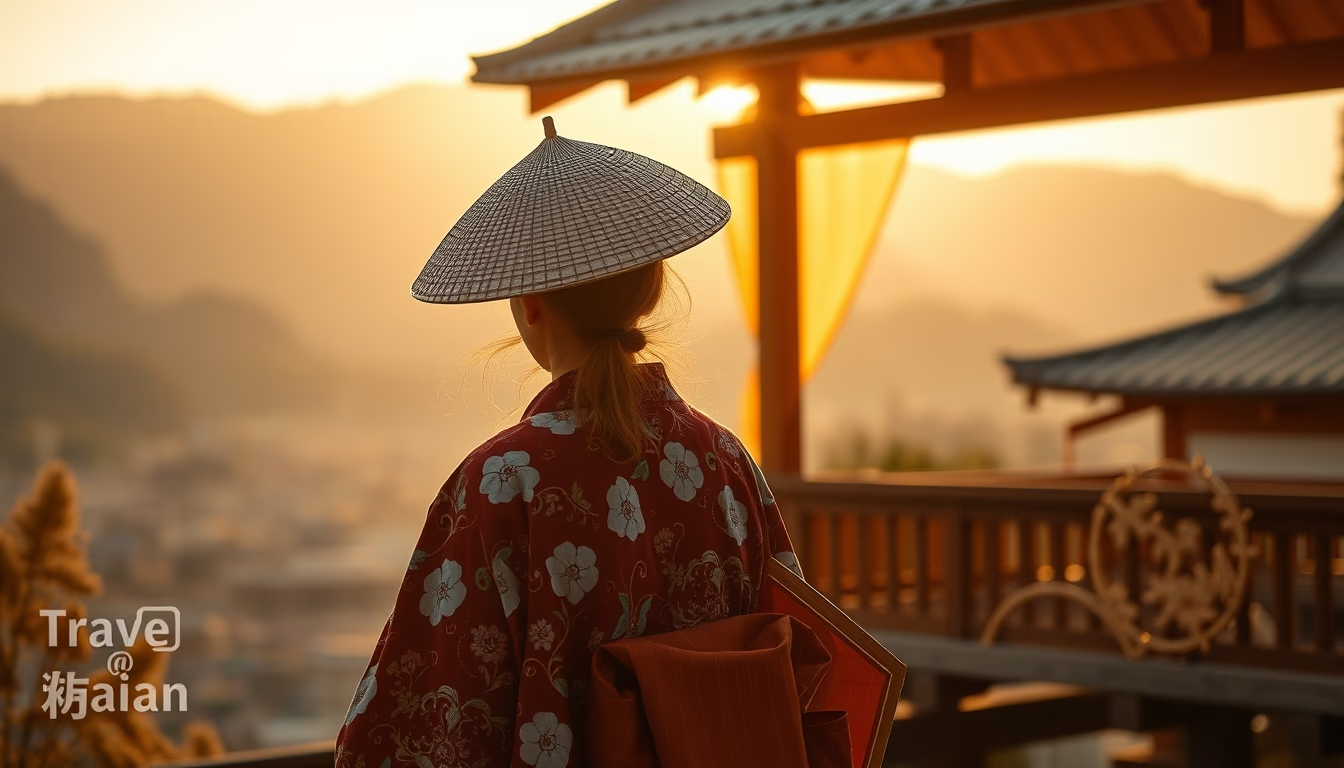
O shamisen é um instrumento tradicional japonês de três cordas, central na música folclórica, no kabuki e nas apresentações de gueixas, conhecido por seu som percussivo característico.
Sobre o tema
O shamisen é um instrumento musical tradicional japonês de três cordas, derivado do sanxian chinês. Foi introduzido no Japão através das Ilhas Ryukyu (Okinawa) por volta do século XVI. O instrumento possui um braço longo e um corpo pequeno e quadrado coberto com pele de animal, tradicionalmente de gato ou cachorro, embora hoje sejam comuns materiais sintéticos. O shamisen é tocado com um palheta chamada bachi, e seu som pode variar de delicado a percussivo. É central em vários gêneros da música japonesa, incluindo min'yo (canções folclóricas), nagauta (canções longas usadas no teatro kabuki) e tsugaru-jamisen (um estilo virtuosístico da região de Tsugaru). O shamisen também aparece na cultura popular moderna, como nas obras dos Yoshida Brothers e em trilhas sonoras de anime. Seu significado cultural reside na associação com o entretenimento das gueixas, kabuki e teatro de bonecos Bunraku. Notavelmente, o shamisen tem um som ressonante característico que evoca a atmosfera do Japão tradicional. A construção do instrumento envolve artesanato meticuloso, com diferentes madeiras usadas para o braço e o corpo, afetando o timbre. As técnicas de execução incluem golpear as cordas e flexionar as notas, muitas vezes com movimentos rápidos e enérgicos.
Perguntas frequentes
De que é feito o shamisen?
O instrumento possui um braço longo, um corpo quadrado coberto com pele de animal (tradicionalmente de gato ou cachorro, hoje sintética) e três cordas. O bachi (palheta) é usado para golpear as cordas.
Como o shamisen é usado na cultura japonesa?
Aparece em canções folclóricas (min'yo), teatro kabuki (nagauta), teatro de bonecos Bunraku e entretenimento de gueixas. O estilo tsugaru-jamisen é especialmente virtuosístico e energético.
O shamisen se originou no Japão?
Não, derivou do sanxian chinês e foi introduzido via Okinawa no século XVI. Depois foi adaptado e se tornou exclusivamente japonês.
URL direta
https://pub-c7d6a6ea828543ac903a74a341ccb2e1.r2.dev/imagens/shamisen-japanese-travel-photography-p1.avifComo creditar
Inclua um link visível de volta pro UtilizAí. Copie um dos snippets abaixo:
<a href="https://xn--utiliza-eza.com/midia/imagens/shamisen-japanese-travel-photography-p1">Shamisen japanese</a> by <a href="https://xn--utiliza-eza.com">UtilizAí</a>, licensed under <a href="https://creativecommons.org/licenses/by/4.0/">CC BY 4.0</a>.
[Shamisen japanese](https://xn--utiliza-eza.com/midia/imagens/shamisen-japanese-travel-photography-p1) by [UtilizAí](https://xn--utiliza-eza.com), CC BY 4.0
Licença: CC-BY-4.0