Saxophone gold detail closeup
1344×768 · AVIF · CC BY 4.0

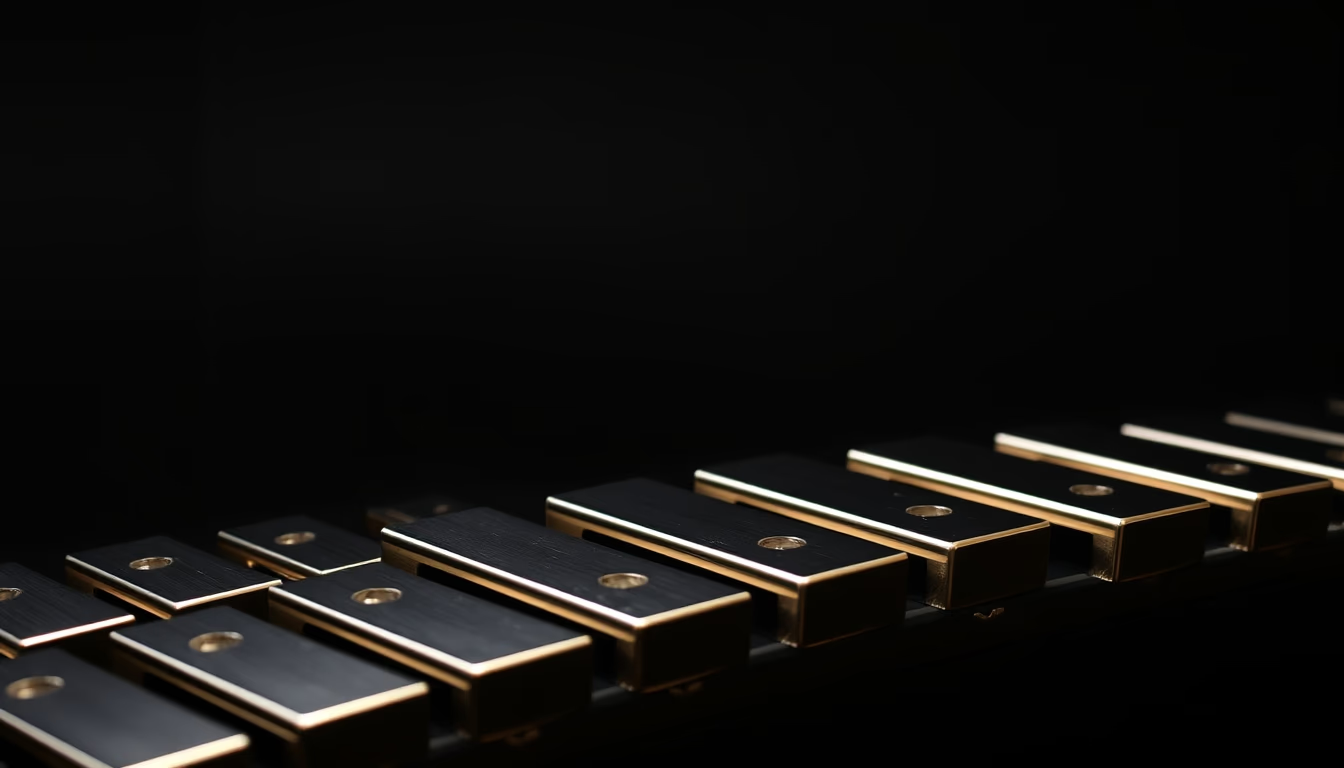
Gold detail close-up of a saxophone, a classic wind instrument that has dominated jazz and popular music since the 19th century.
About this subject
The saxophone was invented by Belgian Adolphe Sax in 1840, combining the single-reed mouthpiece of a clarinet with the conical body of an oboe. Patented in 1846, the instrument quickly became essential in military bands and orchestras, but it was in early 20th-century jazz that it found its true voice. Musicians like Charlie Parker and John Coltrane expanded its technical and expressive possibilities, cementing the saxophone as a symbol of improvisation and emotion.
Professional saxophones often receive a gold plating, an electrolytic process that deposits a thin layer of gold over brass. This choice is not merely aesthetic: gold produces a warmer, fuller timbre and offers resistance to oxidation. Vintage or limited-edition models, such as those by Selmer Paris, can cost tens of thousands of dollars and are prized by collectors.
The saxophone family ranges from sopranino to sub-contrabass, but the most common are alto and tenor. Gold detailing typically appears on keys, bell, and screws. Each key is meticulously adjusted for fast response to the player's touch, and the gold finish requires careful maintenance to prevent wear.
Interestingly, the saxophone was originally designed for symphony orchestras, but composers were slow to adopt it. Only with jazz and rock did the instrument gain global popularity. Today, it is also used in contemporary classical music and film soundtracks.
Frequently Asked Questions
Why are professional saxophones gold-plated?
Gold plating provides a warmer, richer timbre and protects the brass from oxidation. It is both an aesthetic and functional choice that increases the instrument's value.
What is the difference between alto and tenor saxophone?
The alto saxophone is tuned in E-flat, medium-sized with a bright sound. The tenor is larger, tuned in B-flat, and produces a deeper, fuller tone. Both are popular in jazz.
Who invented the saxophone and when?
The saxophone was invented by Belgian Adolphe Sax in 1840, with a patent granted in 1846. He aimed to create an instrument combining the power of brass and the flexibility of woodwinds.
Direct URL
https://pub-c7d6a6ea828543ac903a74a341ccb2e1.r2.dev/imagens/saxophone-gold-detail-closeup-lo-fi-disposable-camera-p6.avifHow to credit
Include a visible link back to UtilizAí. Copy one of the snippets below:
<a href="https://xn--utiliza-eza.com/en/midia/imagens/saxophone-gold-detail-closeup-lo-fi-disposable-camera-p6">Saxophone gold detail closeup</a> by <a href="https://xn--utiliza-eza.com">UtilizAí</a>, licensed under <a href="https://creativecommons.org/licenses/by/4.0/">CC BY 4.0</a>.
[Saxophone gold detail closeup](https://xn--utiliza-eza.com/en/midia/imagens/saxophone-gold-detail-closeup-lo-fi-disposable-camera-p6) by [UtilizAí](https://xn--utiliza-eza.com), CC BY 4.0
License: CC-BY-4.0