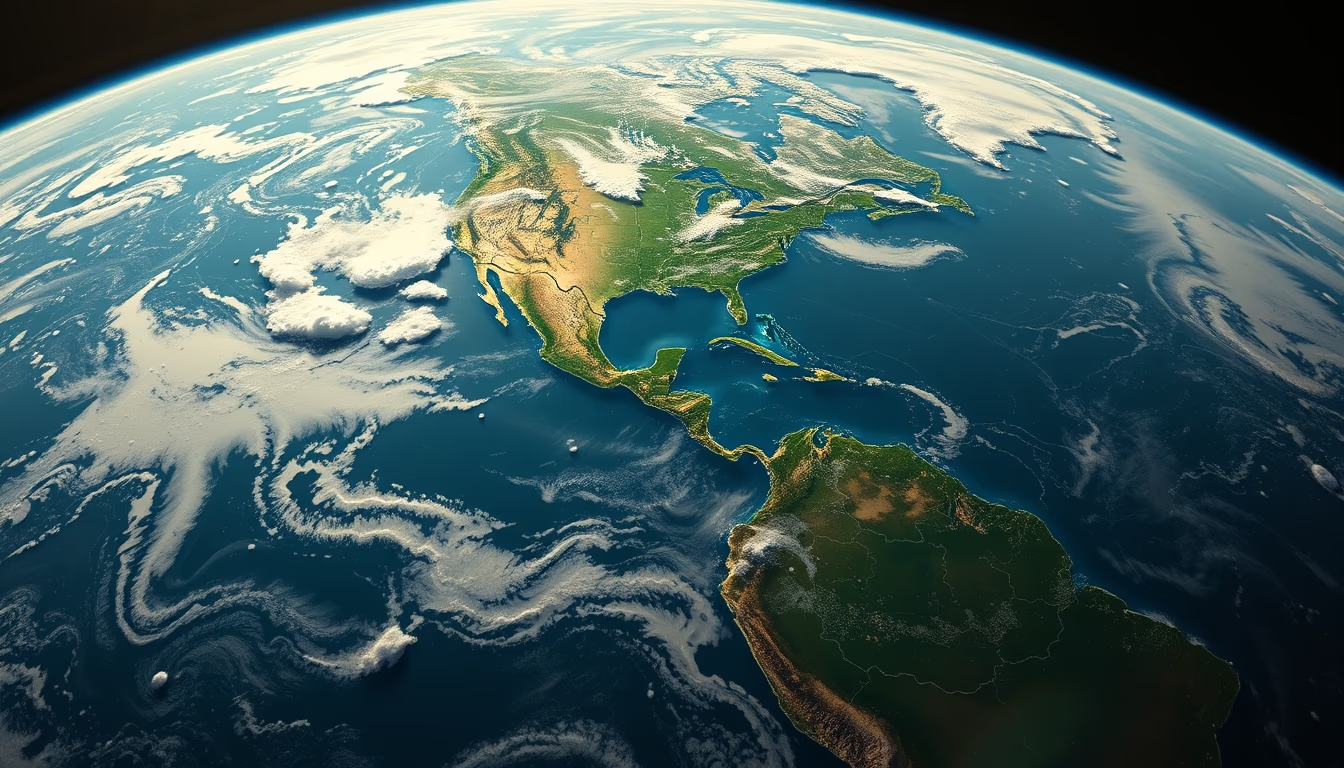
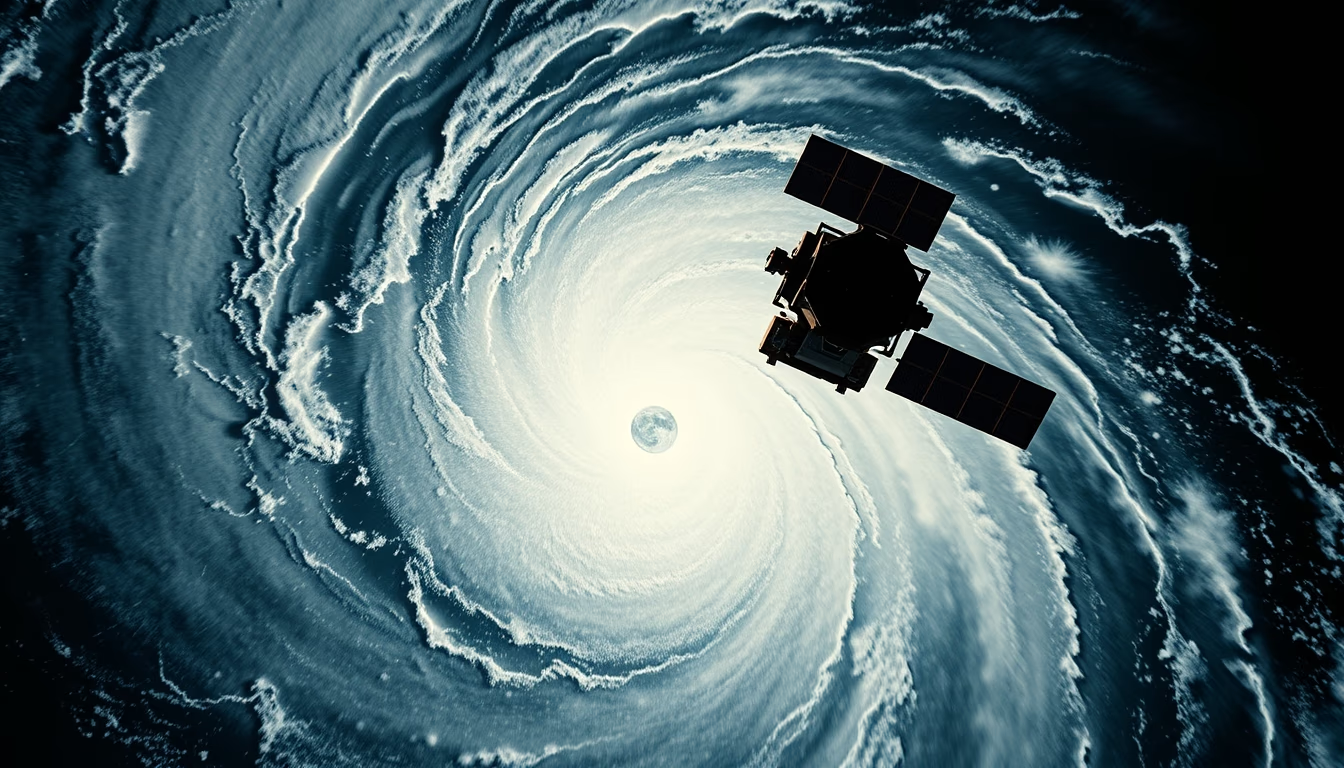
Satellite earth view atmosphere
1344×768 · AVIF · CC BY 4.0
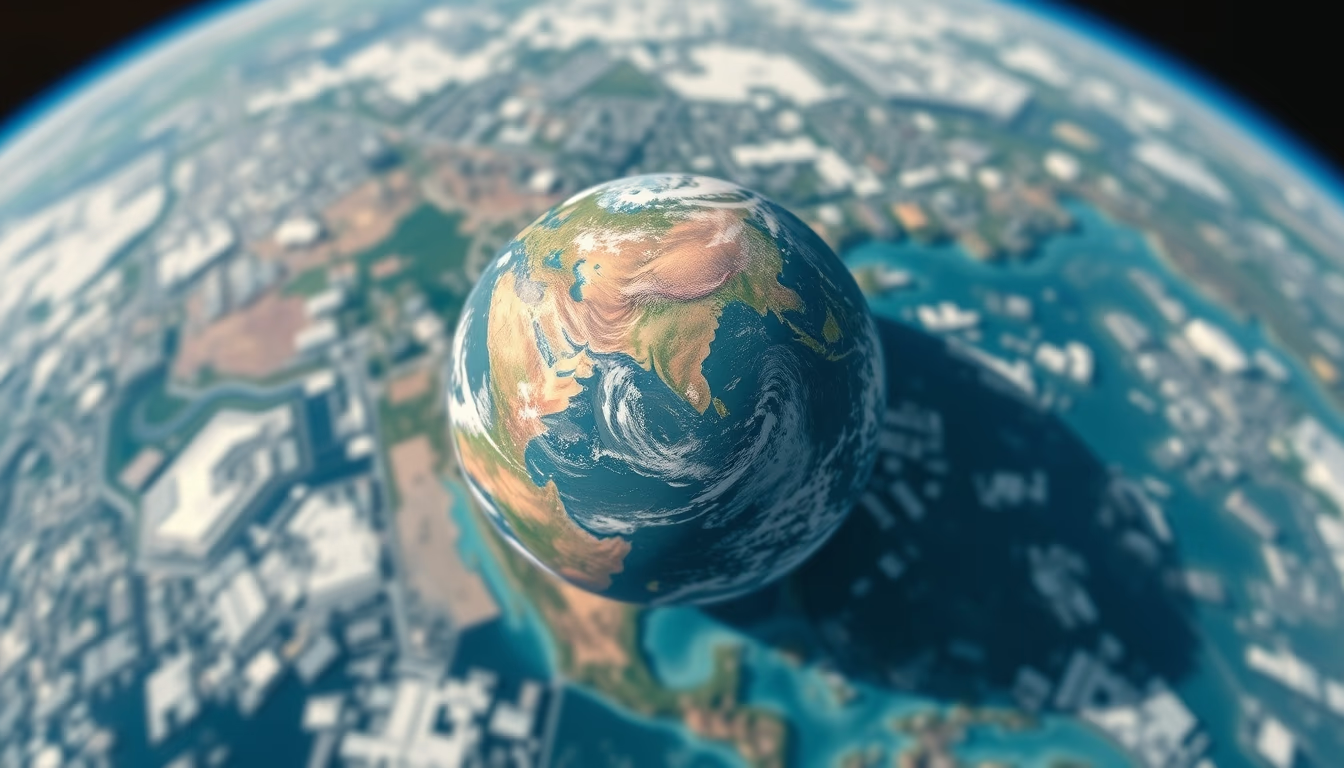
Earth's atmosphere, as seen from satellites, reveals layers of gases that protect life and regulate the global climate.
About this subject
Earth's atmosphere is a gaseous envelope surrounding the planet, composed mainly of nitrogen (78%) and oxygen (21%), with traces of argon, carbon dioxide, and water vapor. It extends about 480 km upward, but 99% of its mass lies within the first 30 km. Divided into five primary layers: troposphere, stratosphere, mesosphere, thermosphere, and exosphere, each has distinct temperature, pressure, and composition.
Earth-observing satellites, such as the GOES series (USA) and Meteosat (Europe), continuously monitor the atmosphere, providing critical data for weather forecasting, climate studies, and detection of phenomena like hurricanes and pollution. The ozone layer, located in the stratosphere, absorbs most of the Sun's harmful ultraviolet radiation, being essential for life. Since the 1980s, satellites like Nimbus-7 documented ozone thinning, leading to the Montreal Protocol that curbed CFC use.
The atmosphere also plays a key role in the natural greenhouse effect, trapping heat and maintaining an average global temperature of about 15°C. Without it, the surface would be freezing (average -18°C). However, increased greenhouse gases from human activities are intensifying this effect, causing global warming. Satellites like NASA's Aqua and Terra measure CO2, methane, and aerosols, aiding in understanding climate change.
Interestingly, the blue color of the sky results from Rayleigh scattering of sunlight by air molecules. Satellites in low Earth orbit (LEO) and geostationary orbit (GEO) offer unique perspectives to study atmospheric patterns, such as general circulation and jet streams. This data is vital for agriculture, aviation, and natural disaster management.
Frequently Asked Questions
What are the main layers of the atmosphere?
The five main layers are: troposphere (up to 12 km, where weather occurs), stratosphere (12-50 km, contains ozone layer), mesosphere (50-85 km, where meteors burn up), thermosphere (85-600 km, with auroras), and exosphere (above 600 km, transition to space).
How do satellites help monitor the atmosphere?
Satellites equipped with sensors measure temperature, humidity, trace gases, aerosols, and radiation. They provide real-time data for weather forecasting, hurricane tracking, pollution monitoring, and climate change studies.
What is the greenhouse effect and why is it important?
The greenhouse effect is the process by which gases like CO2 and water vapor trap some of Earth's outgoing heat, keeping the planet warm. Without it, average temperature would be -18°C. Human activities increase these gases, enhancing the effect and causing global warming.
Direct URL
https://pub-c7d6a6ea828543ac903a74a341ccb2e1.r2.dev/imagens/satellite-earth-view-atmosphere-tilt-shift-miniature-fresh16.avifHow to credit
Include a visible link back to UtilizAí. Copy one of the snippets below:
<a href="https://xn--utiliza-eza.com/en/midia/imagens/satellite-earth-view-atmosphere-tilt-shift-miniature-fresh16">Satellite earth view atmosphere</a> by <a href="https://xn--utiliza-eza.com">UtilizAí</a>, licensed under <a href="https://creativecommons.org/licenses/by/4.0/">CC BY 4.0</a>.
[Satellite earth view atmosphere](https://xn--utiliza-eza.com/en/midia/imagens/satellite-earth-view-atmosphere-tilt-shift-miniature-fresh16) by [UtilizAí](https://xn--utiliza-eza.com), CC BY 4.0
License: CC-BY-4.0