Santorini blue domes
1344×768 · AVIF · CC BY 4.0
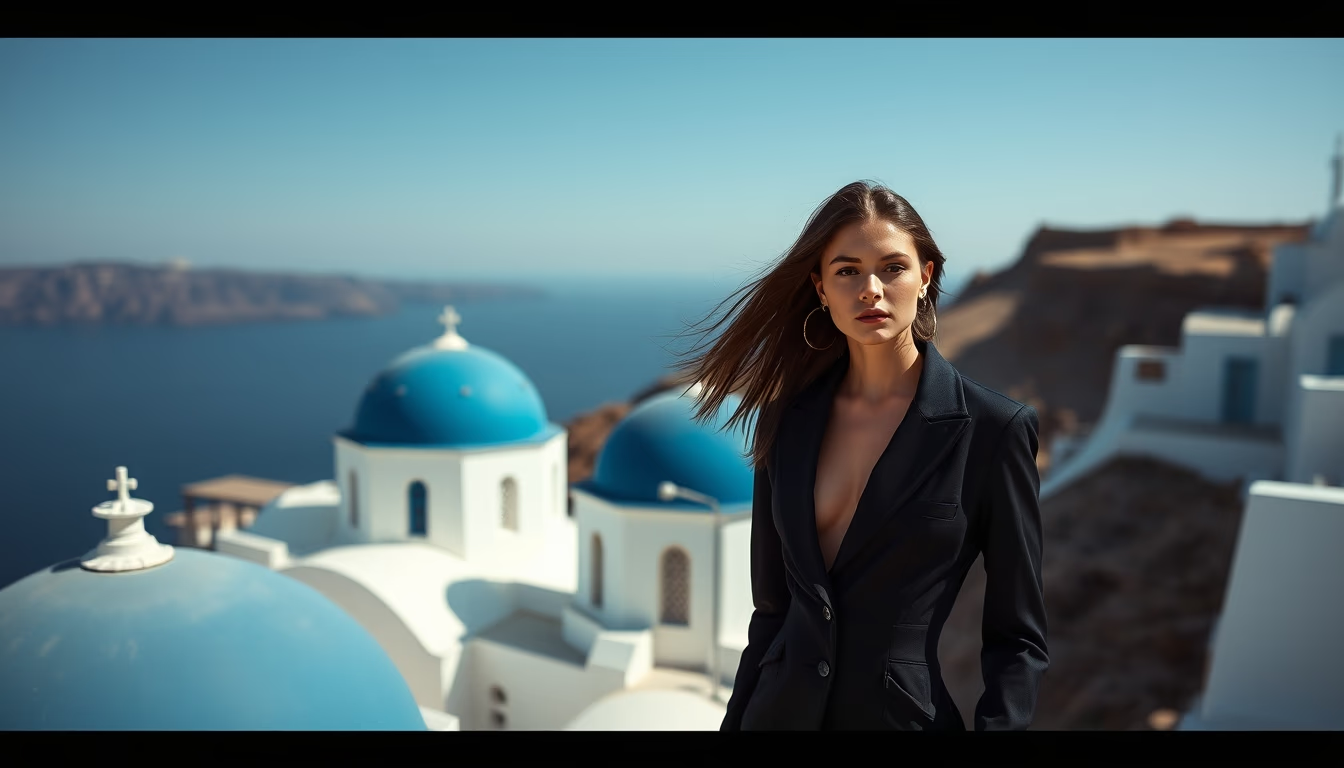
Santorini's blue domes, icons of Cycladic architecture, adorn the Greek islands with their vibrant color and centuries-old history.
About this subject
The famous blue domes of Santorini are hallmark features of Cycladic traditional architecture, found mainly in Greek Orthodox churches scattered across the island. These structures, often painted in an intense blue that contrasts with the whitewashed walls, have become visual symbols of the Greek landscape and attract millions of tourists every year. The origin of these domes dates back to the 19th century, when the island, after Greek independence, adopted an architectural style that reflected both Byzantine heritage and Venetian influences. The blue used was traditionally made from lapis lazuli or other natural pigments, but today acrylic paint resistant to salt and sun is used.
The island of Santorini, formed by a massive volcanic eruption around 1600 BC, has volcanic soil that influences the color and texture of buildings. The domes are not merely aesthetic; they help dissipate summer Mediterranean heat and protect against strong winds. The most photographed church is the Church of Saint Theodorus in Oia, whose blue dome stands out against the sunset. However, dozens of churches with blue domes are spread across Fira, Imerovigli, and other villages. The blue color also has religious significance: it symbolizes the sky and divine protection, common in Orthodox iconography.
Interestingly, the tradition of painting domes blue was not always mandatory. During the dictatorship of Ioannis Metaxas (1936-1941), colors were standardized to reinforce national identity, but blue only became predominant after World War II, when the islands needed to attract tourism. Today, municipal laws in Santorini require new constructions to follow the blue and white color scheme, preserving visual harmony. Despite fame, many blue domes belong to active churches, where local residents still celebrate Sunday liturgies, keeping religious and cultural tradition alive.
Frequently Asked Questions
Why are the domes in Santorini blue?
The blue color carries religious significance in Greek Orthodox tradition, symbolizing the sky and divine protection. Additionally, the blue and white combination was standardized to reinforce Greek national identity and attract tourism, especially after World War II.
What is the most famous blue-domed church in Santorini?
The Church of Saint Theodorus (Agios Theodorus) in Oia is the most photographed. Its blue dome and white bell tower are iconic, especially with the sunset in the background.
Are there many churches with blue domes in Santorini?
Yes, there are dozens scattered across the island, mainly in Oia, Fira, Imerovigli, and Pyrgos. Each has its own style but all follow the Cycladic blue and white pattern.
Direct URL
https://pub-c7d6a6ea828543ac903a74a341ccb2e1.r2.dev/imagens/santorini-blue-domes-high-fashion-editorial-p11.avifHow to credit
Include a visible link back to UtilizAí. Copy one of the snippets below:
<a href="https://xn--utiliza-eza.com/en/midia/imagens/santorini-blue-domes-high-fashion-editorial-p11">Santorini blue domes</a> by <a href="https://xn--utiliza-eza.com">UtilizAí</a>, licensed under <a href="https://creativecommons.org/licenses/by/4.0/">CC BY 4.0</a>.
[Santorini blue domes](https://xn--utiliza-eza.com/en/midia/imagens/santorini-blue-domes-high-fashion-editorial-p11) by [UtilizAí](https://xn--utiliza-eza.com), CC BY 4.0
License: CC-BY-4.0