Salt crystal macro
1344×768 · AVIF · CC BY 4.0
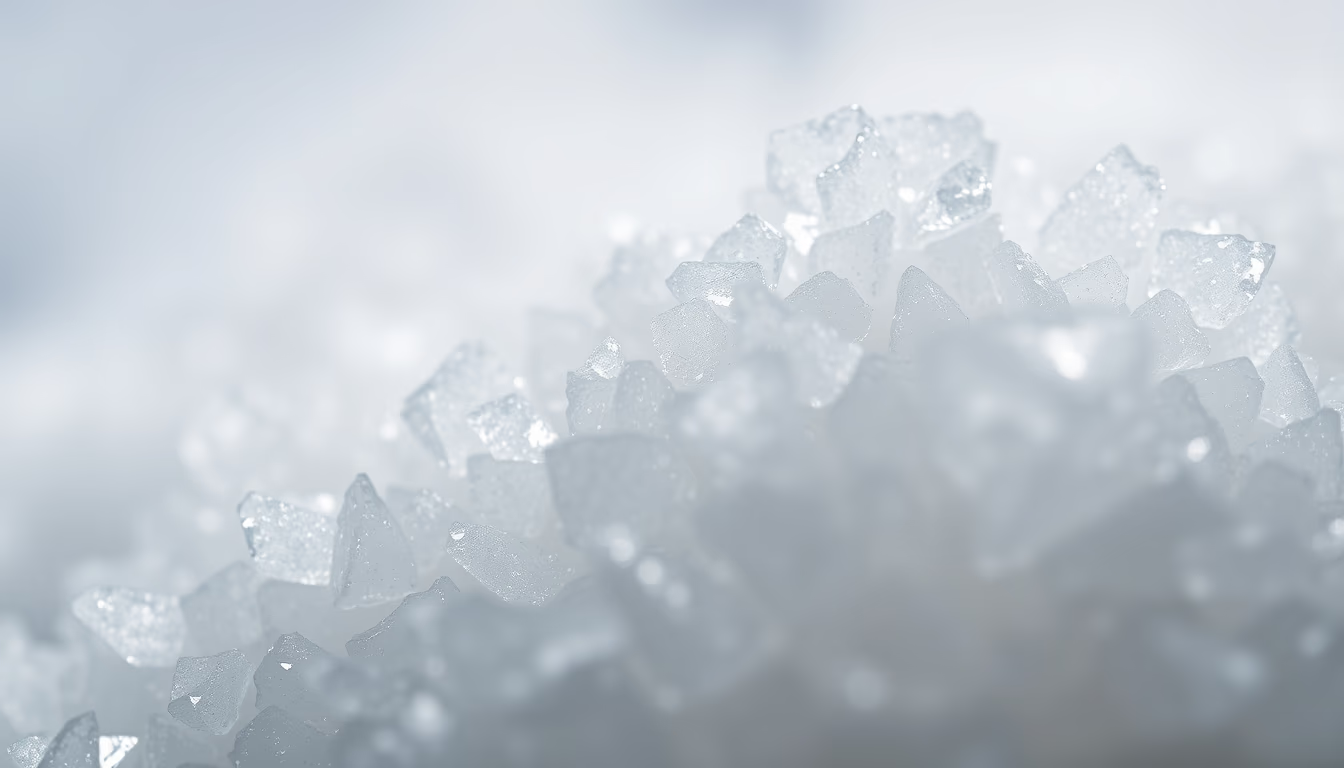
Cristais de sal em close revelam a geometria cúbica perfeita e a beleza oculta do cloreto de sódio, mineral essencial à vida.
Sobre o tema
O sal de cozinha, ou cloreto de sódio (NaCl), cristaliza-se no sistema cúbico, formando cubos perfeitos quando as condições são ideais. Em uma macrofotografia, esses cristais podem exibir arestas nítidas, superfícies translúcidas e inclusões microscópicas de impurezas que lhes conferem tons de branco, rosa ou cinza. A halita, nome mineralógico do sal, é um dos poucos minerais comestíveis e tem dureza 2,5 na escala de Mohs, sendo facilmente solúvel em água.
Os cristais de sal são formados pela evaporação da água salgada, processo que pode levar dias ou semanas em salinas naturais ou artificiais. Cada cristal cresce a partir de um núcleo, adicionando camadas iônicas em uma estrutura reticulada. A forma cúbica é resultado da disposição alternada de íons sódio e cloro, que se atraem eletrostaticamente. Impurezas como magnésio ou cálcio podem distorcer a forma, criando cristais irregulares ou agregados.
A macrofotografia de cristais de sal é popular entre artistas e cientistas por revelar detalhes invisíveis a olho nu. Técnicas como iluminação polarizada ou microscopia eletrônica de varredura podem realçar texturas e cores. O sal também é usado em culinária, conservação de alimentos e indústria química. A produção global de sal ultrapassa 300 milhões de toneladas por ano, com destaque para China, Estados Unidos e Índia.
Curiosamente, o sal já foi usado como moeda em várias civilizações, e a palavra "salário" deriva do latim "salarium", pagamento dado aos soldados romanos para comprar sal. A macrofotografia de cristais de sal não apenas documenta a beleza mineral, mas também convida à reflexão sobre a química e a história por trás de um condimento tão comum.
Perguntas frequentes
Por que os cristais de sal têm formato cúbico?
Os cristais de sal (halita) possuem formato cúbico devido à estrutura cristalina do cloreto de sódio, onde íons de sódio e cloro se organizam em uma rede cúbica de face centrada. Essa disposição iônica resulta em faces perpendiculares entre si, formando cubos.
O que causa as diferentes cores nos cristais de sal?
As cores nos cristais de sal são causadas por impurezas ou inclusões. Por exemplo, o sal rosa do Himalaia contém óxido de ferro, enquanto o sal cinza pode ter argila ou outros minerais. Cristais puros são incolores ou brancos.
Como os cristais de sal são usados na fotografia macro?
Na fotografia macro, os cristais de sal são iluminados com luz polarizada ou LED para destacar suas faces e inclusões. Técnicas como empilhamento de foco (focus stacking) permitem capturar toda a profundidade do cristal com nitidez.
URL direta
https://pub-c7d6a6ea828543ac903a74a341ccb2e1.r2.dev/imagens/salt-crystal-macro-fine-art-photography.avifComo creditar
Inclua um link visível de volta pro UtilizAí. Copie um dos snippets abaixo:
<a href="https://xn--utiliza-eza.com/midia/imagens/salt-crystal-macro-fine-art-photography">Salt crystal macro</a> by <a href="https://xn--utiliza-eza.com">UtilizAí</a>, licensed under <a href="https://creativecommons.org/licenses/by/4.0/">CC BY 4.0</a>.
[Salt crystal macro](https://xn--utiliza-eza.com/midia/imagens/salt-crystal-macro-fine-art-photography) by [UtilizAí](https://xn--utiliza-eza.com), CC BY 4.0
Licença: CC-BY-4.0