Rose petals macro red
1344×768 · AVIF · CC BY 4.0
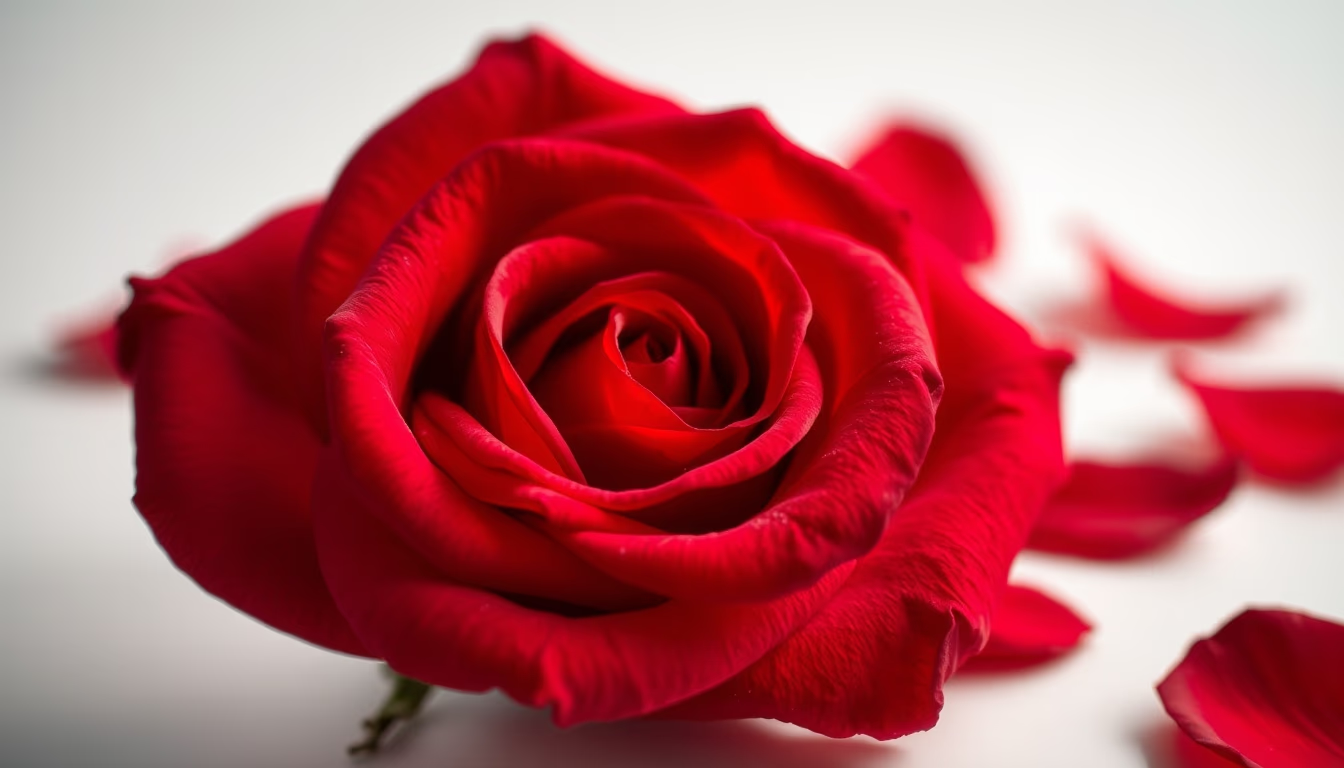
Pétalas vermelhas de rosa em macro revelam texturas aveludadas e nuances sutis de cor, capturadas em estúdio.
Sobre o tema
As pétalas vermelhas de rosa são um dos símbolos mais universais de amor e paixão, mas sua beleza vai muito além do significado romântico. Em um close extremo, é possível observar a complexidade da superfície: cada pétala é composta por células epidérmicas alongadas que refletem a luz de forma irregular, criando um efeito aveludado característico. Essa textura, chamada de 'ornamentação cuticular', também ajuda a proteger a flor da desidratação e de danos causados por insetos.
A coloração vermelha intensa vem de pigmentos chamados antocianinas, que variam em concentração conforme a variedade da rosa e as condições de cultivo. Rosas vermelhas mais escuras, como a 'Black Baccara', possuem maior teor desses pigmentos, enquanto tons mais claros indicam menor concentração. Curiosamente, a percepção humana do vermelho nas pétalas é influenciada pela textura: a superfície aveludada absorve parte da luz, tornando o tom mais profundo e rico.
Na natureza, as pétalas não servem apenas para atrair polinizadores. Sua disposição em espiral ao redor do centro da flor segue a sequência de Fibonacci, um padrão matemático que maximiza a exposição ao sol e a eficiência na distribuição de recursos. Além disso, as pétalas vermelhas são particularmente eficientes em refletir luz ultravioleta, visível para abelhas e outros insetos polinizadores, que enxergam nessa faixa do espectro.
Em estúdio, a fotografia macro de pétalas vermelhas exige controle preciso da iluminação para evitar reflexos indesejados e realçar a textura. Geralmente, usa-se luz difusa e ângulos rasantes para destacar as ondulações e veias das pétalas. O resultado é uma imagem que transforma um elemento comum em uma paisagem abstrata, convidando o observador a explorar detalhes que passam despercebidos no dia a dia.
Perguntas frequentes
Por que as pétalas de rosa têm textura aveludada?
A textura aveludada é causada por células epidérmicas alongadas chamadas papilas, que refletem a luz de forma difusa. Essa estrutura também ajuda a proteger a flor contra ressecamento e ataques de insetos.
O que dá a cor vermelha às pétalas de rosa?
A cor vermelha vem de pigmentos chamados antocianinas, que variam em concentração. Quanto maior a concentração, mais escuro o vermelho. A textura aveludada também intensifica a percepção da cor.
As pétalas de rosa seguem algum padrão matemático?
Sim, as pétalas geralmente se dispõem em espiral seguindo a sequência de Fibonacci, otimizando a exposição solar e a eficiência no uso de recursos.
URL direta
https://pub-c7d6a6ea828543ac903a74a341ccb2e1.r2.dev/imagens/rose-petals-macro-red-studio-editorial-portrait.avifComo creditar
Inclua um link visível de volta pro UtilizAí. Copie um dos snippets abaixo:
<a href="https://xn--utiliza-eza.com/midia/imagens/rose-petals-macro-red-studio-editorial-portrait">Rose petals macro red</a> by <a href="https://xn--utiliza-eza.com">UtilizAí</a>, licensed under <a href="https://creativecommons.org/licenses/by/4.0/">CC BY 4.0</a>.
[Rose petals macro red](https://xn--utiliza-eza.com/midia/imagens/rose-petals-macro-red-studio-editorial-portrait) by [UtilizAí](https://xn--utiliza-eza.com), CC BY 4.0
Licença: CC-BY-4.0