Parrot colorful feathers
1344×768 · AVIF · CC BY 4.0
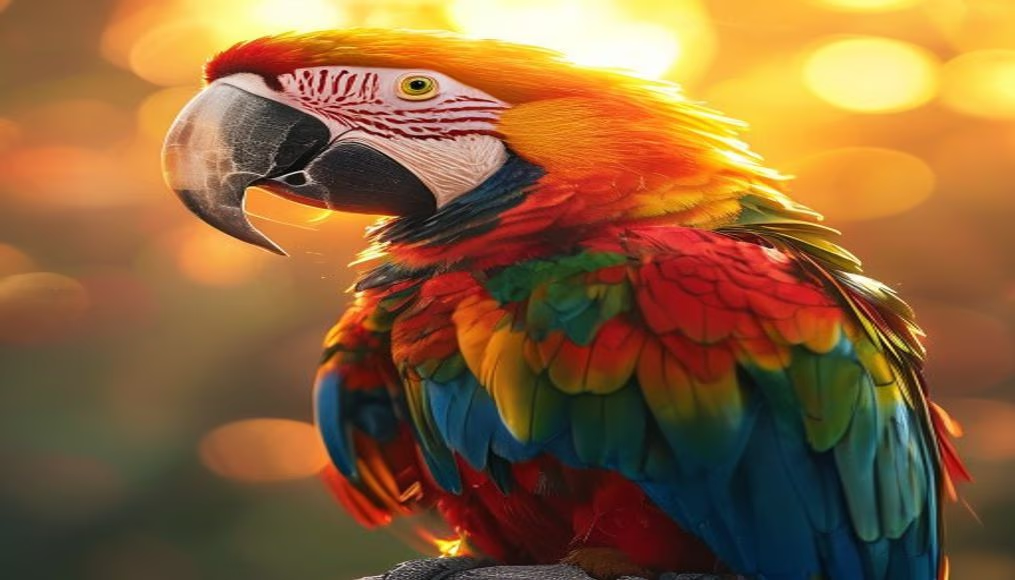
The colorful feathers of parrots are a fascinating natural phenomenon, resulting from pigments and microscopic structures that create vibrant hues.
About this subject
Parrots are globally renowned for their vibrant plumage, displaying a palette from intense green to vivid red, electric blue, and bright yellow. These colors are not merely aesthetic: they play vital roles in communication, camouflage, and sexual selection. Unlike many birds, parrots produce a unique pigment called psittacofulvin, responsible for red and yellow hues. Additionally, blue and green colors result from microscopic structures in the feathers that refract light, a phenomenon known as structural coloration.
These birds are primarily found in tropical and subtropical regions, such as the Amazon Rainforest, Sub-Saharan Africa, Southeast Asia, and Australia. The lush environment provides fruits, seeds, and nectar, their main diet. The striking colors of parrots aid in species identification and mate recognition. Species like the hyacinth macaw and the true parrot are icons of Brazilian biodiversity, but many are threatened by habitat loss and the wildlife trade.
In human culture, parrots are symbols of intelligence and beauty, often depicted in indigenous mythologies as messengers or guardians. In Brazil, the true parrot is known for mimicking human speech, making it a popular pet. However, illegal capture drastically reduces wild populations. Conservation programs, such as captive breeding and habitat restoration, have shown success, but awareness is still crucial.
Interestingly, not all parrots are colorful: some species, like the kakapo of New Zealand, have discreet olive-green plumage, adapted to nocturnal and ground-dwelling life. The diversity of parrot colors continues to intrigue scientists, who study how these colors evolved and how they can aid conservation.
Frequently Asked Questions
Why do parrots have such colorful feathers?
Vibrant colors help with communication, mate attraction, and camouflage in tropical environments. Pigments like psittacofulvin and structural coloration create the vivid hues.
How do parrots produce these colors?
They produce unique pigments called psittacofulvins for red and yellow. Blue and green colors are generated by nanostructures in the feathers that scatter light, without true blue pigment.
Are all parrots colorful?
No. Most are colorful, but species like the kakapo (New Zealand) have olive-green and brown plumage, adapted to nocturnal and ground-dwelling life. Coloration depends on environment and behavior.
Direct URL
https://pub-c7d6a6ea828543ac903a74a341ccb2e1.r2.dev/imagens/parrot-colorful-feathers-travel-photography-v10.avifHow to credit
Include a visible link back to UtilizAí. Copy one of the snippets below:
<a href="https://xn--utiliza-eza.com/en/midia/imagens/parrot-colorful-feathers-travel-photography-v10">Parrot colorful feathers</a> by <a href="https://xn--utiliza-eza.com">UtilizAí</a>, licensed under <a href="https://creativecommons.org/licenses/by/4.0/">CC BY 4.0</a>.
[Parrot colorful feathers](https://xn--utiliza-eza.com/en/midia/imagens/parrot-colorful-feathers-travel-photography-v10) by [UtilizAí](https://xn--utiliza-eza.com), CC BY 4.0
License: CC-BY-4.0