Roman silver denarius coin
1344×768 · AVIF · CC BY 4.0
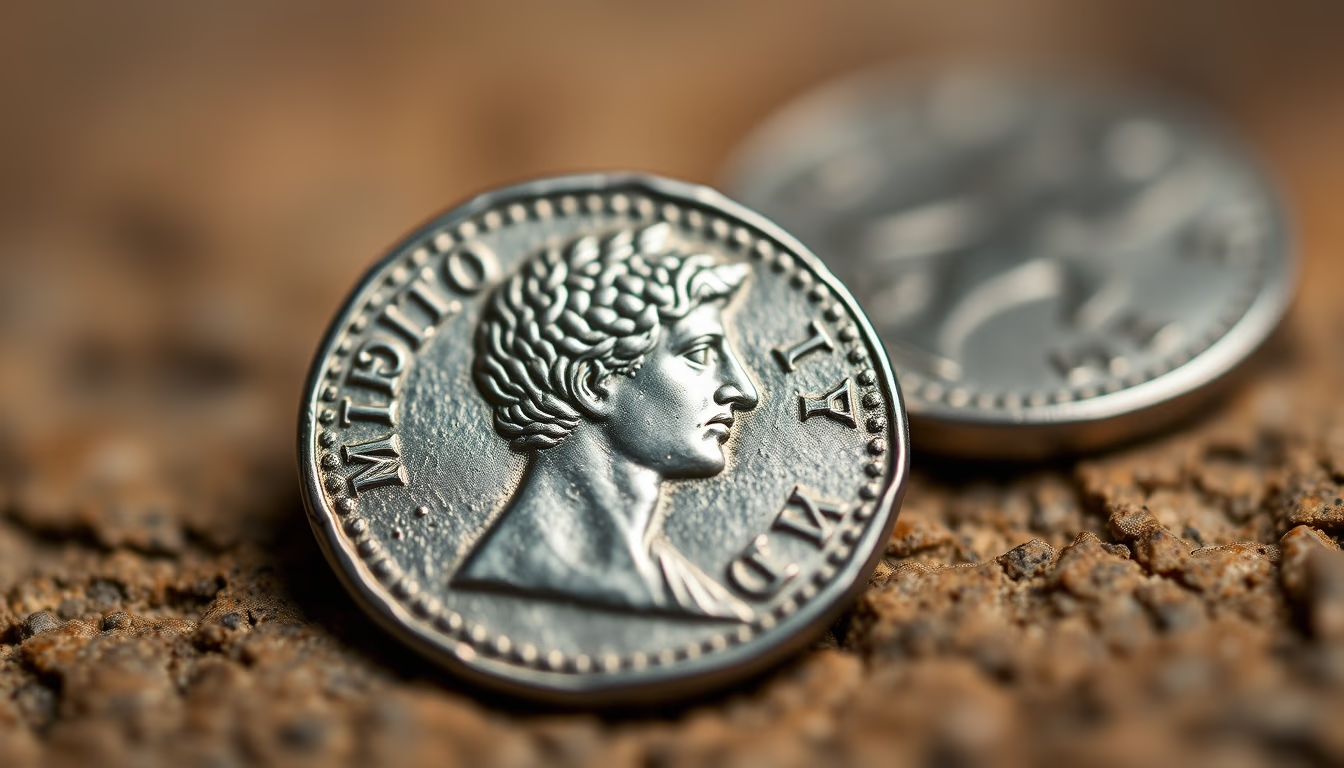
The Roman silver denarius was the standard coin of the Roman Empire for centuries, essential for trade and the ancient economy.
About this subject
The Roman silver denarius was the most common coin in ancient Rome, minted from approximately 211 BC until the 3rd century AD. It replaced the Greek drachma as the primary silver coin in the Mediterranean. The name 'denarius' comes from the Latin 'deni', meaning 'containing ten', as it was initially equivalent to ten bronze asses.
Under Augustus, the denarius weighed about 3.9 grams of nearly pure silver, but over time it suffered debasement, reducing its silver content. Emperors like Nero and Caracalla decreased purity to fund wars and projects, causing inflation. The denarius was widely used to pay soldiers (salary, from Latin 'salarium', related to salt, which was sometimes paid with denarii) and for daily transactions.
The coins often bore the profile of the ruling emperor on the obverse and deities, military symbols, or allegories on the reverse. For example, denarii of Julius Caesar featured his portrait, an innovation at the time since only gods had been depicted. This practice reinforced imperial propaganda and the leader's authority.
Collectors today value these denarii for their historical and artistic significance. Well-preserved coins with clear details and even patina can fetch high prices at auction. Discoveries of denarii hoards, like the Hoxne Hoard in England, provide valuable insights into the economy and circulation of coins in the empire.
Frequently Asked Questions
What was the value of a denarius in the Roman Empire?
A silver denarius was originally worth ten bronze asses. In the 1st century AD, a denarius was the typical daily wage for an unskilled worker or common soldier.
Why did denarii suffer debasement?
Emperors reduced the silver content of the denarius to mint more coins and fund military campaigns and public projects, causing inflation and loss of trust in the currency.
How to identify an authentic denarius?
Authentic denarii typically weigh between 3.5, 4.0 grams, have a diameter of 16, 20 mm, and show a granular surface or patina. The presence of letters, imperial portraits, and typical symbols (like the goddess Roma or eagles) aids identification.
Direct URL
https://pub-c7d6a6ea828543ac903a74a341ccb2e1.r2.dev/imagens/roman-silver-denarius-coin-tilt-shift-miniature-fresh18.avifHow to credit
Include a visible link back to UtilizAí. Copy one of the snippets below:
<a href="https://xn--utiliza-eza.com/en/midia/imagens/roman-silver-denarius-coin-tilt-shift-miniature-fresh18">Roman silver denarius coin</a> by <a href="https://xn--utiliza-eza.com">UtilizAí</a>, licensed under <a href="https://creativecommons.org/licenses/by/4.0/">CC BY 4.0</a>.
[Roman silver denarius coin](https://xn--utiliza-eza.com/en/midia/imagens/roman-silver-denarius-coin-tilt-shift-miniature-fresh18) by [UtilizAí](https://xn--utiliza-eza.com), CC BY 4.0
License: CC-BY-4.0