Roman silver denarius coin
1344×768 · AVIF · CC BY 4.0
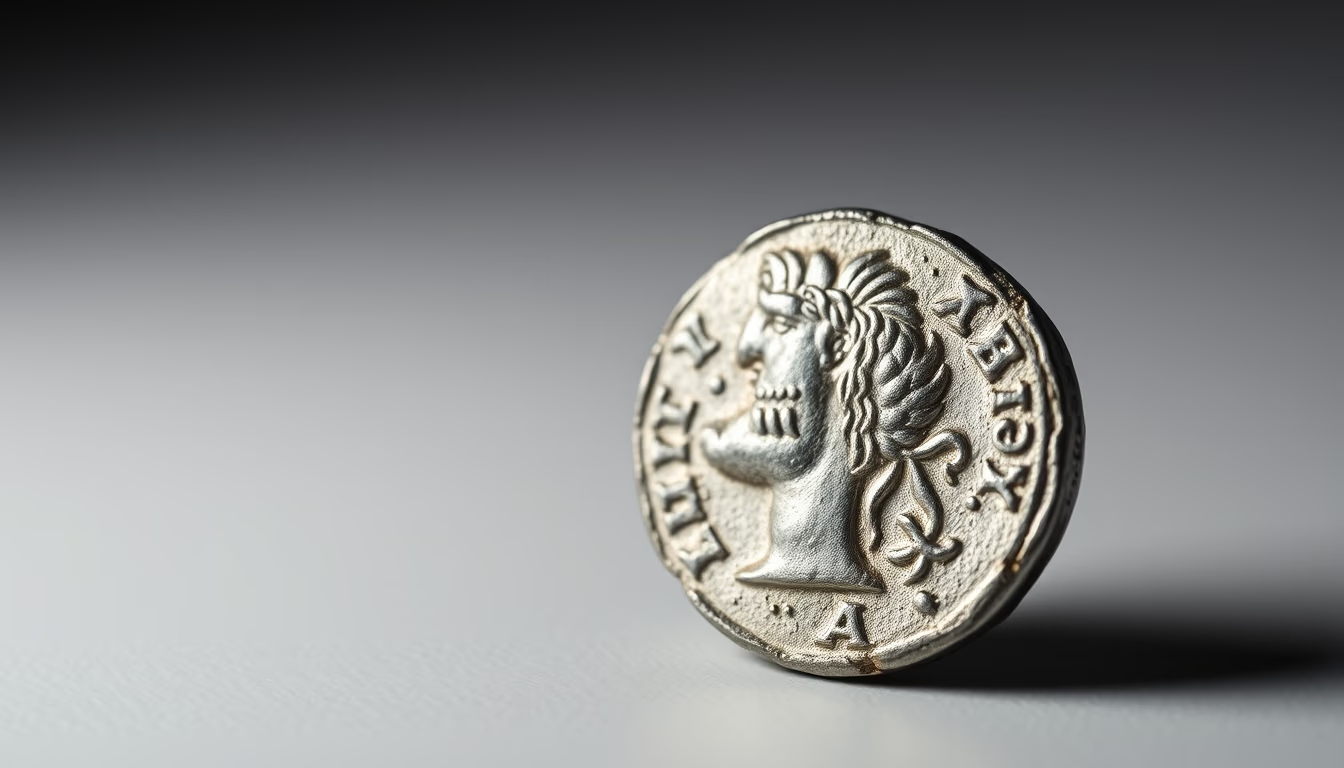
The Roman silver denarius was the most important coin of the Republic and Empire, minted from the 3rd century BC to the 3rd century AD, forming the backbone of the economy for over 400 years.
About this subject
The silver denarius was introduced around 211 BC during the Second Punic War to replace the bronze-as system and facilitate trade across the Mediterranean. Its name comes from Latin 'deni' meaning 'ten', as it was originally worth ten asses. Weighing about 4.5 grams of pure silver (later reduced to 3.9 grams), the denarius became the standard coin for soldiers, officials, and commerce.
Denarius minting reflected political propaganda: obverses featured emperors and Roman gods; reverses showed military scenes, allegories, or buildings. From Nero onward, silver purity declined, and during the 3rd-century crisis the denarius was gradually replaced by the antoninianus. Nonetheless, its legacy endures: the word 'money' in Romance languages derives from 'denarius'.
Collectors and historians prize denarii for the wealth of information they provide about ancient Rome. Well-preserved coins with portraits of emperors like Augustus, Trajan, or Marcus Aurelius are highly sought after. Authentication requires knowledge of metal alloys, wear patterns, and minting styles; spectrometry is often used. The denarius also inspired Brazilian colonial silver coinage, though with different weight and value.
Frequently Asked Questions
How can I identify an authentic denarius?
Check weight (about 3.5 to 4.5 g for most issues), silver content (usually over 80% until Nero), and strike details. Natural wear, patina, and a characteristic ring when tapped are clues. Professional authentication via X-ray fluorescence spectrometry (XRF) is recommended for collectors.
What is a denarius worth today?
Value depends on rarity, condition, and emperor. Common denarii in average condition range from $50 to $150; rare or well-preserved pieces (uncirculated) can exceed $5,000. Some exceptional examples sell for tens of thousands of dollars at auction.
Which emperors were most commonly depicted on denarii?
Augustus, Tiberius, Nero, Trajan, Antoninus Pius, and Marcus Aurelius are frequent. Coins of short-reigning emperors like Otho or Vitellius are particularly rare and valuable.
Direct URL
https://pub-c7d6a6ea828543ac903a74a341ccb2e1.r2.dev/imagens/roman-silver-denarius-coin-studio-still-life-fresh14.avifHow to credit
Include a visible link back to UtilizAí. Copy one of the snippets below:
<a href="https://xn--utiliza-eza.com/en/midia/imagens/roman-silver-denarius-coin-studio-still-life-fresh14">Roman silver denarius coin</a> by <a href="https://xn--utiliza-eza.com">UtilizAí</a>, licensed under <a href="https://creativecommons.org/licenses/by/4.0/">CC BY 4.0</a>.
[Roman silver denarius coin](https://xn--utiliza-eza.com/en/midia/imagens/roman-silver-denarius-coin-studio-still-life-fresh14) by [UtilizAí](https://xn--utiliza-eza.com), CC BY 4.0
License: CC-BY-4.0