Roman silver denarius coin
1344×768 · AVIF · CC BY 4.0
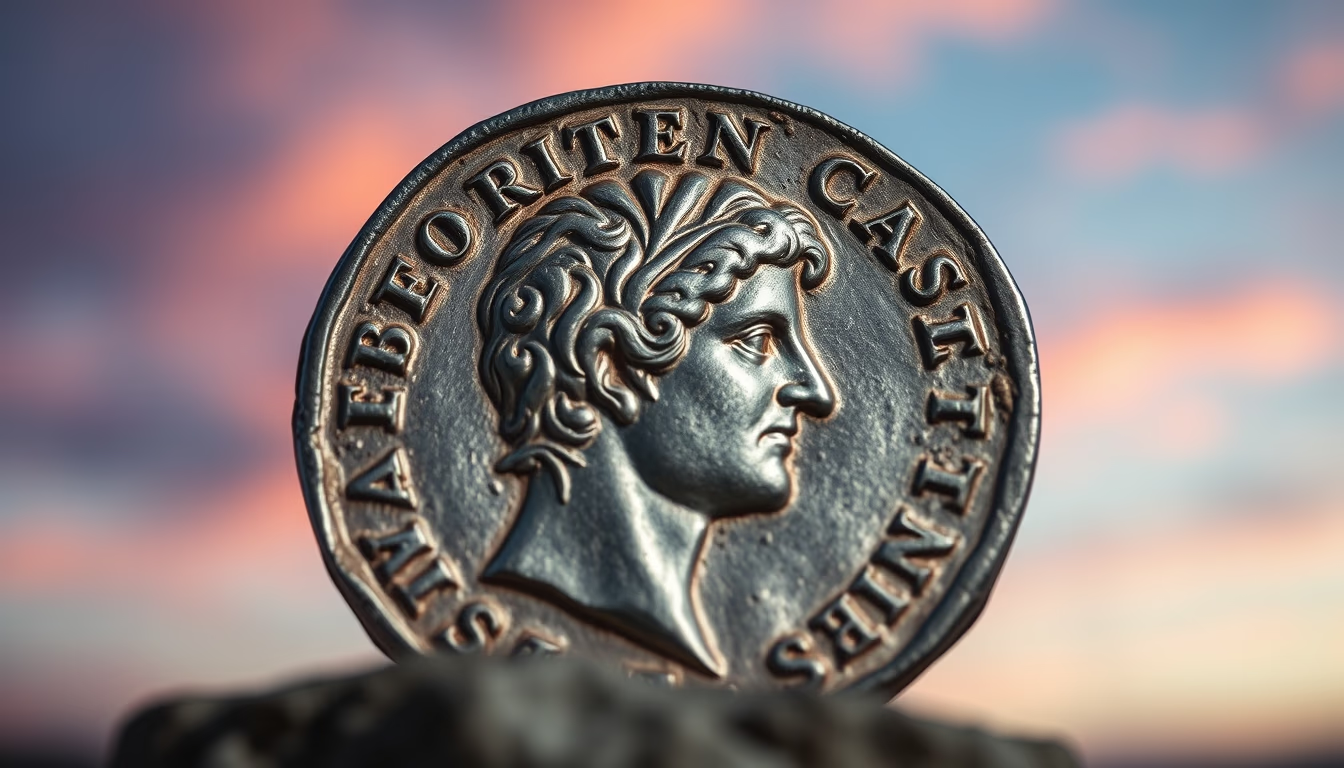
The Roman silver denarius was the standard coin of the Roman Empire for centuries, essential for trade and the ancient economy.
About this subject
The silver denarius was introduced around 211 BC during the Second Punic War and quickly became the principal Roman silver coin. Initially minted in Rome, the denarius weighed about 4.5 grams of nearly pure silver. Its name comes from Latin 'denarius', meaning 'containing ten', as it was originally worth ten 'asses', the bronze coins of the time.
Over the centuries, the denarius underwent progressive reductions in silver content and weight, especially from the reign of Nero (54-68 AD), when the silver content fell to about 90%. By the 3rd century AD, inflation and economic crises led to severe debasement, with the denarius containing less than 5% silver, eventually being replaced by the antoninianus. Nevertheless, the denarius remained a monetary standard and is today one of the most studied artifacts in Roman numismatics.
The denarius often bore on the obverse the portrait of the reigning emperor or imperial family members, with legends indicating titles and offices. The reverse featured allegorical scenes, deities, military victories, or legion references. For instance, Julius Caesar's denarius with Venus or Augustus' coin with a bull. These coins served as political propaganda and historical records.
Today, the denarius is highly prized by collectors and historians. Well-preserved coins, especially from emperors like Trajan, Hadrian, or Marcus Aurelius, fetch high prices at auctions. Studying denarii helps date archaeological sites and understand the Roman economy, including wages, food prices, and military expenditures.
Frequently Asked Questions
How much was a denarius worth in ancient Rome?
A denarius was the daily wage of a soldier or unskilled laborer in the early Empire. It could buy about 4 to 5 liters of wine or 1 kilogram of bread.
How can you identify an authentic denarius?
Authentic denarii have specific weight and diameter (about 3.5-4.5g and 18-20mm) and natural patina. The presence of striking marks and legible inscriptions are also indicators. Consulting a specialist or using numismatic catalogs is recommended.
Why was the denarius debased?
Debasement occurred due to economic crises, constant wars, and reduced silver supply. Emperors like Nero and Caracalla lowered silver content to fund military expenses and public works, leading to inflation.
Direct URL
https://pub-c7d6a6ea828543ac903a74a341ccb2e1.r2.dev/imagens/roman-silver-denarius-coin-long-exposure-fresh15.avifHow to credit
Include a visible link back to UtilizAí. Copy one of the snippets below:
<a href="https://xn--utiliza-eza.com/en/midia/imagens/roman-silver-denarius-coin-long-exposure-fresh15">Roman silver denarius coin</a> by <a href="https://xn--utiliza-eza.com">UtilizAí</a>, licensed under <a href="https://creativecommons.org/licenses/by/4.0/">CC BY 4.0</a>.
[Roman silver denarius coin](https://xn--utiliza-eza.com/en/midia/imagens/roman-silver-denarius-coin-long-exposure-fresh15) by [UtilizAí](https://xn--utiliza-eza.com), CC BY 4.0
License: CC-BY-4.0