Roman silver denarius coin
1344×768 · AVIF · CC BY 4.0
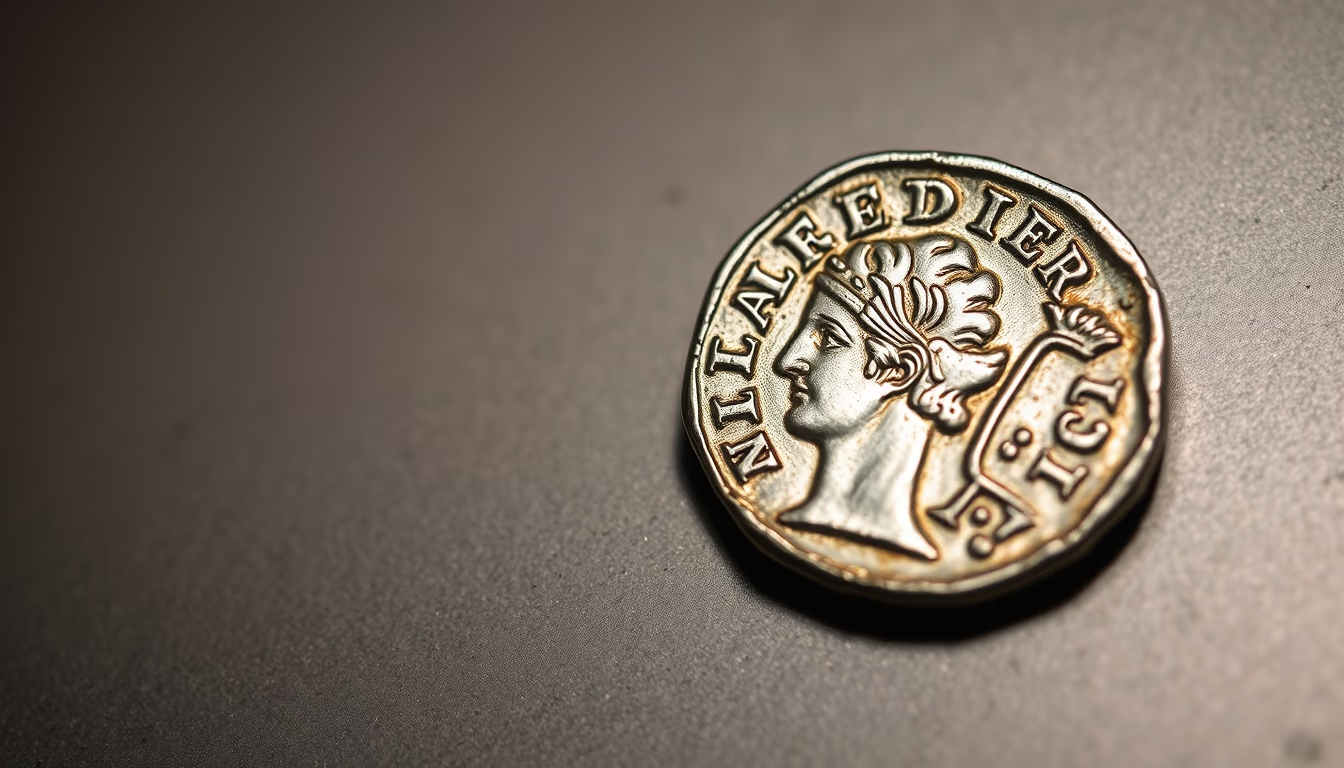
The Roman silver denarius was the most important coin of the Roman Empire for centuries, ensuring trade and army payments.
About this subject
The silver denarius was introduced around 211 BC during the Second Punic War as part of a monetary reform to fund the war effort against Carthage. Initially it weighed about 4.5 grams of nearly pure silver, with a fineness above 95%. This coin quickly became the backbone of the Roman monetary system, replacing the earlier bronze standard and enabling higher-value transactions.
Over the centuries, the denarius underwent gradual debasement. In the early Empire under Augustus, it still maintained high purity, but from the 2nd century AD onward, emperors began reducing the silver content to finance wars and public works. In the 3rd century, the economic crisis led to a drastic drop: the denarius eventually contained less than 5% silver and was replaced by the antoninianus. This debasement contributed to inflation and the collapse of the imperial monetary system.
The denarius iconography is a rich historical record. The obverse typically featured the profile of the reigning emperor, along with titles and propaganda legends. The reverse displayed deities, personifications, or military scenes. Notable examples include the denarius of Julius Caesar, one of the first to depict a living Roman, and the denarius of Augustus, celebrating his victories. These coins circulated throughout the Empire, from Britain to Egypt, serving as a standard medium of exchange for centuries.
Frequently Asked Questions
How much was a denarius worth in ancient Rome?
In the 1st century AD, one denarius was equivalent to a day's wages for an unskilled laborer. About 10 to 15 denarii could buy a modius (around 6.5 kg) of wheat.
Why did the denarius lose value over time?
Emperors reduced the silver content in the coin to cover expenses, causing inflation. By the 3rd century, the silver content dropped to less than 5%, leading to a loss of public confidence in the currency.
Which emperors appear on the most famous denarii?
Julius Caesar, Augustus, Nero, and Trajan are among the emperors who issued widely circulated denarii. Caesar's denarius with his portrait was a milestone because it depicted a living ruler, which previously was reserved for gods.
Direct URL
https://pub-c7d6a6ea828543ac903a74a341ccb2e1.r2.dev/imagens/roman-silver-denarius-coin-lo-fi-disposable-camera-fresh13.avifHow to credit
Include a visible link back to UtilizAí. Copy one of the snippets below:
<a href="https://xn--utiliza-eza.com/en/midia/imagens/roman-silver-denarius-coin-lo-fi-disposable-camera-fresh13">Roman silver denarius coin</a> by <a href="https://xn--utiliza-eza.com">UtilizAí</a>, licensed under <a href="https://creativecommons.org/licenses/by/4.0/">CC BY 4.0</a>.
[Roman silver denarius coin](https://xn--utiliza-eza.com/en/midia/imagens/roman-silver-denarius-coin-lo-fi-disposable-camera-fresh13) by [UtilizAí](https://xn--utiliza-eza.com), CC BY 4.0
License: CC-BY-4.0