Roastery beans cooling
1344×768 · AVIF · CC BY 4.0
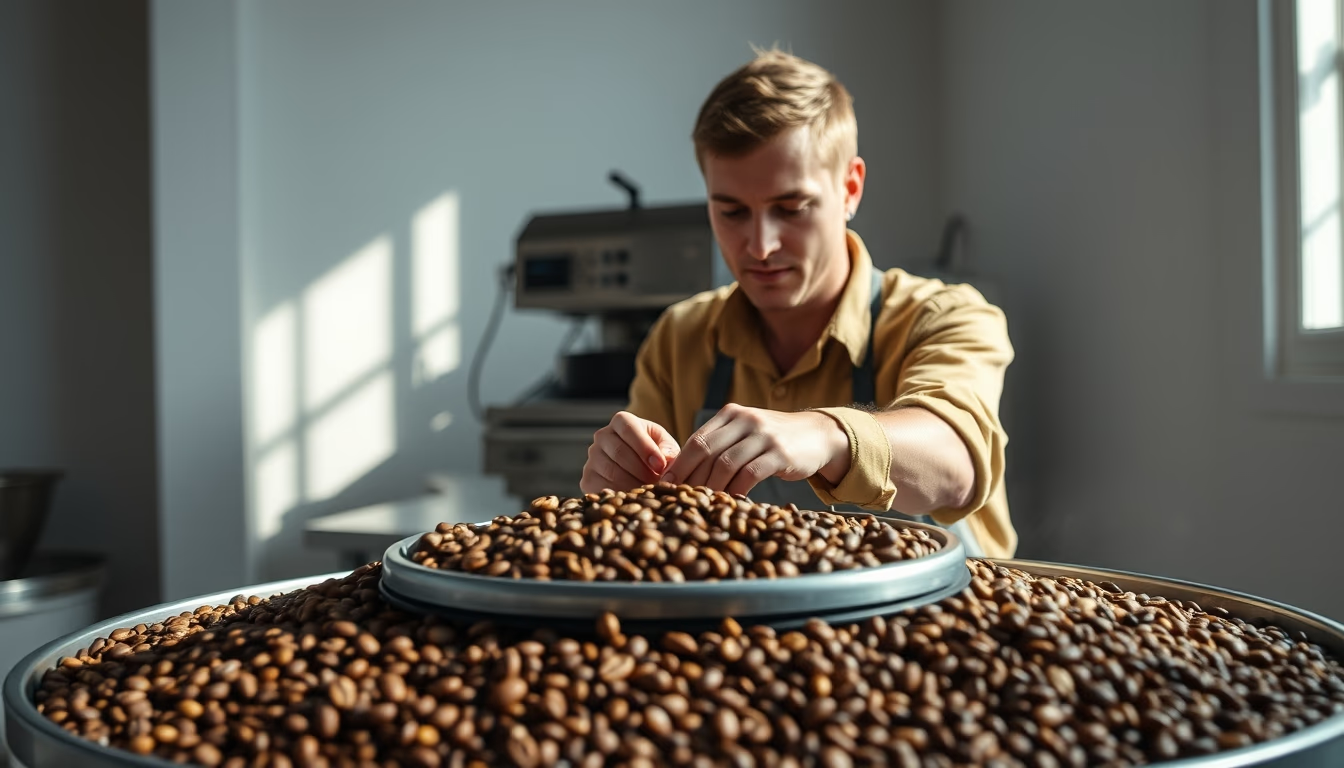
Freshly roasted coffee beans undergoing cooling: an essential step to lock in flavor and aroma, a critical phase between roasting and packaging that defines final bean quality.
About this subject
Cooling coffee beans immediately after roasting is a critical step that stops the internal cooking process and sets the final flavor profile. Beans exiting the roaster at temperatures between 190°C and 230°C must be brought to room temperature within 4 to 6 minutes to prevent overdevelopment. Industrial roasters use vibrating tables or perforated drums with forced air, while artisanal roasters rely on metal trays and manual stirring. Failure to cool quickly can lead to baked or smoky flavors, a common defect in poorly processed coffees.
Beyond halting the roast, cooling facilitates the release of carbon dioxide trapped inside the beans, a process called degassing. It also preserves volatile aromatic compounds and essential oils. Specialty roasters monitor temperature curves with probes and adjust airflow to ensure batch-to-batch consistency. Without proper cooling, even high-quality green beans can result in a mediocre cup. The rate of cooling also affects grindability: slow cooling makes beans more brittle, producing excessive fines during grinding, while rapid cooling can cause thermal shock and cracking.
Interestingly, the cooling method influences the final taste. Some roasters advocate for slow, natural air cooling to develop sweeter, more complex notes, while others favor rapid forced-air systems for clarity and brightness. Modern equipment combines air and a fine water mist to accelerate cooling without wetting the beans, a technique borrowed from food processing. Yet many craft roasters prefer traditional methods, valuing the hands-on control they provide. This diversity underscores that cooling is not merely a mechanical step but an integral part of the roaster's craft.
In specialty coffee, the cooling phase is often monitored alongside the roast curve. Roasters look for visual cues such as bean shine and color uniformity. The development of cooling technology has paralleled the growth of the specialty coffee industry, with innovations aimed at preserving bean integrity. However, the debate between fast and slow cooling continues, reflecting the complexity of translating roast profiles into exceptional cups. Ultimately, mastering cooling is as important as mastering the roast itself.
Frequently Asked Questions
How long does it take to cool coffee beans after roasting?
Ideally, beans should reach room temperature within 4 to 6 minutes. Longer times can lead to overdevelopment and undesirable flavors like baked or smoky notes.
What happens if coffee beans are not cooled quickly enough?
The roast continues internally, resulting in overdeveloped beans with flavors of burnt toast, smoke, or ash. The bean structure also becomes more brittle, affecting grind consistency and extraction.
Does cooling affect the caffeine content of coffee?
Not directly. Caffeine is stable during cooling. However, cooling speed can influence aroma retention and grindability, which affect flavor perception but not caffeine levels.
Direct URL
https://pub-c7d6a6ea828543ac903a74a341ccb2e1.r2.dev/imagens/roastery-beans-cooling-minimalist-composition-p0.avifHow to credit
Include a visible link back to UtilizAí. Copy one of the snippets below:
<a href="https://xn--utiliza-eza.com/en/midia/imagens/roastery-beans-cooling-minimalist-composition-p0">Roastery beans cooling</a> by <a href="https://xn--utiliza-eza.com">UtilizAí</a>, licensed under <a href="https://creativecommons.org/licenses/by/4.0/">CC BY 4.0</a>.
[Roastery beans cooling](https://xn--utiliza-eza.com/en/midia/imagens/roastery-beans-cooling-minimalist-composition-p0) by [UtilizAí](https://xn--utiliza-eza.com), CC BY 4.0
License: CC-BY-4.0