Ribosome detail render
1344×768 · AVIF · CC BY 4.0
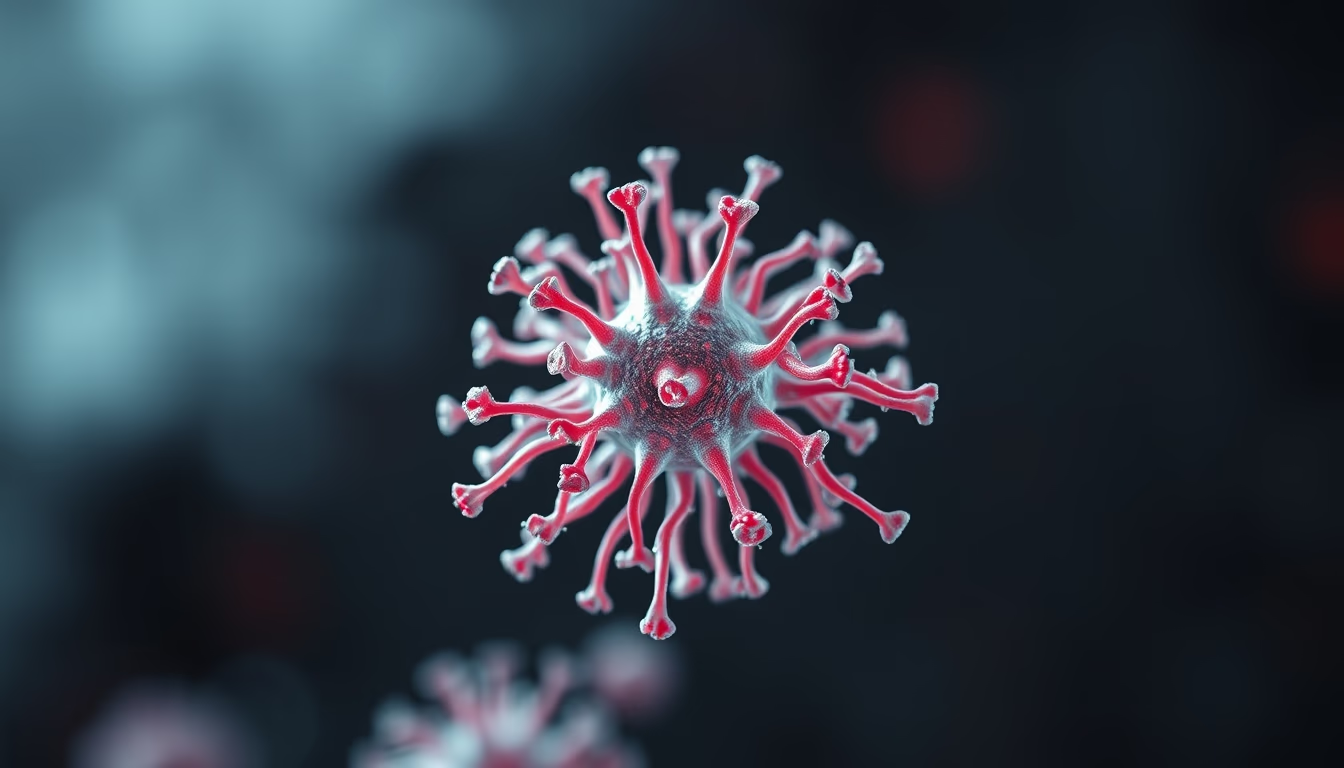
Ribosomes are molecular complexes responsible for protein synthesis, a process essential for life.
About this subject
Ribosomes are fundamental cellular structures found in all living cells, acting as the machinery for protein production. Composed of ribosomal RNA (rRNA) and proteins, they consist of two subunits: a large and a small one. During translation, these subunits assemble around messenger RNA (mRNA) and, with the help of transfer RNA (tRNA), link amino acids into polypeptide chains, forming proteins. This process occurs in the cytoplasm of prokaryotic and eukaryotic cells, with ribosomes also attached to the rough endoplasmic reticulum in eukaryotes.
The discovery of ribosomes dates back to the mid-20th century, through electron microscopy and ultracentrifugation studies. In 1974, Albert Claude, Christian de Duve, and George Palade received the Nobel Prize in Physiology or Medicine for their discoveries concerning the structural and functional organization of the cell, including the role of ribosomes. Later, knowledge advanced with the elucidation of the three-dimensional structure of ribosomes via X-ray crystallography, which earned the Nobel Prize in Chemistry in 2009 to Venkatraman Ramakrishnan, Thomas Steitz, and Ada Yonath.
Ribosomes are important targets for antibiotics, such as tetracycline and erythromycin, which inhibit bacterial protein synthesis. A detailed understanding of their structure and function is crucial for drug development. Additionally, synthetic biology has explored the engineering of ribosomes to produce artificial or modified proteins, opening possibilities in biotechnology and medicine. A typical bacterial cell contains about 10,000 to 100,000 ribosomes, while a eukaryotic cell may have millions, reflecting the high demand for protein synthesis.
Frequently Asked Questions
What is the main function of the ribosome?
The main function of the ribosome is to synthesize proteins based on genetic instructions from messenger RNA (mRNA), in a process called translation.
Are ribosomes found in human cells?
Yes, all human cells contain ribosomes, both in the cytoplasm and attached to the rough endoplasmic reticulum, for protein production.
Why are ribosomes targets for antibiotics?
Many antibiotics, such as tetracycline, selectively inhibit bacterial protein synthesis by binding to their ribosomes, without severely affecting human ribosomes, thus fighting bacterial infections.
Direct URL
https://pub-c7d6a6ea828543ac903a74a341ccb2e1.r2.dev/imagens/ribosome-detail-render-minimalist-composition-p3.avifHow to credit
Include a visible link back to UtilizAí. Copy one of the snippets below:
<a href="https://xn--utiliza-eza.com/en/midia/imagens/ribosome-detail-render-minimalist-composition-p3">Ribosome detail render</a> by <a href="https://xn--utiliza-eza.com">UtilizAí</a>, licensed under <a href="https://creativecommons.org/licenses/by/4.0/">CC BY 4.0</a>.
[Ribosome detail render](https://xn--utiliza-eza.com/en/midia/imagens/ribosome-detail-render-minimalist-composition-p3) by [UtilizAí](https://xn--utiliza-eza.com), CC BY 4.0
License: CC-BY-4.0