Rapier renaissance fencing
1344×768 · AVIF · CC BY 4.0
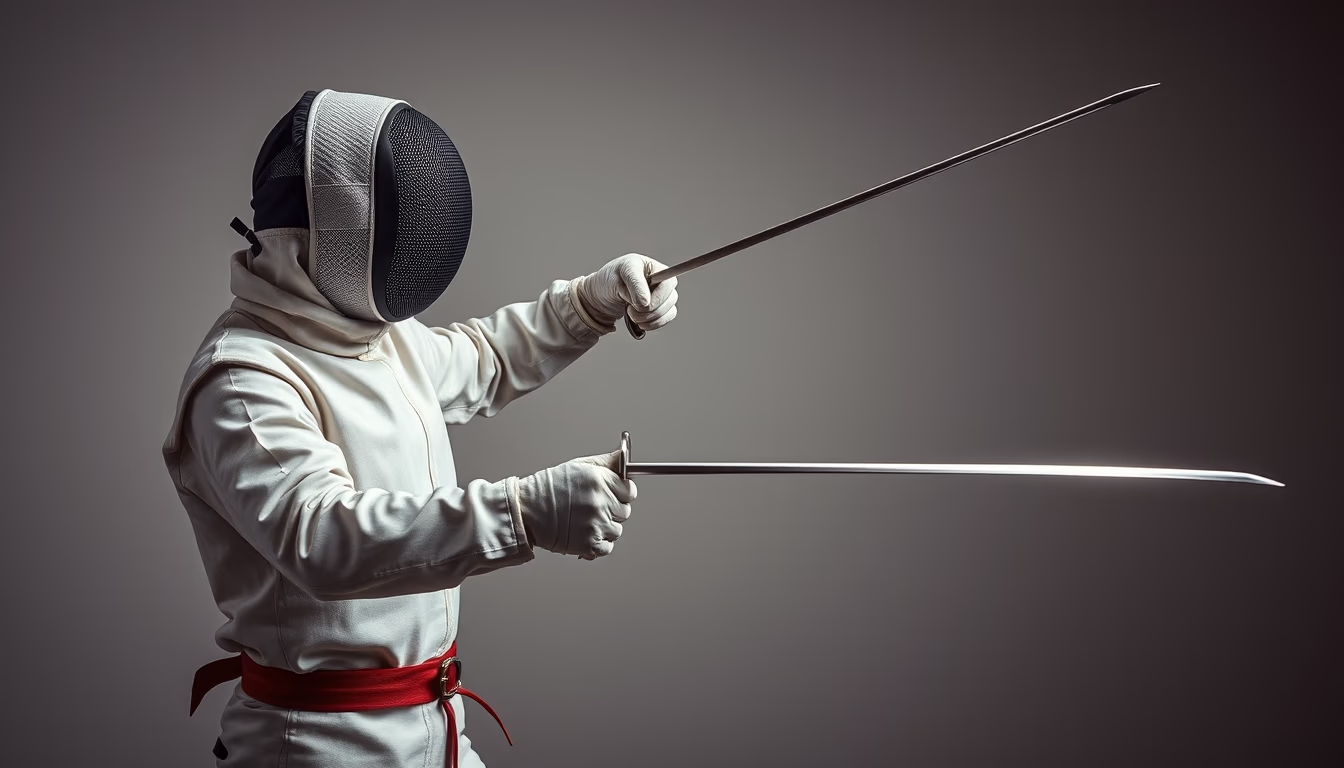
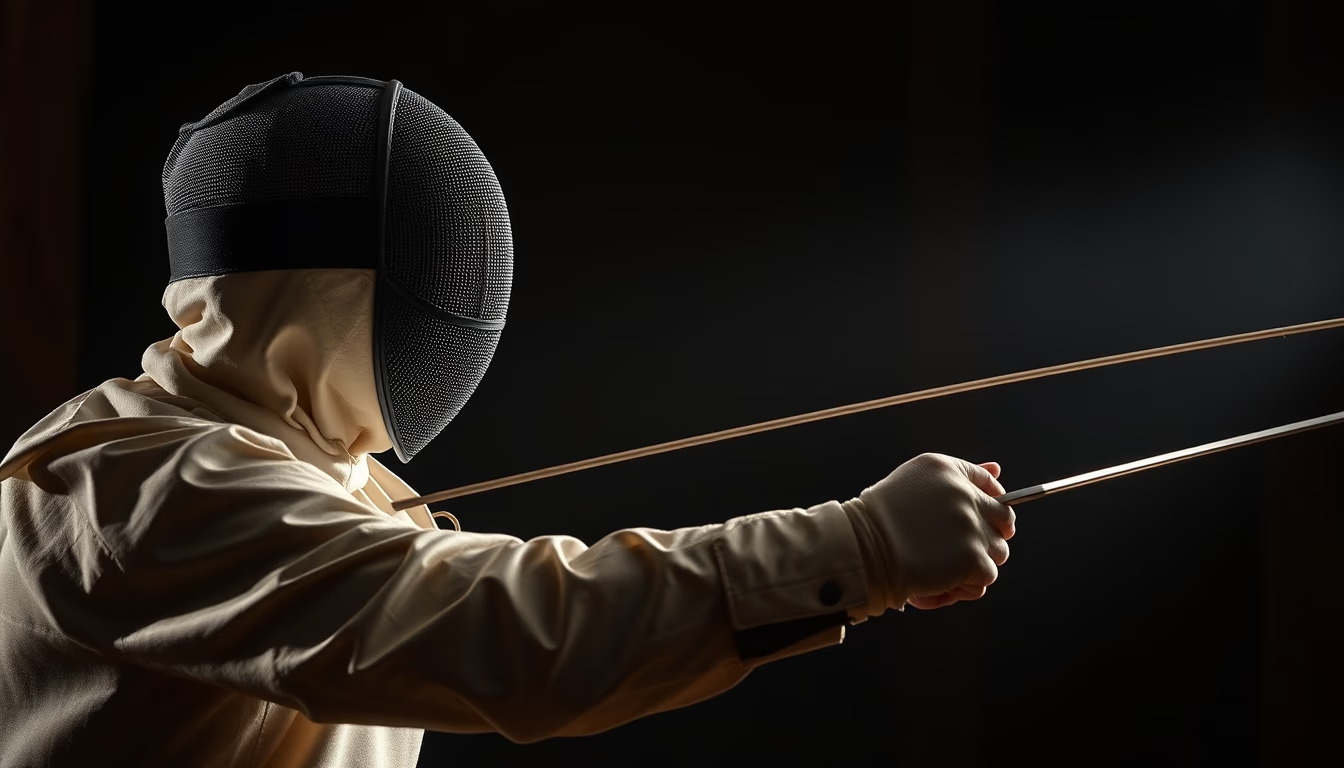
Rapier fencing during the Renaissance blended refined technique and honor duels, marking the transition from medieval swords to the modern foil.
About this subject
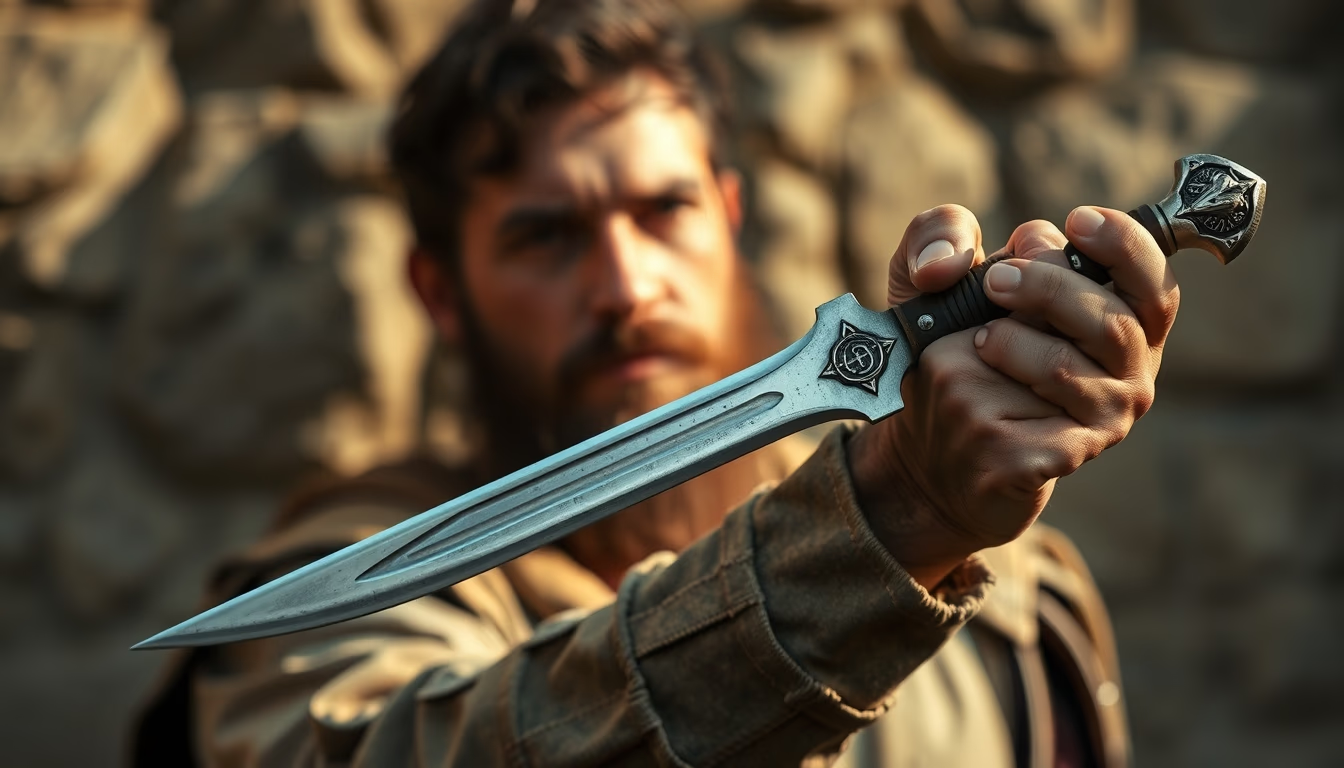
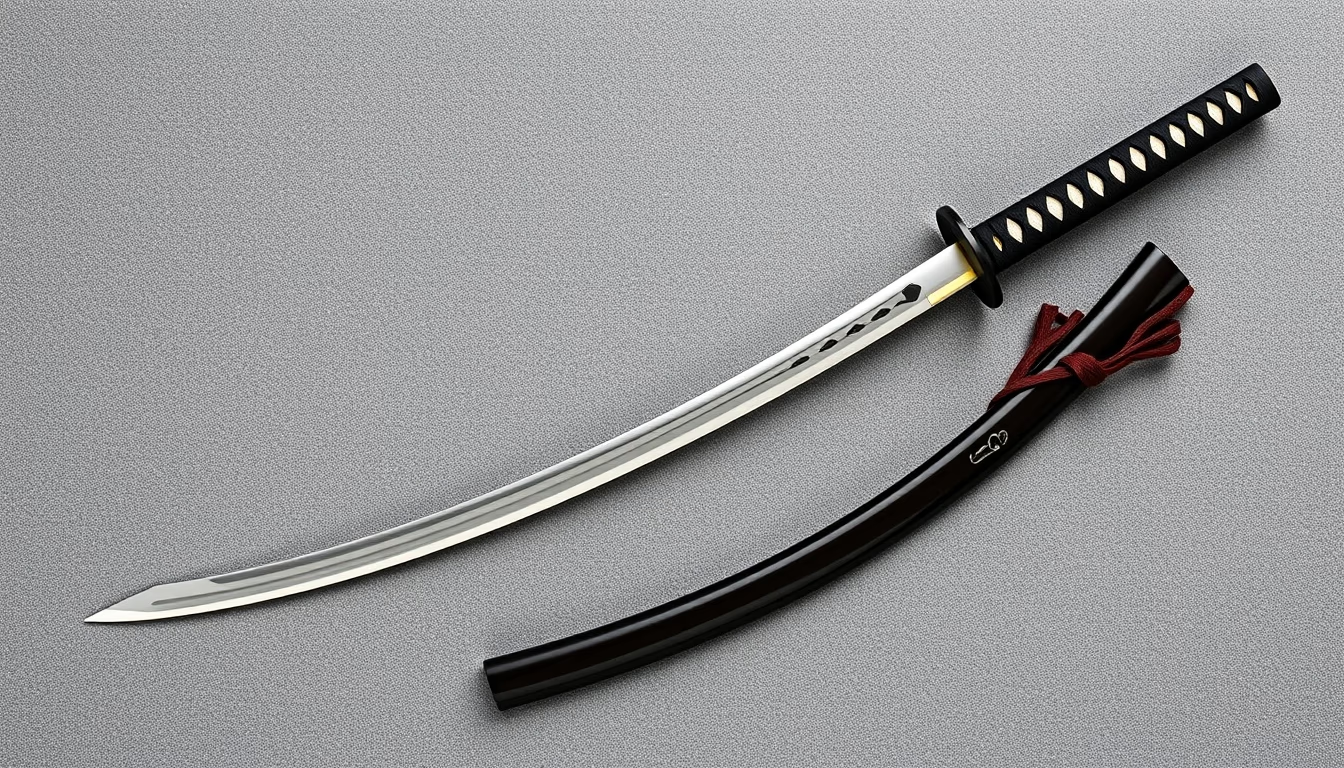
The rapier, a long, narrow-bladed sword, emerged in the late 15th century and became the quintessential civilian weapon of the European Renaissance, especially in Italy and Spain. Unlike heavy medieval swords, the rapier was light and agile, designed for precise thrusts rather than wide slashes. This reflected a change in combat style: plate armor was declining, and duels among nobles required speed and technique.
Italian fencing schools, such as those of Fiore dei Liberi in the 14th century and later Achille Marozzo in the 16th century, systematized rapier use. Manuals like Angelo Viggiani's "Opera Nova" (1575) detailed guards, footwork, and counterattacks. The rapier was usually wielded in the right hand, while the left held a dagger (main gauche) or a cloak for defense. The upright posture and linear advance contrasted with the more brutish medieval combat.
Culturally, the rapier symbolized status and education. Elite men learned fencing as part of their upbringing; owning a rapier indicated nobility or wealth. Honor duels were common, governed by codes of conduct that minimized unnecessary deaths. The transition to the foil in the 17th century occurred as the rapier became lighter and fencing evolved into a sport, with safety rules and a target area restricted to the torso.
Trivia: The term "rapier" derives from the Spanish "espada ropera," meaning "sword of clothing," as it was worn as a fashion accessory. Many specimens had elaborate guards (like the cup hilt or swept hilt) that protected the hand. Today, the Renaissance rapier is recreated by historical reenactment groups and appears in swashbuckling films, but its greatest legacy is as the foundation of modern Olympic fencing.
Frequently Asked Questions
What is the difference between a rapier and a medieval longsword?
The rapier is lighter, with a thinner blade sharpened only at the tip, focusing on thrusts. The medieval longsword was heavier, used for cuts and blows, and often wielded with both hands.
Why was the rapier so popular among Renaissance nobles?
It was a personal defense weapon and a status symbol. Lightweight and elegant, it could be worn as a fashion accessory, and it was essential for honor duels, a common practice among the nobility.
What are the main rapier fencing techniques described in historical manuals?
Manuals taught guards such as prima, seconda, and terza, along with footwork (passes) and counterattacks. Emphasis was on precise thrusts and using the left hand for defense with a dagger or cloak.
Direct URL
https://pub-c7d6a6ea828543ac903a74a341ccb2e1.r2.dev/imagens/rapier-renaissance-fencing-studio-still-life-fresh12.avifHow to credit
Include a visible link back to UtilizAí. Copy one of the snippets below:
<a href="https://xn--utiliza-eza.com/en/midia/imagens/rapier-renaissance-fencing-studio-still-life-fresh12">Rapier renaissance fencing</a> by <a href="https://xn--utiliza-eza.com">UtilizAí</a>, licensed under <a href="https://creativecommons.org/licenses/by/4.0/">CC BY 4.0</a>.
[Rapier renaissance fencing](https://xn--utiliza-eza.com/en/midia/imagens/rapier-renaissance-fencing-studio-still-life-fresh12) by [UtilizAí](https://xn--utiliza-eza.com), CC BY 4.0
License: CC-BY-4.0