Falchion medieval curved
1344×768 · AVIF · CC BY 4.0
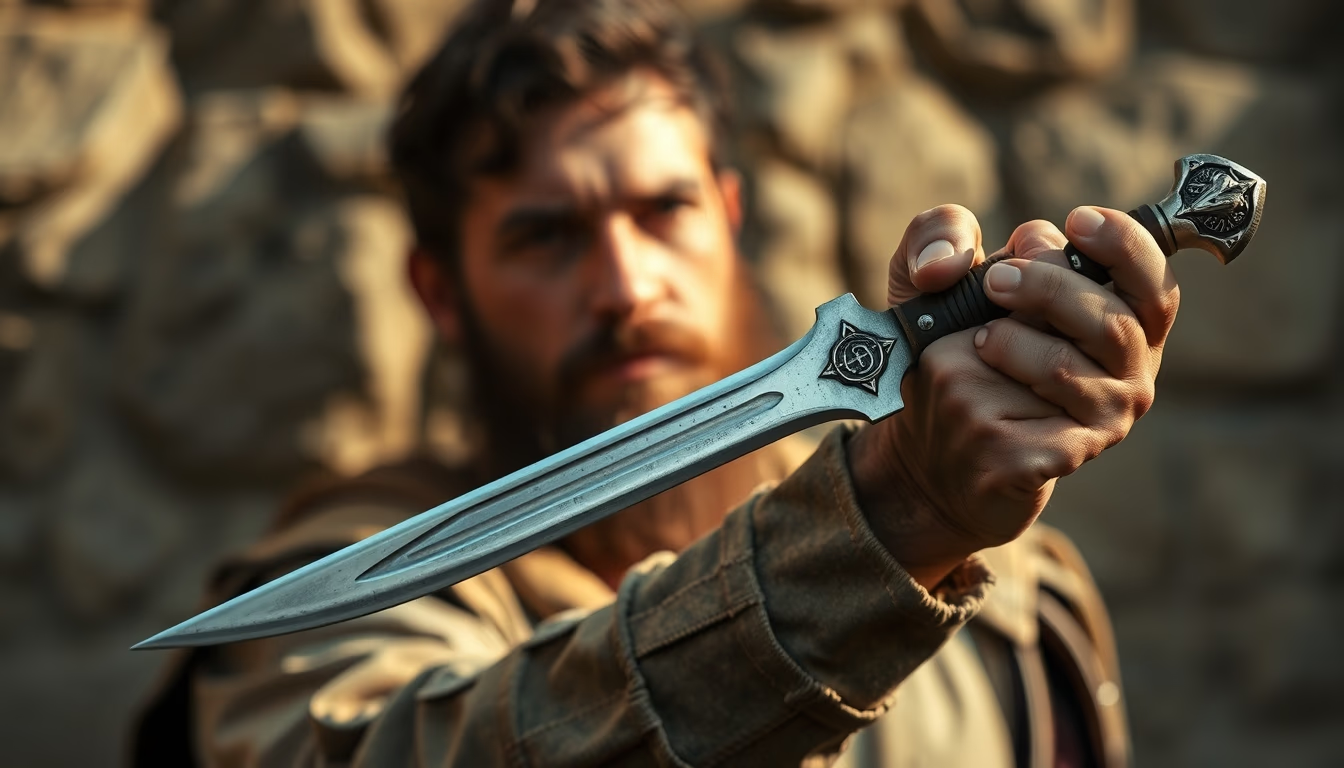
The medieval falchion is a curved, single-edged sword used in Europe from the 13th to the 16th centuries, prized for its effectiveness in close combat.
About this subject
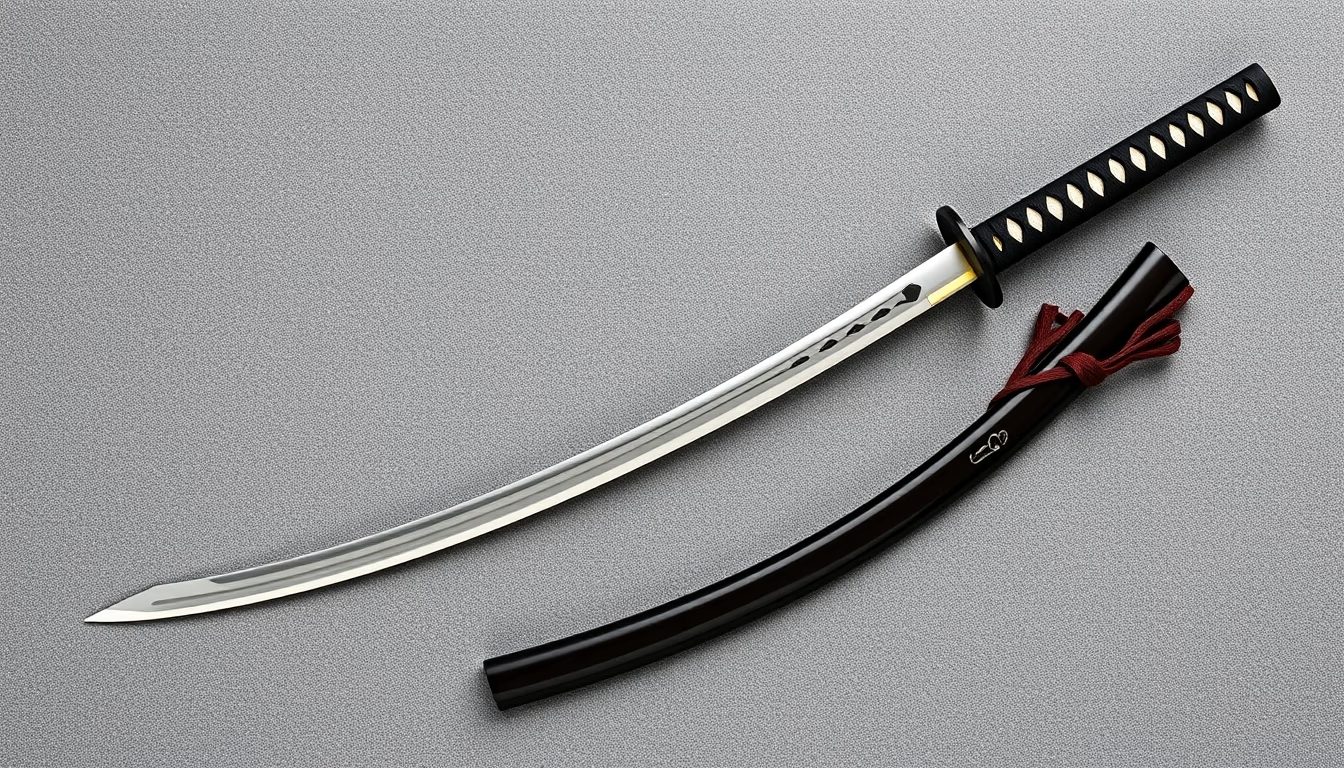
The medieval falchion is a type of single-edged, curved sword that thrived in Europe during the High to Late Middle Ages, roughly from the 13th to the 16th centuries. Unlike the straight-bladed longsword, the falchion had a broader, heavier blade that often widened toward the tip, resembling a cleaver or a scimitar. This geometry shifted the center of mass forward, enhancing the cutting power of each strike.
The origins of the falchion are uncertain, but it may have been influenced by Middle Eastern swords or Nordic hunting knives. It was popular among infantrymen and knights who needed a robust weapon to break through mail or leather armor. Shorter and more maneuverable than cavalry swords, it was often employed in confined spaces such as naval engagements or sieges.
Regional variations include the German falchion (Gassenhauer) and the Italian storta. The falchion appears in illuminated manuscripts and fencing manuals, such as Hans Talhoffer's "Fechtbuch," which illustrates specific techniques for this weapon. Although it fell out of use with the advent of full plate armor, the falchion influenced later saber designs.
The word "falchion" derives from the Latin "falx," meaning "sickle," referring to the curved blade. Today, modern replicas are used in historical reenactments and European martial arts.
Frequently Asked Questions
What is the difference between a falchion and a scimitar?
Both have curved blades, but the falchion is typically broader and heavier, often widening toward the tip, while a scimitar is thinner with a distinctive hilt. The falchion was primarily used in Europe, while the scimitar originates from the Middle East.
Was the falchion effective against plate armor?
It was not ideal, as its curved, heavy blade was better suited for cutting mail and leather. Against full plate armor, the falchion lost effectiveness and was replaced by weapons like war hammers or pointed longswords.
Where can I see historical falchions?
Several European museums display falchions, such as the National Museum of Denmark in Copenhagen and the Musée de l'Armée in Paris. Replicas are also available in private collections and specialist historical arms websites.
Direct URL
https://pub-c7d6a6ea828543ac903a74a341ccb2e1.r2.dev/imagens/falchion-medieval-curved-documentary-photography-fresh17.avifHow to credit
Include a visible link back to UtilizAí. Copy one of the snippets below:
<a href="https://xn--utiliza-eza.com/en/midia/imagens/falchion-medieval-curved-documentary-photography-fresh17">Falchion medieval curved</a> by <a href="https://xn--utiliza-eza.com">UtilizAí</a>, licensed under <a href="https://creativecommons.org/licenses/by/4.0/">CC BY 4.0</a>.
[Falchion medieval curved](https://xn--utiliza-eza.com/en/midia/imagens/falchion-medieval-curved-documentary-photography-fresh17) by [UtilizAí](https://xn--utiliza-eza.com), CC BY 4.0
License: CC-BY-4.0