Public charging station
1344×768 · AVIF · CC BY 4.0
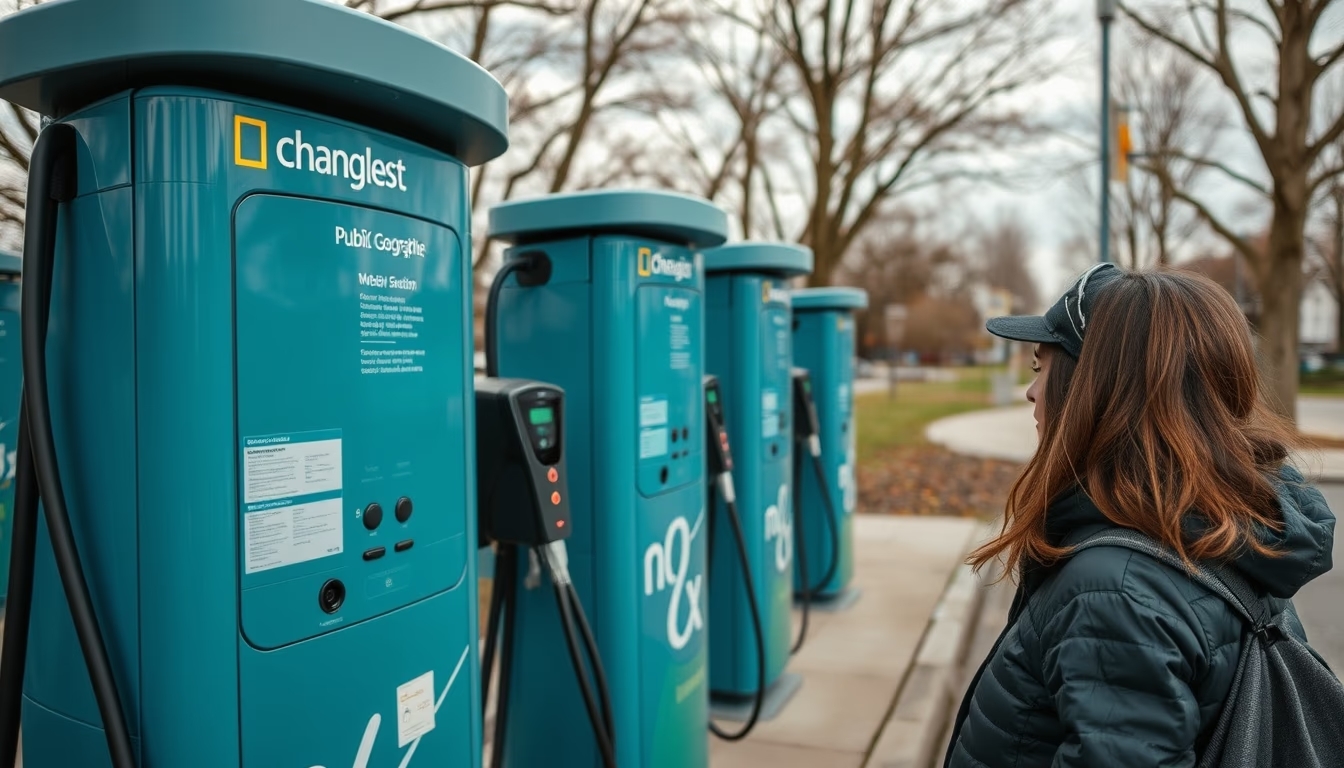
Public electric vehicle charging stations are becoming common in wine regions, merging sustainability with wine tourism.
About this subject
The integration of public charging stations in wine regions is a global trend combining electric mobility with wine tourism. In countries like the United States, France, and Australia, wineries are installing EV chargers to attract eco-conscious visitors. These stations, typically with power outputs between 22 and 150 kW, accommodate most electric vehicles and encourage longer stays, boosting local sales.
Many wineries offer free charging as a value-added service, leveraging renewable energy sources such as rooftop solar panels. This not only reduces operational costs but also aligns with the sustainability image that many wine brands cultivate. For example, Napa Valley in California has mapped over 100 public chargers near vineyards, creating a seamless experience for EV drivers.
The infrastructure supports broader environmental goals: a typical EV charged at a winery using solar power can save up to 2.5 tons of CO2 per year compared to a gasoline car. Wine regions also benefit from reduced noise pollution and air quality improvements. As EV adoption accelerates, with global sales expected to reach 30% of new cars by 2026, the presence of reliable charging networks becomes a competitive advantage for wine tourism destinations. Initiatives like the "Electric Wine Route" in South Africa and similar projects in Brazil's Serra Gaúcha demonstrate how charging stations are becoming integral to the terroir experience.
Frequently Asked Questions
Why install charging stations in wine regions?
To attract EV-driving tourists, promote sustainability, and encourage longer stays at wineries, boosting wine sales and local services.
What is the typical power output of chargers at wineries?
Usually between 22 kW (semi-fast) and 150 kW (fast), compatible with most electric vehicles on the market.
Do wineries generate their own energy for chargers?
Yes, many use solar panels to power the chargers, creating a clean energy cycle that reduces costs and carbon emissions.
Direct URL
https://pub-c7d6a6ea828543ac903a74a341ccb2e1.r2.dev/imagens/public-charging-station-national-geographic-style-p5.avifHow to credit
Include a visible link back to UtilizAí. Copy one of the snippets below:
<a href="https://xn--utiliza-eza.com/en/midia/imagens/public-charging-station-national-geographic-style-p5">Public charging station</a> by <a href="https://xn--utiliza-eza.com">UtilizAí</a>, licensed under <a href="https://creativecommons.org/licenses/by/4.0/">CC BY 4.0</a>.
[Public charging station](https://xn--utiliza-eza.com/en/midia/imagens/public-charging-station-national-geographic-style-p5) by [UtilizAí](https://xn--utiliza-eza.com), CC BY 4.0
License: CC-BY-4.0