Public bike station
1344×768 · AVIF · CC BY 4.0
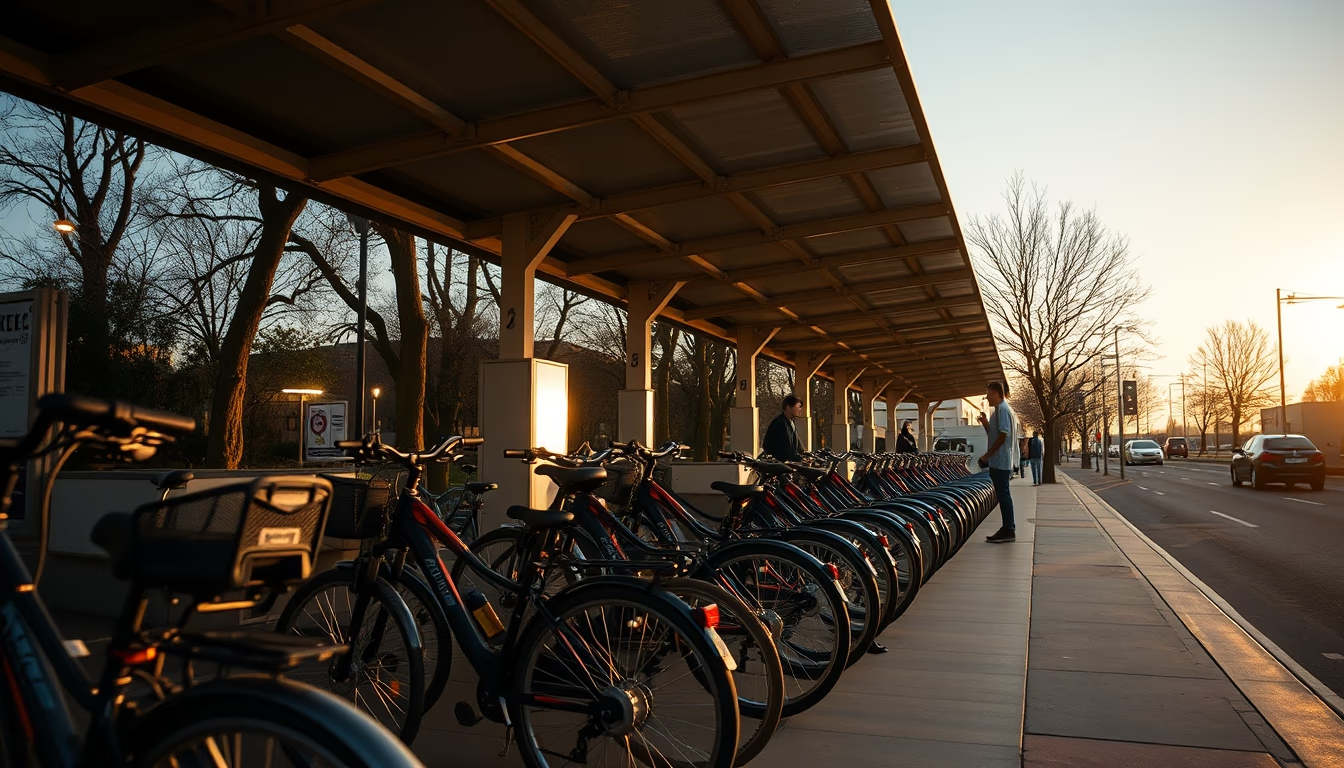
Public bike-sharing station, a pillar of sustainable urban mobility in smart cities worldwide.
About this subject
Public bike-sharing stations, also known as bike docks, are short-term rental systems that let users pick up and drop off bicycles at automated kiosks across the city. The modern model emerged in 2005 in France with Paris's Vélib' system, inspiring networks such as BIXI in Montreal (2009) and Bike Rio in Brazil (2011). Today, over 2,000 cities in 100 countries operate some form of bike-sharing, handling millions of daily trips.
A typical station comprises a payment terminal (credit card or app-based), a row of locking docks, and standardized bicycles with puncture-resistant tires and front baskets. Technology has evolved to include dockless systems (like e-scooters), but docked stations remain popular for keeping sidewalks organized and ensuring predictable availability. Integration with mapping apps and public transit enables multimodal trips, reducing car usage and CO2 emissions.
In smart cities, bike stations are fitted with IoT sensors that track dock occupancy, bike locations, and weather data. This feeds redistribution algorithms that rebalance bikes to high-demand areas and dynamic pricing that encourages returns to low-capacity zones. Studies show each shared bike can replace up to 5 car trips per day, easing congestion and improving air quality.
Notably, cities like Copenhagen and Amsterdam run bike-sharing systems serving both tourists and residents, often with government subsidies. In Brazil, Bike Sampa (São Paulo) and Bicicletar (Porto Alegre) are municipal networks that expanded active transport access. Station maintenance remains a challenge, involving dock cleaning, bike repairs, and battery charging for e-models. Trends for 2026 include GPS-integrated bikes, pedal assist, and solar-powered autonomous stations.
Frequently Asked Questions
How does renting a bike from a public station work?
Users register via app or kiosk, enter payment details, and unlock a bike. The first 30, 60 minutes are usually free, with extra fees per hour. To return, simply dock the bike at any station of the same network.
What are the main differences between docked and dockless systems?
Docked systems require bikes to be picked up and returned at fixed stations, ensuring order and centralized maintenance. Dockless systems allow parking anywhere, but may cause sidewalk clutter and require more repositioning.
How do cities benefit economically from bike-sharing?
It reduces public transport costs by offering a low-cost alternative, cuts healthcare expenses by encouraging physical activity, and boosts tourism. Studies show that every dollar invested in bike-sharing generates up to four dollars in social and environmental benefits.
Direct URL
https://pub-c7d6a6ea828543ac903a74a341ccb2e1.r2.dev/imagens/public-bike-station-cinematic-wide-shot-p2.avifHow to credit
Include a visible link back to UtilizAí. Copy one of the snippets below:
<a href="https://xn--utiliza-eza.com/en/midia/imagens/public-bike-station-cinematic-wide-shot-p2">Public bike station</a> by <a href="https://xn--utiliza-eza.com">UtilizAí</a>, licensed under <a href="https://creativecommons.org/licenses/by/4.0/">CC BY 4.0</a>.
[Public bike station](https://xn--utiliza-eza.com/en/midia/imagens/public-bike-station-cinematic-wide-shot-p2) by [UtilizAí](https://xn--utiliza-eza.com), CC BY 4.0
License: CC-BY-4.0