Protein structure 3d
1344×768 · AVIF · CC BY 4.0
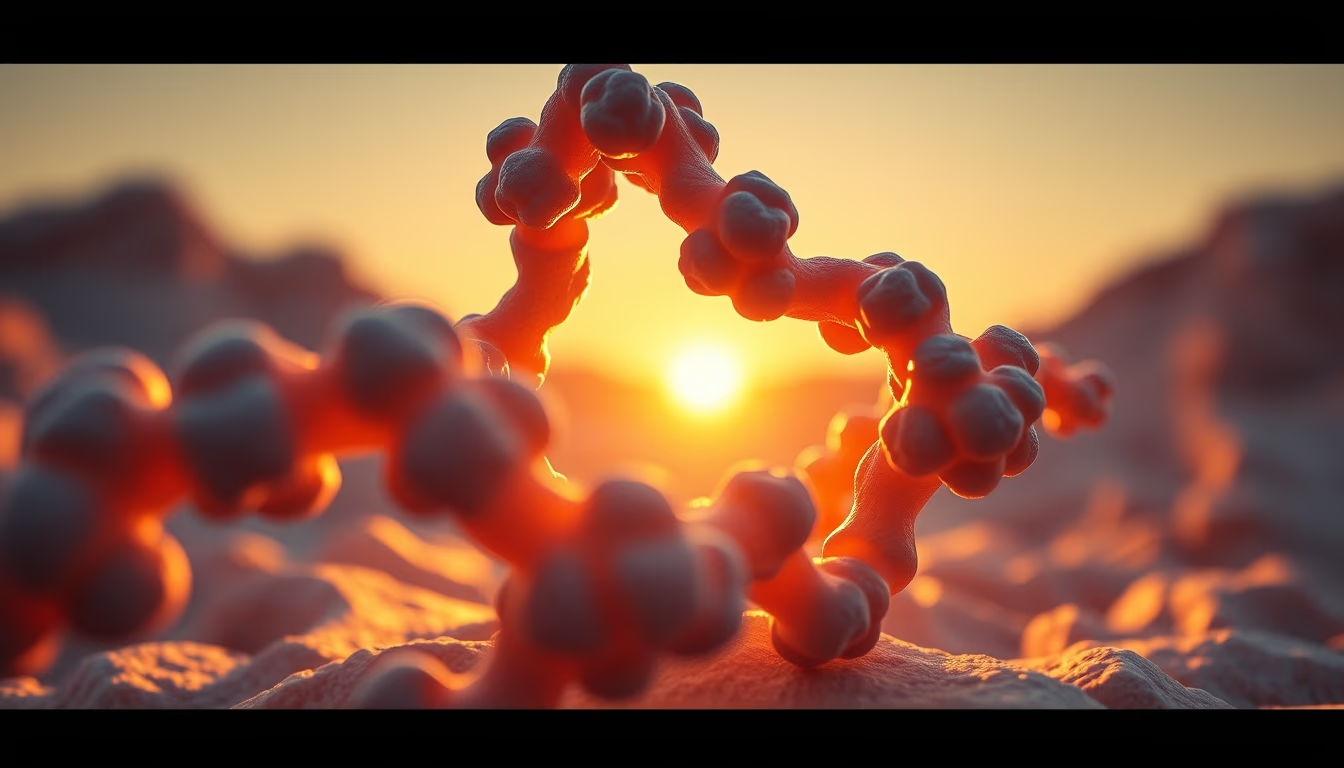
Proteins are essential macromolecules whose three-dimensional structure determines their biological function, explored in fields like biochemistry and pharmacology.
About this subject
Proteins are chains of amino acids that fold into specific three-dimensional structures, enabling precise interactions with other molecules. This conformation is critical for functions such as enzymatic catalysis, transport (hemoglobin), defense (antibodies), and cell signaling. Loss of the native structure through denaturation typically inactivates the protein.
The study of 3D structure relies on techniques like X-ray crystallography, which has resolved atomic structures since the 1950s (Nobel Prize to Kendrew and Perutz), and more recently cryo-electron microscopy (cryo-EM), allowing visualization of macromolecules without crystallization. The Protein Data Bank (PDB) holds over 200,000 structures, an essential resource for research.
Notable examples include the structure of insulin (determined by Dorothy Hodgkin) and the spike protein of SARS-CoV-2, whose mapping accelerated vaccine development. Artificial intelligence, such as AlphaFold, has revolutionized structure prediction from sequence, but challenges remain for complex proteins or under different cellular conditions.
Interestingly, some proteins are intrinsically disordered, lacking a fixed structure. Errors in folding (misfolding) are linked to neurodegenerative diseases like Alzheimer's and Parkinson's, where proteins aggregate into amyloid fibrils.
Frequently Asked Questions
What determines the three-dimensional structure of a protein?
The structure is primarily determined by the amino acid sequence (primary structure), which guides folding through interactions such as hydrogen bonds, hydrophobic forces, and disulfide bridges. Environmental factors like pH and temperature also play a role.
How is the 3D structure of proteins discovered experimentally?
The main methods are X-ray crystallography, nuclear magnetic resonance (NMR), and cryo-electron microscopy (cryo-EM). Crystallography requires protein crystals, while cryo-EM enables imaging of individual molecules in solution.
What is protein folding and why is it important?
Protein folding is the process by which a linear chain of amino acids acquires its functional three-dimensional conformation. It is crucial for biological activity; misfolding can lead to diseases such as Alzheimer's and cystic fibrosis.
Direct URL
https://pub-c7d6a6ea828543ac903a74a341ccb2e1.r2.dev/imagens/protein-structure-3d-travel-photography-p8.avifHow to credit
Include a visible link back to UtilizAí. Copy one of the snippets below:
<a href="https://xn--utiliza-eza.com/en/midia/imagens/protein-structure-3d-travel-photography-p8">Protein structure 3d</a> by <a href="https://xn--utiliza-eza.com">UtilizAí</a>, licensed under <a href="https://creativecommons.org/licenses/by/4.0/">CC BY 4.0</a>.
[Protein structure 3d](https://xn--utiliza-eza.com/en/midia/imagens/protein-structure-3d-travel-photography-p8) by [UtilizAí](https://xn--utiliza-eza.com), CC BY 4.0
License: CC-BY-4.0