Protein structure 3d
1344×768 · AVIF · CC BY 4.0
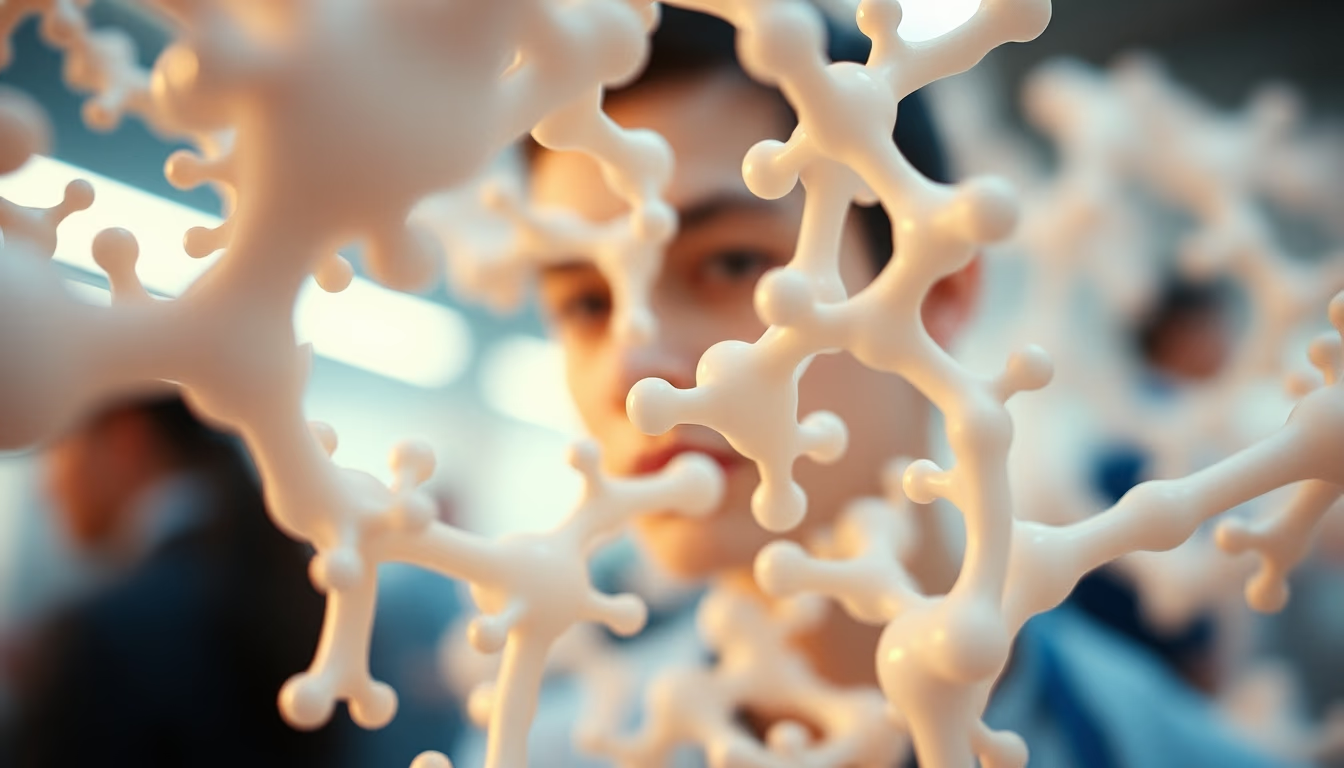
Three-dimensional protein structures reveal the complex molecular architecture that determines essential biological functions.
About this subject
Proteins are fundamental macromolecules for life, composed of amino acid chains that fold into unique three-dimensional structures. This spatial conformation is crucial for their function, defining binding sites, enzymatic activity, and interactions with other molecules. There are four levels of protein structure: primary (linear sequence of amino acids), secondary (alpha helices and beta sheets), tertiary (complete three-dimensional folding), and quaternary (association of multiple subunits).
Determination of 3D protein structures is achieved by techniques such as X-ray crystallography, nuclear magnetic resonance (NMR), and more recently, cryo-electron microscopy (cryo-EM). X-ray crystallography, developed in the 1960s, resolved the first protein structure: myoglobin. Cryo-EM, awarded the Nobel Prize in Chemistry in 2017, allows visualization of proteins in their native state without crystallization, revolutionizing structural biology.
Knowledge of 3D structures is essential for rational drug design. By identifying the active site of a target protein, scientists can design molecules that fit precisely, inhibiting or activating its function. Notable examples include HIV protease inhibitors and drugs against the SARS-CoV-2 spike protein. Databases like the Protein Data Bank (PDB) store over 200,000 structures, globally accessible for research.
Genetic mutations can alter protein folding, leading to conformational diseases such as Alzheimer's, Parkinson's, and cystic fibrosis. Understanding these mechanisms paves the way for therapies that correct misfolding, a field called pharmacological chaperones. Artificial intelligence, with tools like AlphaFold, now predicts structures with high accuracy, accelerating discoveries in biology and medicine.
Frequently Asked Questions
Why is the three-dimensional structure of a protein important?
The 3D structure determines the protein's function by defining how it interacts with other molecules. Changes in conformation can lead to loss of function or disease.
How are 3D protein structures determined?
Main techniques include X-ray crystallography, nuclear magnetic resonance (NMR), and cryo-electron microscopy (cryo-EM). Each has specific advantages for different protein types.
What is protein folding and why is it critical?
Folding is the process by which a protein acquires its functional three-dimensional structure. Failures can result in toxic aggregates associated with neurodegenerative diseases.
Direct URL
https://pub-c7d6a6ea828543ac903a74a341ccb2e1.r2.dev/imagens/protein-structure-3d-film-grain-authentic-p12.avifHow to credit
Include a visible link back to UtilizAí. Copy one of the snippets below:
<a href="https://xn--utiliza-eza.com/en/midia/imagens/protein-structure-3d-film-grain-authentic-p12">Protein structure 3d</a> by <a href="https://xn--utiliza-eza.com">UtilizAí</a>, licensed under <a href="https://creativecommons.org/licenses/by/4.0/">CC BY 4.0</a>.
[Protein structure 3d](https://xn--utiliza-eza.com/en/midia/imagens/protein-structure-3d-film-grain-authentic-p12) by [UtilizAí](https://xn--utiliza-eza.com), CC BY 4.0
License: CC-BY-4.0