Pre-euro lira italian
1344×768 · AVIF · CC BY 4.0

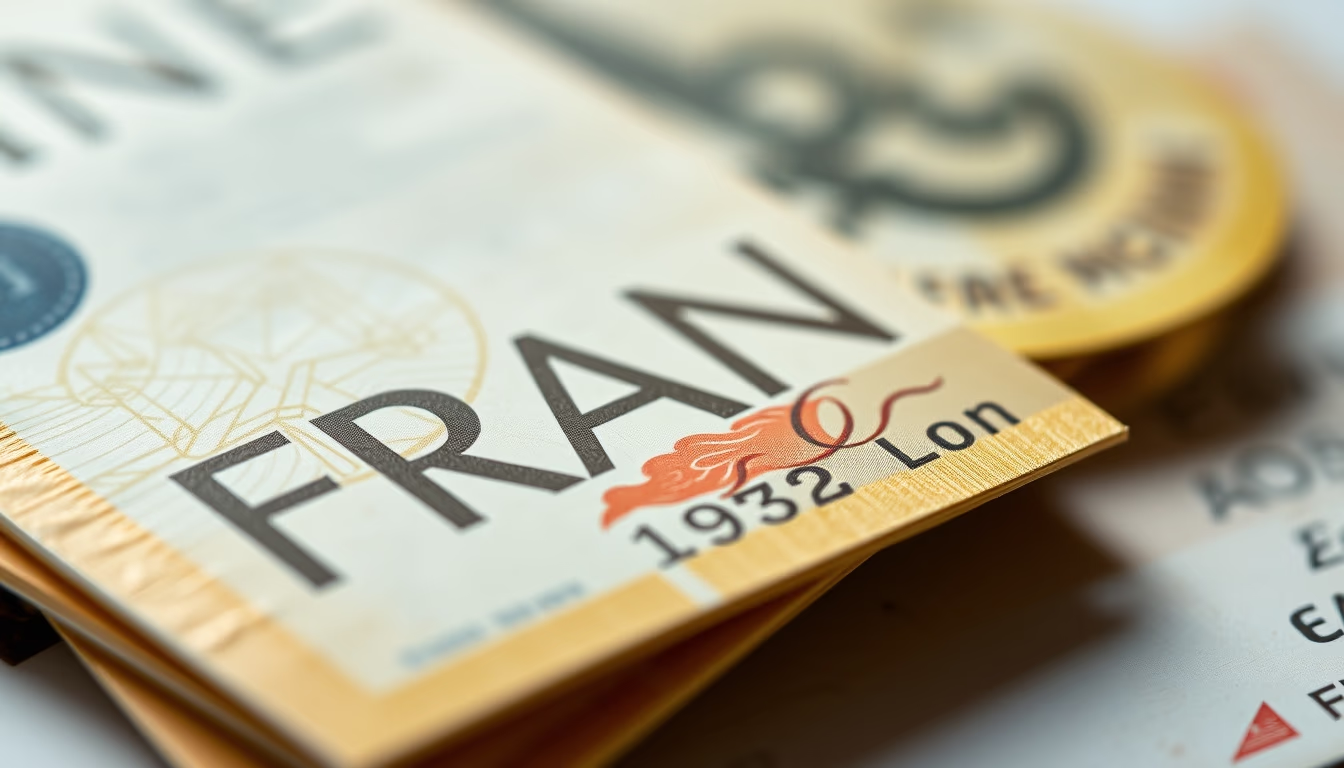
The Italian lira was the official currency of Italy for 141 years until replaced by the euro in 2002. Banknotes and coins reflected the country's history and culture.
About this subject
The Italian lira (symbol: ₤, code: ITL) served as the official currency of the Kingdom of Italy from 1861 and later the Italian Republic until February 28, 2002, when it was fully replaced by the euro. The name "lira" derives from the Latin "libra," a unit of weight. Throughout its history, the lira underwent several reforms, devaluations, and periods of hyperinflation, especially after the two world wars.
Italian lira banknotes were known for their vibrant colors and depictions of prominent figures from Italian culture and history. For example, the 1,000 lire note featured educator Maria Montessori, the 5,000 lire note composer Vincenzo Bellini, and the 10,000 lire note physicist Alessandro Volta. Coins ranged from unit values to 500 and 1,000 lire, with designs varying from allegories of the Republic to monuments and natural elements.
The lira also played an important role in the global economy during the post-war period, as Italy joined the European Monetary System. The country adopted the euro in 1999, with a fixed exchange rate of 1 euro = 1,936.27 lire. The transition to the euro was marked by nostalgia, especially among older Italians who hold fond memories of the banknotes and coins they used daily.
Interestingly, lira notes featured advanced security measures for their time, such as watermarks and security threads, but were notoriously easy to counterfeit. The Bank of Italy issued several series to combat forgery, culminating in notes with holograms and other elements in the 1990s. Today, old lire are collector's items, valued by numismatists and enthusiasts of Italian economic history.
Frequently Asked Questions
When did the Italian lira cease to be official currency?
The Italian lira was replaced by the euro in 2002, ceasing to be official currency on February 28, 2002. Until that date, banknotes and coins could still be exchanged at banks.
What was the symbol of the Italian lira?
The symbol of the Italian lira was ₤ (L with two strokes) and the ISO code was ITL. It was also often represented by a capital letter L.
Which personalities appeared on lira banknotes?
Figures such as Maria Montessori (1,000 lire), Vincenzo Bellini (5,000 lire), Alessandro Volta (10,000 lire), and Michelangelo (20,000 lire) were depicted on Italian notes. Each note honored a prominent person from culture, science, or the arts.
Direct URL
https://pub-c7d6a6ea828543ac903a74a341ccb2e1.r2.dev/imagens/pre-euro-lira-italian-isometric-flat-lay-fresh11.avifHow to credit
Include a visible link back to UtilizAí. Copy one of the snippets below:
<a href="https://xn--utiliza-eza.com/en/midia/imagens/pre-euro-lira-italian-isometric-flat-lay-fresh11">Pre-euro lira italian</a> by <a href="https://xn--utiliza-eza.com">UtilizAí</a>, licensed under <a href="https://creativecommons.org/licenses/by/4.0/">CC BY 4.0</a>.
[Pre-euro lira italian](https://xn--utiliza-eza.com/en/midia/imagens/pre-euro-lira-italian-isometric-flat-lay-fresh11) by [UtilizAí](https://xn--utiliza-eza.com), CC BY 4.0
License: CC-BY-4.0