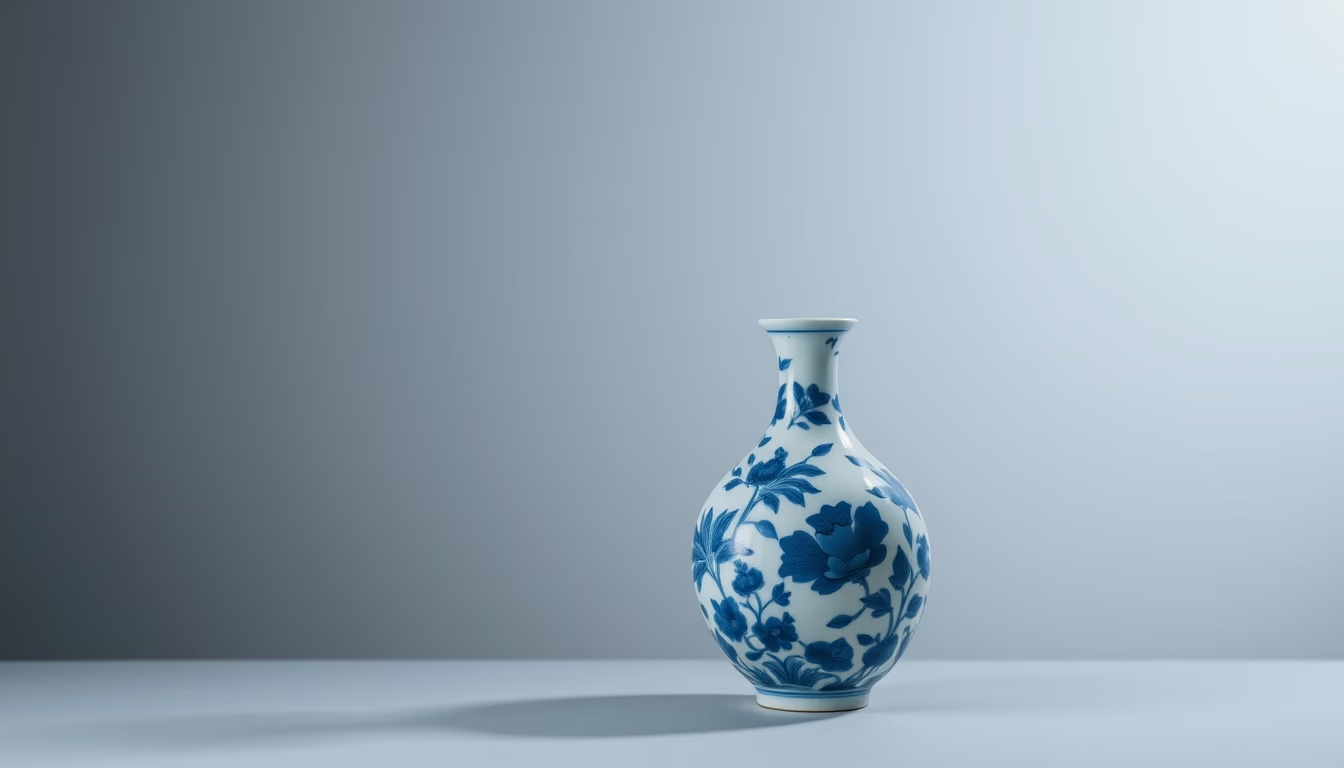
Porcelain blue white vase
1344×768 · AVIF · CC BY 4.0
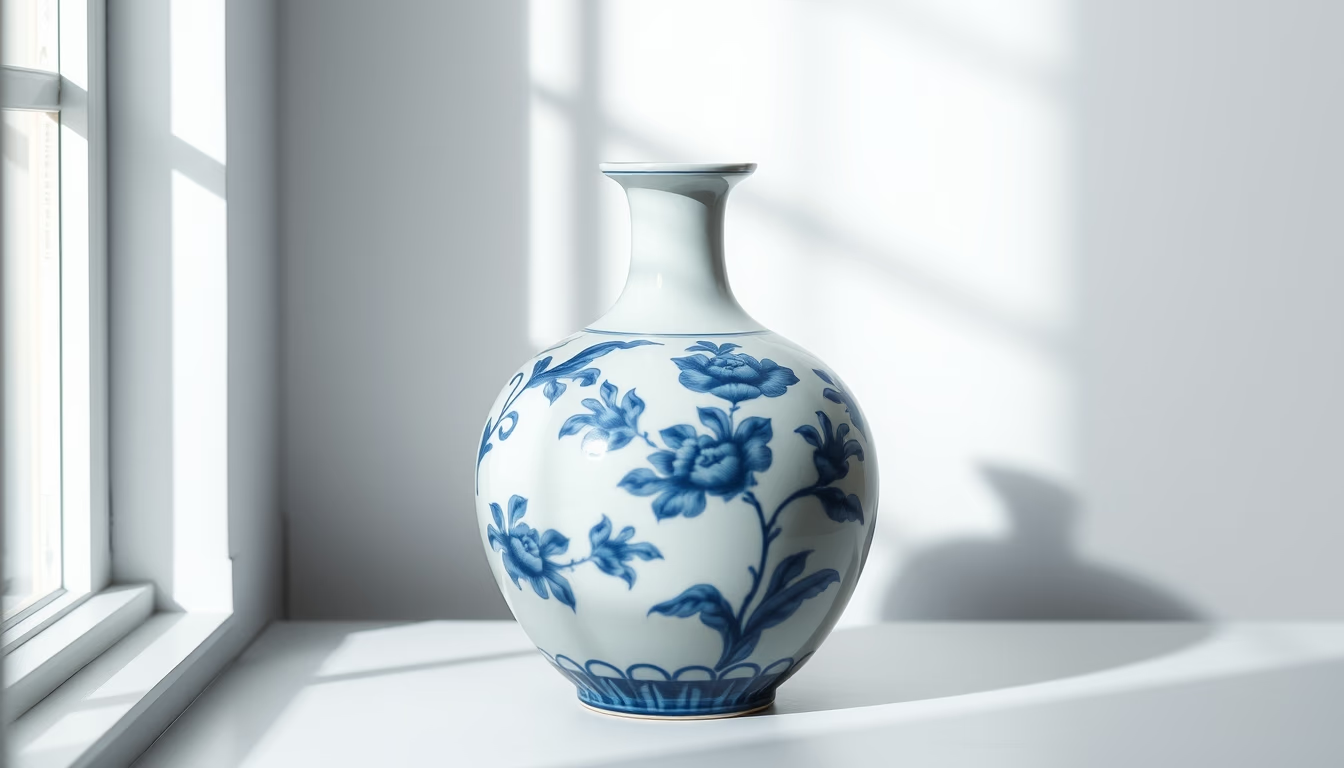
Blue and white porcelain vase, a classic piece of Chinese ceramics that influenced global design for centuries.
About this subject
Blue and white porcelain originated in China during the Yuan dynasty (1271-1368), when Jingdezhen artisans began using cobalt imported from Persia for underglaze painting. The combination of pure white kaolin clay and deep blue created a style that became one of the most recognizable in ceramic history. Production peaked during the Ming dynasty (1368-1644), with pieces exported worldwide via the Silk Road and maritime routes.
The trade of blue and white porcelain transformed the global economy. European demand, especially from the 16th century onward, led to imitations like Dutch Delftware. These pieces were symbols of status and wealth, influencing metalwork, painting, and even architecture. The underglaze technique requires extreme skill: cobalt is painted on the biscuit, covered with a clear glaze, and fired at high temperatures, permanently fixing the blue.
Though strongly associated with China, blue and white porcelain was also produced in Japan (Imari porcelain) and Korea. In the 18th century, Europe developed its own versions, such as Meissen porcelain in Germany. Today, authentic Ming and Qing vases are highly valued at auctions, fetching millions of dollars. The style continues to inspire contemporary designers, remaining relevant in art and decor markets.
Frequently Asked Questions
What is the origin of blue and white porcelain?
Blue and white porcelain originated in China during the Yuan dynasty (1271-1368) in Jingdezhen. Artisans used cobalt imported from Persia for underglaze painting, creating the distinctive blue-white contrast.
How to identify an authentic blue and white porcelain vase?
Authentic pieces feature underglaze painting, high-purity kaolin clay, and period marks (e.g., Ming or Qing reign marks). The blue color is embedded in the glaze, not on the surface. The base often shows firing marks and specific texture.
Why was blue and white porcelain highly valued in the West?
Due to its beauty, durability, and exoticism. Porcelain was strong, lightweight, and translucent, surpassing European ceramics. It became a status symbol among nobles and royalty, influencing local production of faience and porcelain.
Direct URL
https://pub-c7d6a6ea828543ac903a74a341ccb2e1.r2.dev/imagens/porcelain-blue-white-vase-magazine-editorial-fresh10.avifHow to credit
Include a visible link back to UtilizAí. Copy one of the snippets below:
<a href="https://xn--utiliza-eza.com/en/midia/imagens/porcelain-blue-white-vase-magazine-editorial-fresh10">Porcelain blue white vase</a> by <a href="https://xn--utiliza-eza.com">UtilizAí</a>, licensed under <a href="https://creativecommons.org/licenses/by/4.0/">CC BY 4.0</a>.
[Porcelain blue white vase](https://xn--utiliza-eza.com/en/midia/imagens/porcelain-blue-white-vase-magazine-editorial-fresh10) by [UtilizAí](https://xn--utiliza-eza.com), CC BY 4.0
License: CC-BY-4.0