Porcelain blue white vase
1344×768 · AVIF · CC BY 4.0
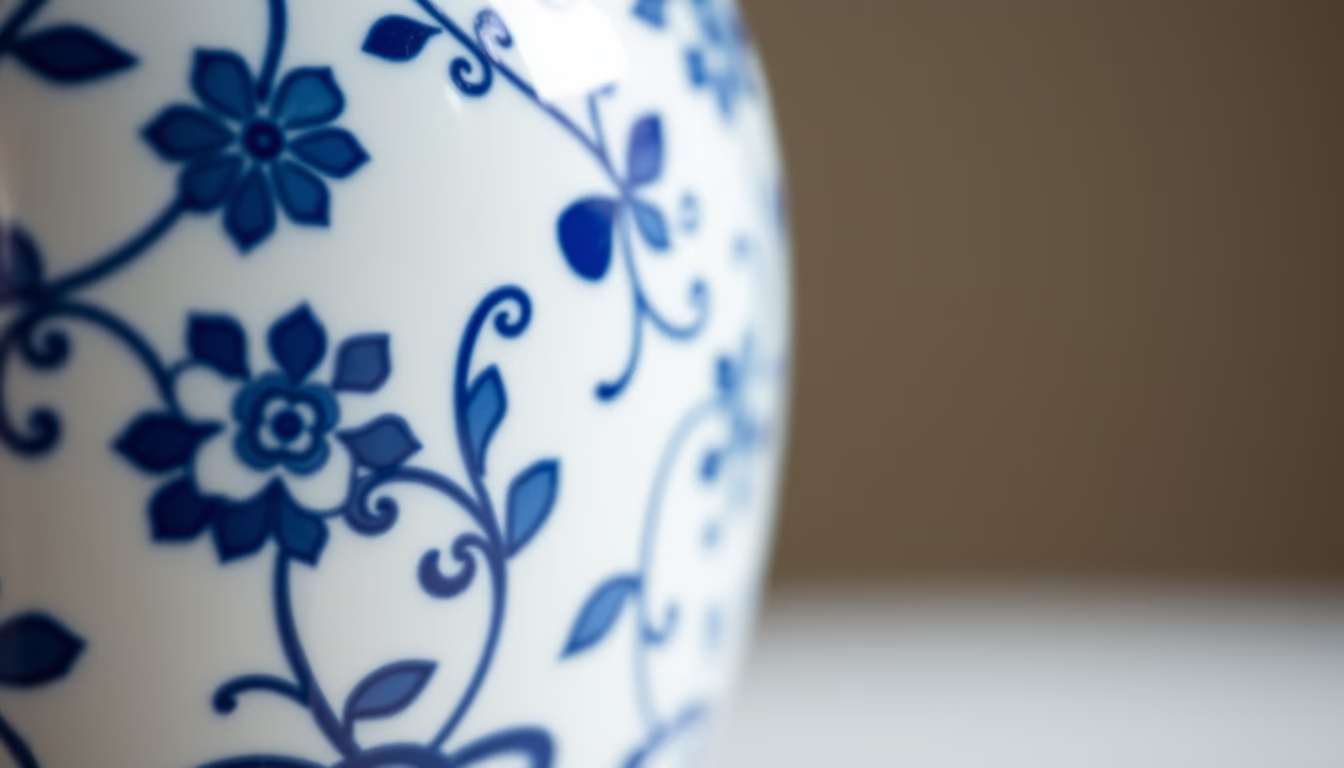
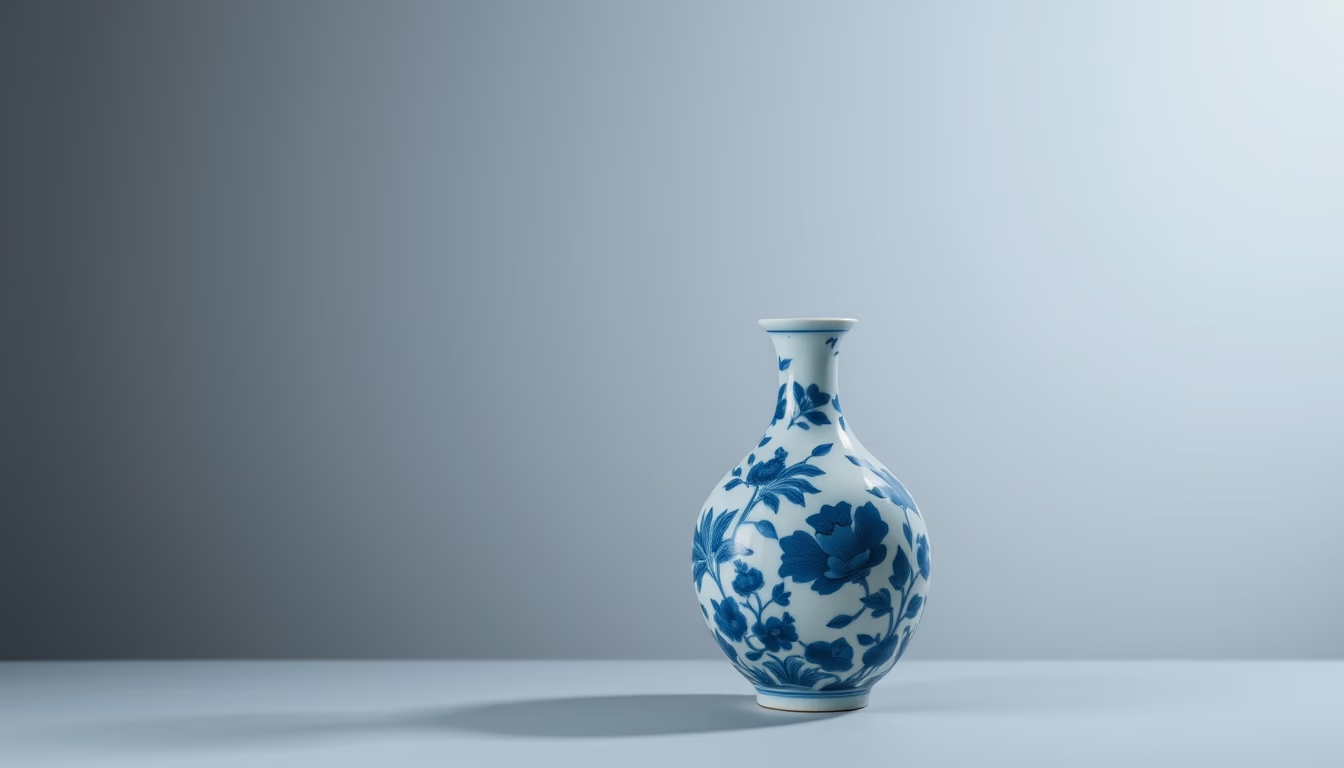
Blue and white porcelain vase, an emblematic piece of global trade that united Chinese techniques with European markets.
About this subject
Blue and white porcelain is one of the most iconic expressions of Chinese ceramics, with origins dating back to the Tang dynasty (618, 907 AD), but reaching its peak during the Ming dynasty (1368, 1644). The technique involves applying cobalt oxide under a transparent glaze, which after high-temperature firing reveals the characteristic intense blue. The cobalt used was initially imported from Persia, but later sourced locally in China, especially in Jiangxi province.
These vases were not merely decorative objects; they were among the first globalized products in history. During the 16th and 17th centuries, the Dutch East India Company (VOC) and other European powers imported millions of pieces. Designs often incorporated natural motifs such as dragons, lotus flowers, and landscapes, adapting to Western tastes. Jingdezhen became the main production center, known as the "Porcelain Capital".
The influence of blue and white porcelain spread worldwide, inspiring imitations in Europe, such as Dutch Delftware, and in Japan, with Arita porcelain. Interestingly, the term "porcelain" derives from the Italian "porcellana", referring to the cowrie shell due to the resemblance in appearance. To this day, these pieces are highly valued in museums and private collections, representing a bridge between East and West.
In global trade, blue and white porcelain symbolized status and sophistication. European orders often specified Western shapes, such as jugs and tableware, but with Chinese decoration. This cultural exchange resulted in a hybrid style known as "Chinoiserie", which influenced European art and design for centuries.
Frequently Asked Questions
What is the origin of blue and white porcelain?
Blue and white porcelain originated in China during the Tang dynasty (618, 907 AD) and was perfected in the Ming dynasty (1368, 1644), especially in Jingdezhen.
Why is the blue so characteristic in this type of porcelain?
The blue comes from cobalt oxide applied to the piece before firing. The cobalt, initially imported from Persia, produces a vivid and durable color after vitrification.
How did blue and white porcelain influence global trade?
From the 16th century, Europe imported millions of pieces through companies like the VOC. This demand led to adaptations in shapes and decorations, giving rise to the Chinoiserie style.
Direct URL
https://pub-c7d6a6ea828543ac903a74a341ccb2e1.r2.dev/imagens/porcelain-blue-white-vase-macro-closeup-fresh7.avifHow to credit
Include a visible link back to UtilizAí. Copy one of the snippets below:
<a href="https://xn--utiliza-eza.com/en/midia/imagens/porcelain-blue-white-vase-macro-closeup-fresh7">Porcelain blue white vase</a> by <a href="https://xn--utiliza-eza.com">UtilizAí</a>, licensed under <a href="https://creativecommons.org/licenses/by/4.0/">CC BY 4.0</a>.
[Porcelain blue white vase](https://xn--utiliza-eza.com/en/midia/imagens/porcelain-blue-white-vase-macro-closeup-fresh7) by [UtilizAí](https://xn--utiliza-eza.com), CC BY 4.0
License: CC-BY-4.0