Plant cell wall closeup
1344×768 · AVIF · CC BY 4.0
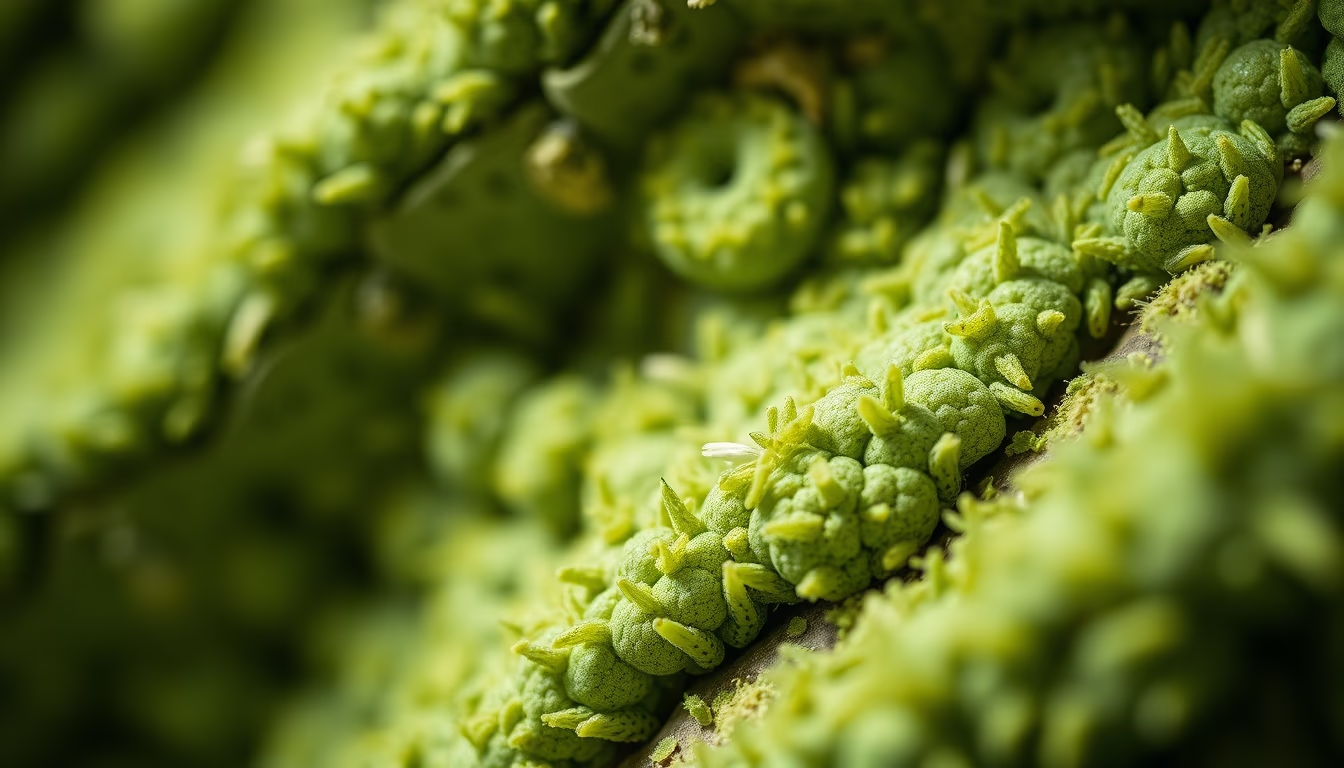
The plant cell wall is a rigid extracellular structure that provides support and protection to plant cells, mainly composed of cellulose, hemicellulose, and pectin.
About this subject
The plant cell wall is a defining feature of plant cells, absent in animal cells. It consists of a complex matrix of polysaccharides and proteins. The primary wall, deposited during cell growth, is flexible and composed of cellulose microfibrils embedded in a matrix of hemicellulose and pectin. The secondary wall, formed after growth ceases, is thicker and often impregnated with lignin, providing rigidity and impermeability.
This structure performs vital functions: it provides mechanical support, maintains cell shape against turgor pressure, regulates growth (through the orientation of cellulose microfibrils), and acts as a barrier against pathogens. In conducting tissues like xylem, the lignin in the secondary wall enables efficient water and mineral transport and resists compression.
A remarkable fact is that cellulose, the main wall component, is the most abundant organic polymer on Earth, with an estimated annual production of 1.5 trillion tons. The crystalline structure of cellulose was elucidated by X-ray diffraction in the 1930s. Today, knowledge of the cell wall drives biotechnological applications such as biofuel production from lignocellulosic biomass, where enzymes break down cellulose into fermentable sugars.
In microscopic images like the one that inspired this description, the cell wall appears as a dense, organized layer around the cell. Techniques such as scanning electron microscopy reveal the mesh of microfibrils, while staining with specific dyes highlights lignin and pectin, allowing researchers to study their distribution and integrity.
Frequently Asked Questions
What differentiates the primary cell wall from the secondary wall?
The primary wall is thin, flexible, and deposited during cell growth, while the secondary wall is thicker, rigid, and formed after growth ceases, often containing lignin.
What is the function of lignin in the cell wall?
Lignin provides rigidity, impermeability, and compression resistance, crucial for water conduction in xylem and defense against pathogens.
How is the cell wall important for biofuel production?
Lignocellulosic biomass, rich in cellulose and hemicellulose, is broken down by enzymes into sugars that can be fermented to produce ethanol and other biofuels.
Direct URL
https://pub-c7d6a6ea828543ac903a74a341ccb2e1.r2.dev/imagens/plant-cell-wall-closeup-studio-still-life-p9.avifHow to credit
Include a visible link back to UtilizAí. Copy one of the snippets below:
<a href="https://xn--utiliza-eza.com/en/midia/imagens/plant-cell-wall-closeup-studio-still-life-p9">Plant cell wall closeup</a> by <a href="https://xn--utiliza-eza.com">UtilizAí</a>, licensed under <a href="https://creativecommons.org/licenses/by/4.0/">CC BY 4.0</a>.
[Plant cell wall closeup](https://xn--utiliza-eza.com/en/midia/imagens/plant-cell-wall-closeup-studio-still-life-p9) by [UtilizAí](https://xn--utiliza-eza.com), CC BY 4.0
License: CC-BY-4.0