Piccolo small flute
1344×768 · AVIF · CC BY 4.0
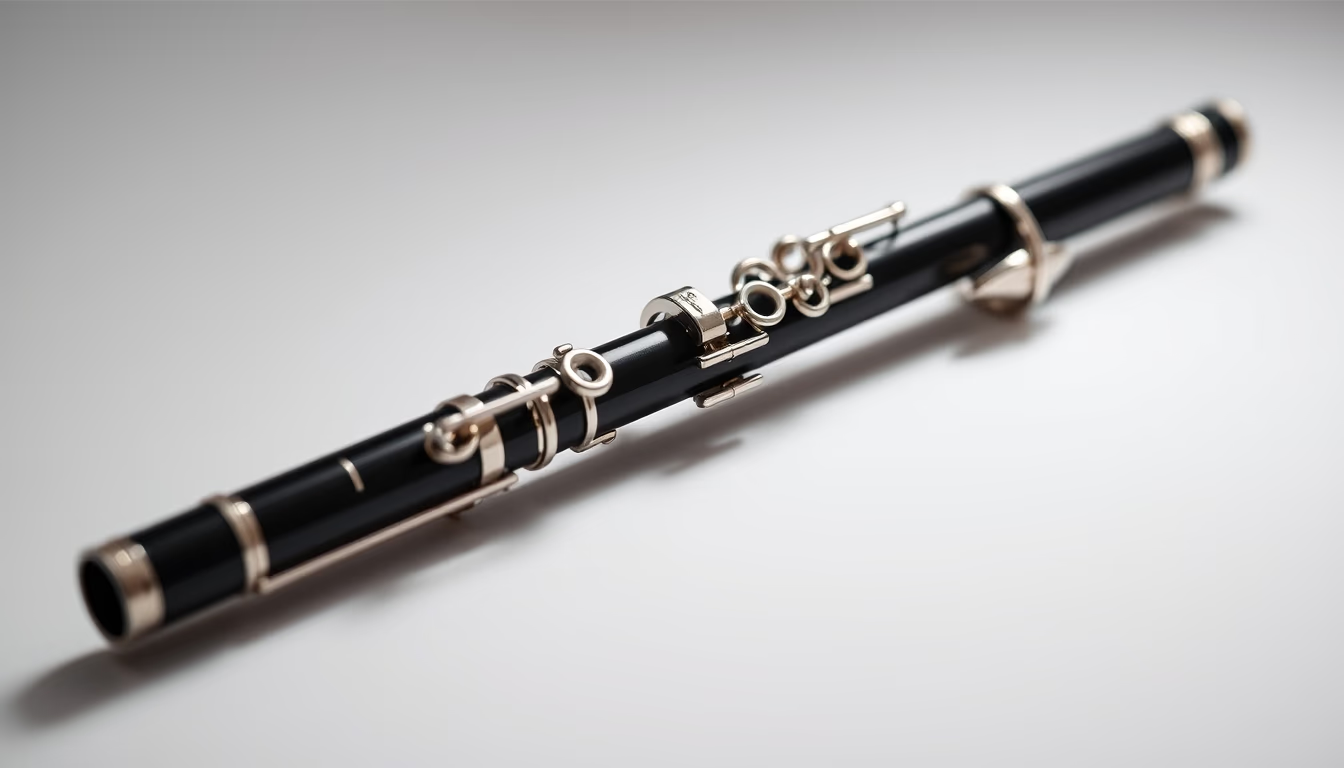
The piccolo is a woodwind instrument of the flute family, known for its high pitch and prominent role in orchestras and bands.
About this subject
The piccolo, also known as the flautino, is the smallest and highest-pitched instrument in the flute family. Its name derives from the Italian word "piccolo," meaning "small." Measuring approximately 32 centimeters in length, it is tuned one octave above the standard concert flute. Traditionally made from wood (grenadilla, ebony) or metal (silver, nickel-silver), its penetrating timbre is easily recognized in symphony orchestras, military bands, and musicals.
The instrument emerged in the 18th century, evolving from the recorder and the Baroque transverse flute. Composers such as Beethoven, Tchaikovsky, and Sousa used it for dramatic effects and melodic highlights. In the orchestra, the piccolo often reinforces the violins or adds brilliance to festive passages. Famous examples include Beethoven's "Turkish March" and Tchaikovsky's "Dance of the Pages." In Brazil, it is common in frevo bands and popular music orchestras.
Technically, the piccolo requires precise embouchure control and breath support due to its small size and high air resistance. Unlike the flute, it has a conical headjoint and a narrower bore, contributing to its shrill sound. Professional models often include additional keys to improve intonation and playability. Maintenance, such as regular cleaning and spring adjustment, is essential to preserve the characteristic timbre.
Interestingly, the piccolo is one of the most difficult instruments to play in terms of intonation, as slight embouchure adjustments drastically change pitch. Despite this, its role is indispensable in works like Rimsky-Korsakov's "Flight of the Bumblebee" and epic film scores. The versatility of the piccolo keeps it relevant in both classical and popular repertoires.
Frequently Asked Questions
What is the difference between a flute and a piccolo?
The piccolo is smaller and sounds one octave higher than the concert flute. It has a brighter, more penetrating timbre, while the flute produces a softer, lower sound.
Is the piccolo only used in classical music?
No, the piccolo is versatile and appears in military bands, frevo, jazz, and film scores. In Brazil, it is a highlight in frevo music from Pernambuco.
Why is playing the piccolo considered difficult?
It requires precise embouchure and breath control. Small changes affect intonation, and the loud sound demands refined technique to avoid shrillness.
Direct URL
https://pub-c7d6a6ea828543ac903a74a341ccb2e1.r2.dev/imagens/piccolo-small-flute-studio-still-life-p3.avifHow to credit
Include a visible link back to UtilizAí. Copy one of the snippets below:
<a href="https://xn--utiliza-eza.com/en/midia/imagens/piccolo-small-flute-studio-still-life-p3">Piccolo small flute</a> by <a href="https://xn--utiliza-eza.com">UtilizAí</a>, licensed under <a href="https://creativecommons.org/licenses/by/4.0/">CC BY 4.0</a>.
[Piccolo small flute](https://xn--utiliza-eza.com/en/midia/imagens/piccolo-small-flute-studio-still-life-p3) by [UtilizAí](https://xn--utiliza-eza.com), CC BY 4.0
License: CC-BY-4.0