Piccolo small flute
1344×768 · AVIF · CC BY 4.0
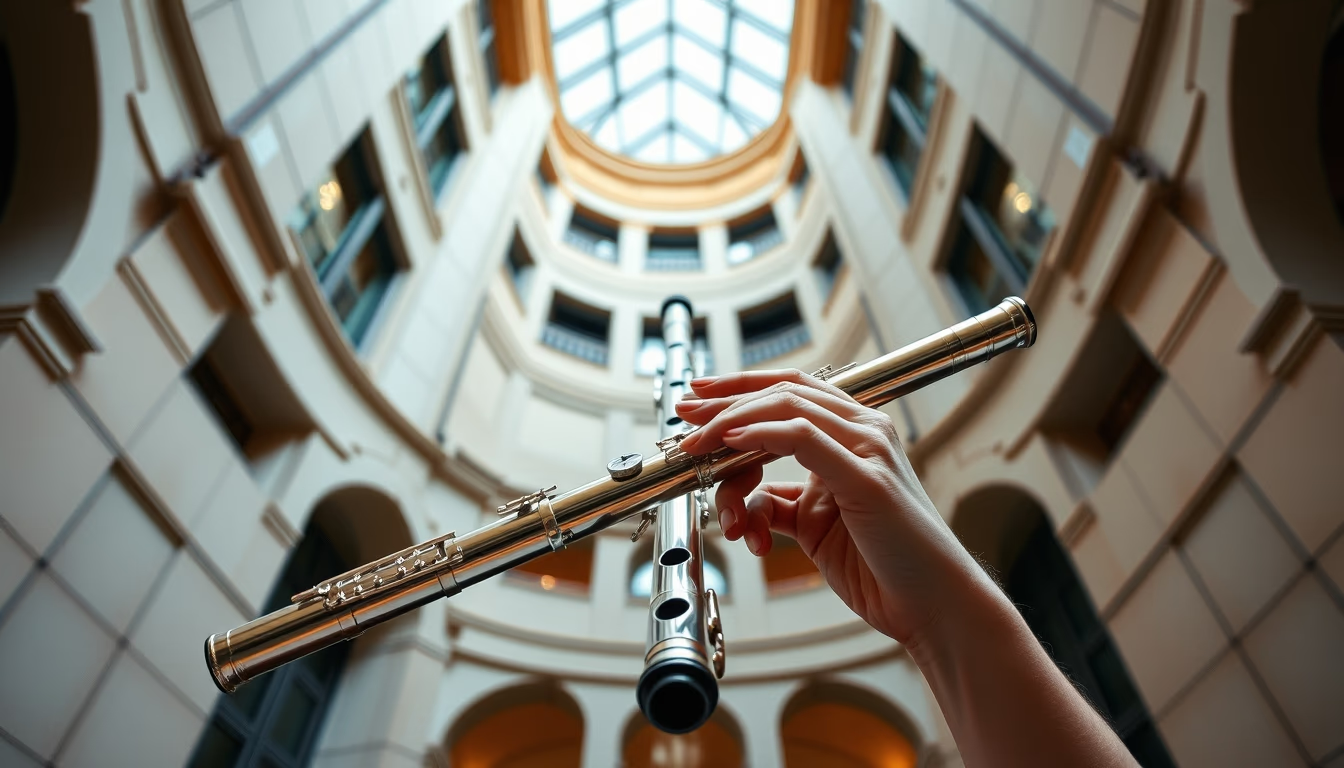
The piccolo, a small high-pitched woodwind instrument, is essential in orchestras and bands, known for its piercing tone and versatility.
About this subject
The piccolo is a woodwind instrument belonging to the flute family, approximately half the size of a standard transverse flute. It is pitched one octave above the concert flute, producing the highest sound among orchestral instruments. Typically made from wood (such as grenadilla) or metal (silver, nickel), the piccolo has a similar embouchure to the flute but requires greater breath control and precision due to its small scale.
It emerged in the early 19th century, derived from the Baroque flauto piccolo or flautino. Since then, it has become a staple in symphony orchestras, military bands, and chamber ensembles. One of the most famous piccolo solos is in John Philip Sousa's march "The Stars and Stripes Forever", where the instrument mimics a whistle. It is also used in works by composers such as Beethoven, Tchaikovsky, and Prokofiev, often to add brilliance and intensity to climactic passages.
Despite its diminutive size, the piccolo is challenging to play. Intonation is unstable, and the sound can become shrill if not carefully controlled. Players need great skill to articulate fast notes and maintain balanced volume with the rest of the ensemble. In marching bands, the piccolo is valued for its penetrating sound, able to cut through other instruments. Outside classical music, it appears in film scores, jazz, and popular music, showcasing its versatility.
Trivia: the name "piccolo" comes from Italian "flauto piccolo" (small flute). Although often associated with metal instruments, many professional piccolos are still made of wood for a warmer, richer timbre. The instrument is also used in folk music from parts of Europe and Latin America, such as Brazilian samba, where it replaces whistles in some ensembles.
Frequently Asked Questions
What is the difference between a flute and a piccolo?
The piccolo is smaller, sounds one octave higher, and has a higher pitch. The standard transverse flute is about 67 cm long, while the piccolo measures about 32 cm.
Why is the piccolo considered difficult to play?
It requires precise embouchure control and breath support, as notes can easily sound out of tune or shrill. Fast articulation in extreme registers is also challenging.
What are famous musical pieces with piccolo?
The solo in "The Stars and Stripes Forever" (Sousa) is iconic. It also appears in "Pictures at an Exhibition" (Mussorgsky/Ravel), "The Nutcracker" (Tchaikovsky), and film scores like "Jurassic Park".
Direct URL
https://pub-c7d6a6ea828543ac903a74a341ccb2e1.r2.dev/imagens/piccolo-small-flute-architectural-photography-p0.avifHow to credit
Include a visible link back to UtilizAí. Copy one of the snippets below:
<a href="https://xn--utiliza-eza.com/en/midia/imagens/piccolo-small-flute-architectural-photography-p0">Piccolo small flute</a> by <a href="https://xn--utiliza-eza.com">UtilizAí</a>, licensed under <a href="https://creativecommons.org/licenses/by/4.0/">CC BY 4.0</a>.
[Piccolo small flute](https://xn--utiliza-eza.com/en/midia/imagens/piccolo-small-flute-architectural-photography-p0) by [UtilizAí](https://xn--utiliza-eza.com), CC BY 4.0
License: CC-BY-4.0