Pharmaceutical research lab
1344×768 · AVIF · CC BY 4.0
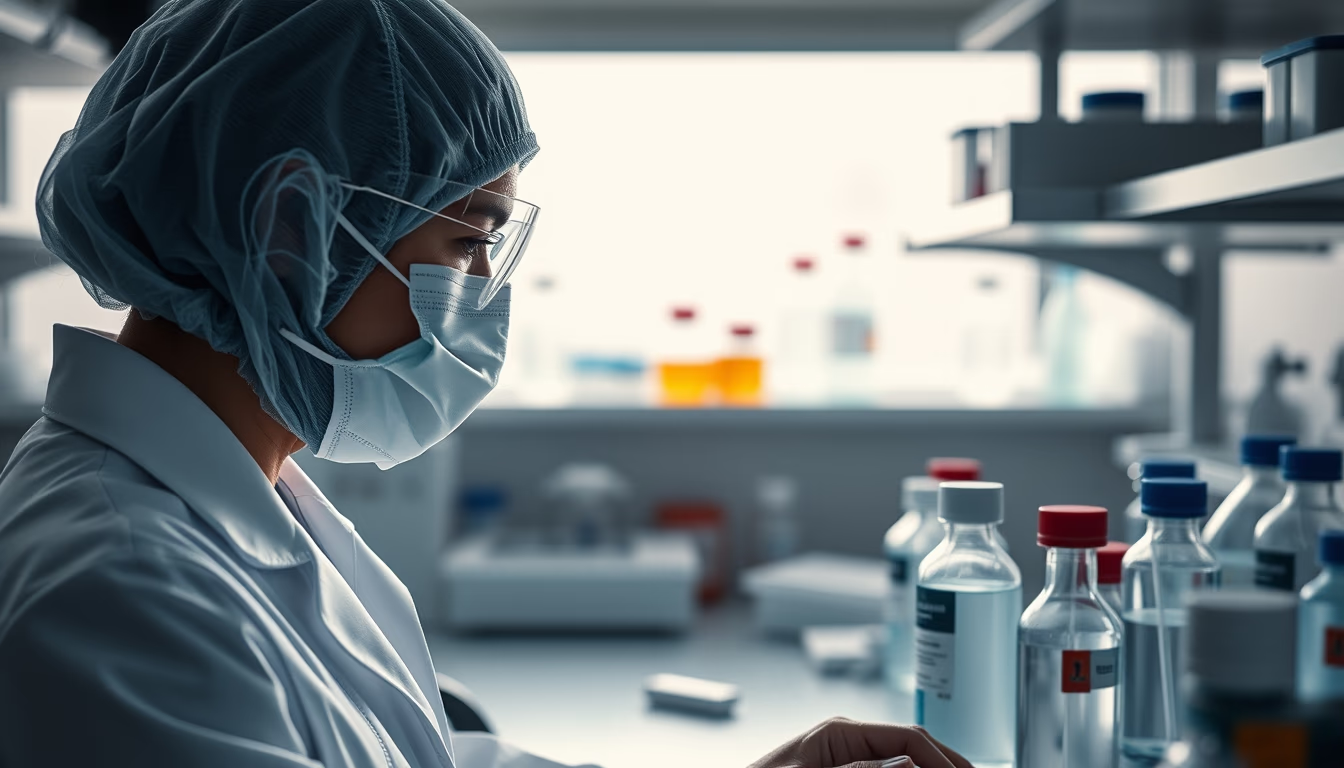
Pharmaceutical research labs are controlled environments where scientists develop new drugs, conduct efficacy and safety tests, and advance understanding of diseases.
About this subject
Pharmaceutical research labs are the heart of the drug industry. In them, multidisciplinary teams of chemists, biologists, pharmacologists, and physicians work together to turn promising molecules into approved drugs. The process begins with identifying biological targets, such as proteins or genes associated with diseases, followed by screening thousands of compounds for drug candidates. These candidates undergo preclinical tests on cell cultures and animals to evaluate efficacy and toxicity.
A crucial step is formulation and galenic development, which defines the best route of administration: tablets, injectables, aerosols, or patches. Stability studies run in parallel to ensure the drug maintains its properties over time. All work follows strict good laboratory practices (GLP) and is overseen by regulatory agencies such as ANVISA in Brazil and the FDA in the United States.
Pharmaceutical research is not limited to new drugs. It also includes developing generics, optimizing existing medications, and creating combination therapies. In recent years, biotechnology has brought advances like monoclonal antibodies, gene therapies, and messenger RNA, expanding the scope of traditional labs. Besides basic equipment such as laminar flow hoods, microscopes, and chromatographs, modern labs feature molecular modeling software and robots to automate experiments.
The COVID-19 pandemic highlighted the importance of these spaces: mRNA vaccines were developed in record time thanks to decades of basic research in molecular biology. The productivity of a pharmaceutical lab depends not only on technology but also on international collaboration and investment in basic research. For the end patient, the result is access to safer and more effective treatments with fewer side effects.
Frequently Asked Questions
What are the main stages of drug development in a pharmaceutical lab?
Development includes target discovery, compound screening, preclinical tests, galenic formulation, stability studies, followed by human clinical trials (phases I, II, and III) to prove safety and efficacy before regulatory approval.
What are Good Laboratory Practices (GLP) and why are they important?
Good Laboratory Practices are international standards that ensure the quality, integrity, and reliability of data from non-clinical studies. They are essential for regulatory acceptance and to guarantee the safety of future patients.
How has biotechnology changed pharmaceutical research in recent years?
Biotechnology has enabled the development of large-molecule drugs such as monoclonal antibodies and gene therapies, as well as rapid platforms like mRNA, which was crucial for creating COVID-19 vaccines. This has expanded the therapeutic arsenal for previously incurable diseases.
Direct URL
https://pub-c7d6a6ea828543ac903a74a341ccb2e1.r2.dev/imagens/pharmaceutical-research-lab-magazine-editorial-p6.avifHow to credit
Include a visible link back to UtilizAí. Copy one of the snippets below:
<a href="https://xn--utiliza-eza.com/en/midia/imagens/pharmaceutical-research-lab-magazine-editorial-p6">Pharmaceutical research lab</a> by <a href="https://xn--utiliza-eza.com">UtilizAí</a>, licensed under <a href="https://creativecommons.org/licenses/by/4.0/">CC BY 4.0</a>.
[Pharmaceutical research lab](https://xn--utiliza-eza.com/en/midia/imagens/pharmaceutical-research-lab-magazine-editorial-p6) by [UtilizAí](https://xn--utiliza-eza.com), CC BY 4.0
License: CC-BY-4.0