Petra treasury jordan
1344×768 · AVIF · CC BY 4.0
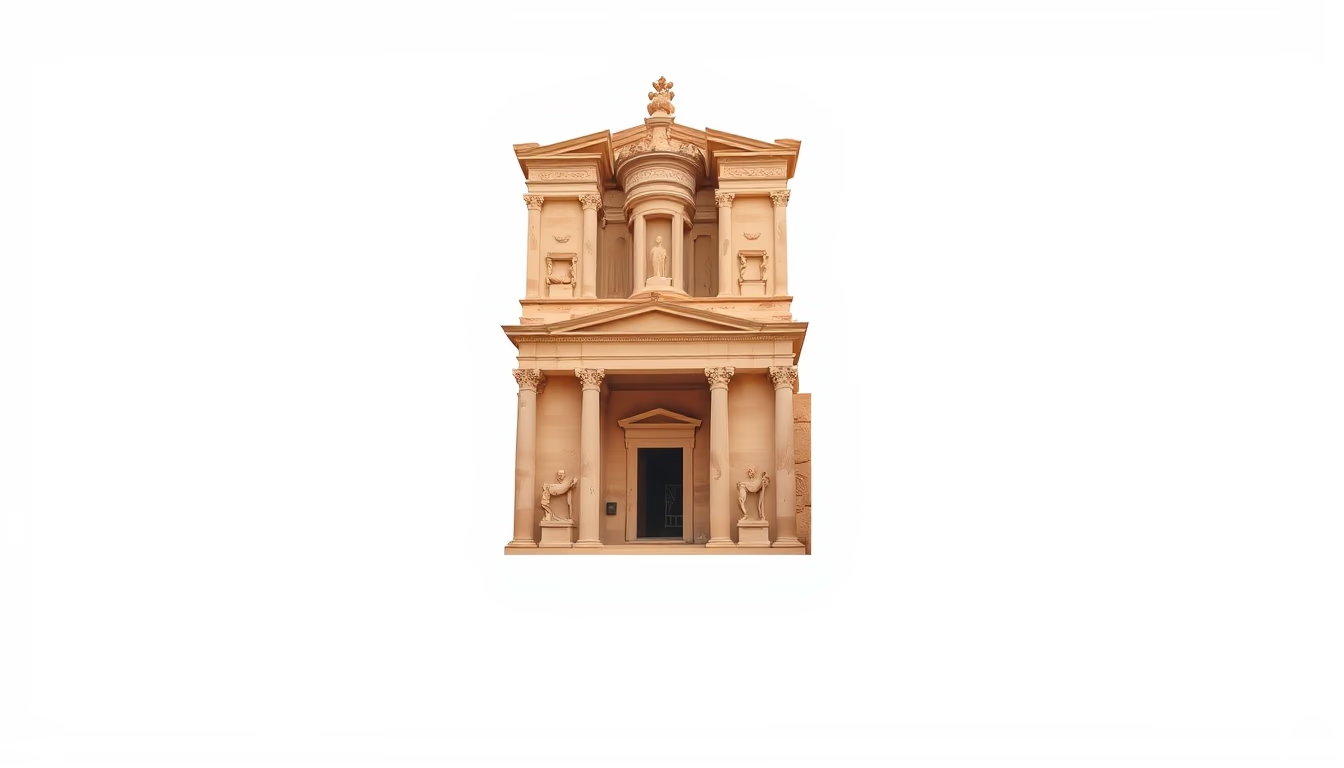
O Tesouro de Petra, Al-Khazneh, é um monumento esculpido em rocha no século I a.C. no sul da Jordânia, famoso por sua fachada nabateia e aparição em filmes.
Sobre o tema
Al-Khazneh, conhecido como o Tesouro de Petra, é uma das estruturas mais emblemáticas da antiga cidade nabateia de Petra, no sul da Jordânia. Esculpido diretamente na face de um penhasco de arenito rosa, o monumento data aproximadamente do século I a.C., durante o auge do reino nabateu. Acredita-se que tenha sido construído como mausoléu real, embora seu nome popular, Tesouro, derive de lendas beduínas sobre um tesouro escondido no topo da fachada. A fachada mede cerca de 40 metros de altura e 25 metros de largura, exibindo uma mistura de estilos arquitetônicos greco-romanos e egípcios, incluindo colunas coríntias, frontão quebrado e figuras de divindades.
O monumento ganhou fama mundial por ter sido o cenário de filmes como Indiana Jones e a Última Cruzada (1989), onde aparece como a entrada para o Santo Graal. No entanto, o interior do Tesouro é relativamente simples: uma única câmara quadrada com aproximados 12 metros de lado, sem inscrições ou decorações extensas, o que sugere que nunca foi concluído ou que seu propósito original funerário foi alterado ao longo do tempo. A fachada, por outro lado, é ricamente ornamentada com relevos que incluem águias, figuras aladas e vasos quebrados, simbolizando a imortalidade.
Petra foi designada Patrimônio Mundial da UNESCO em 1985 e é uma das Novas Sete Maravilhas do Mundo (2007). O acesso ao Tesouro é feito através do Siq, um desfiladeiro estreito de 1,2 km, o que cria um efeito dramático ao revelar a fachada de repente. A cidade de Petra, que floresceu como centro de comércio de especiarias e seda, entrou em declínio após terremotos e mudanças nas rotas comerciais no século VII d.C., sendo abandonada e redescoberta pelo explorador suíço Johann Ludwig Burckhardt em 1812. Hoje, o Tesouro é um dos sítios arqueológicos mais visitados do Oriente Médio, atraindo turistas de todo o mundo.
Perguntas frequentes
O que significa Al-Khazneh em árabe?
Al-Khazneh significa 'O Tesouro' em árabe. O nome vem de lendas locais que afirmam que um tesouro estava escondido no vaso de pedra no topo da fachada.
O Tesouro de Petra foi realmente usado como tumba?
Sim, acredita-se que tenha sido construído como mausoléu real para um rei nabateu, provavelmente Aretas IV. A câmara interna tem tamanho suficiente para um enterro, embora não tenham sido encontrados restos mortais.
Como visitar o Tesouro de Petra hoje?
O Tesouro está localizado dentro do Parque Arqueológico de Petra, na Jordânia. Os visitantes entram pelo Siq e chegam ao monumento a pé ou de carroça. É necessário comprar ingresso para o parque, com preços variando entre 50 e 90 dinares jordanianos para um dia.
URL direta
https://pub-c7d6a6ea828543ac903a74a341ccb2e1.r2.dev/imagens/petra-treasury-jordan-commercial-product-photography-p11.avifComo creditar
Inclua um link visível de volta pro UtilizAí. Copie um dos snippets abaixo:
<a href="https://xn--utiliza-eza.com/midia/imagens/petra-treasury-jordan-commercial-product-photography-p11">Petra treasury jordan</a> by <a href="https://xn--utiliza-eza.com">UtilizAí</a>, licensed under <a href="https://creativecommons.org/licenses/by/4.0/">CC BY 4.0</a>.
[Petra treasury jordan](https://xn--utiliza-eza.com/midia/imagens/petra-treasury-jordan-commercial-product-photography-p11) by [UtilizAí](https://xn--utiliza-eza.com), CC BY 4.0
Licença: CC-BY-4.0