Persian rug weaving
1344×768 · AVIF · CC BY 4.0
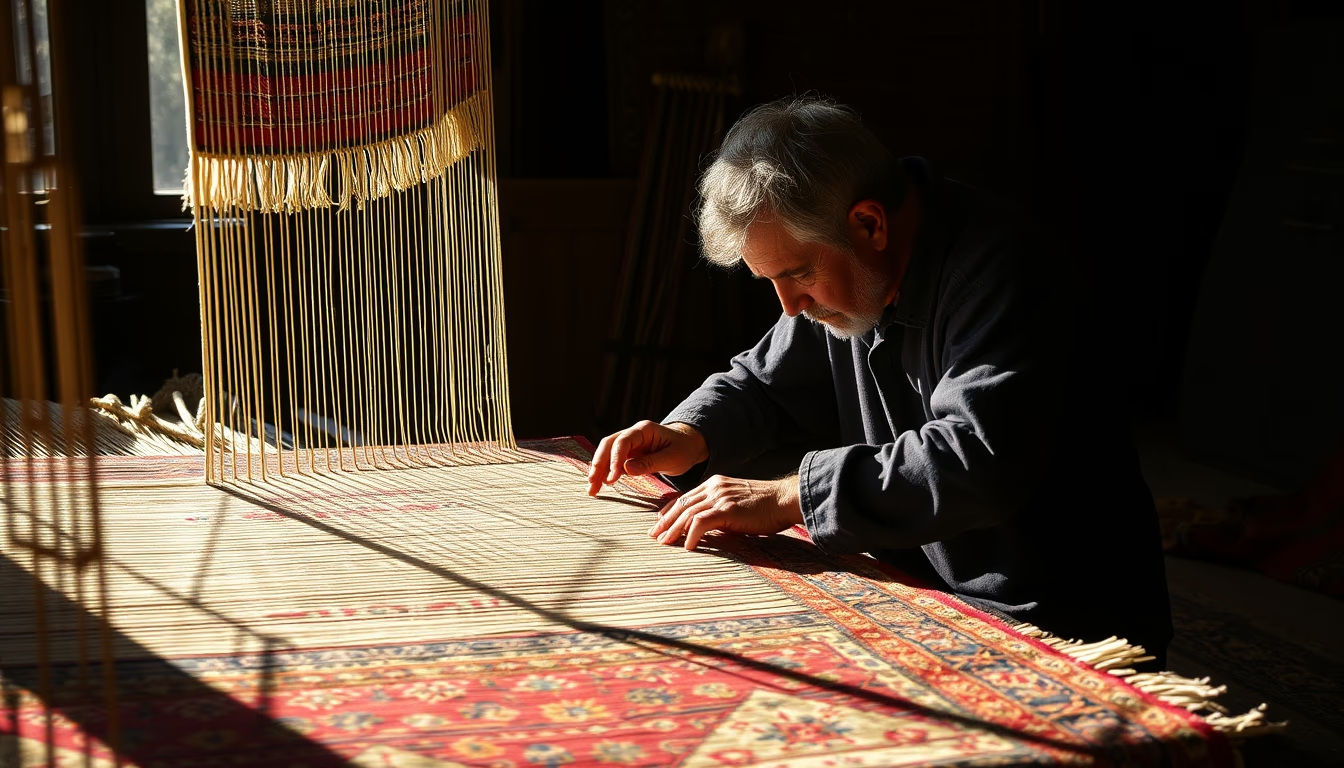
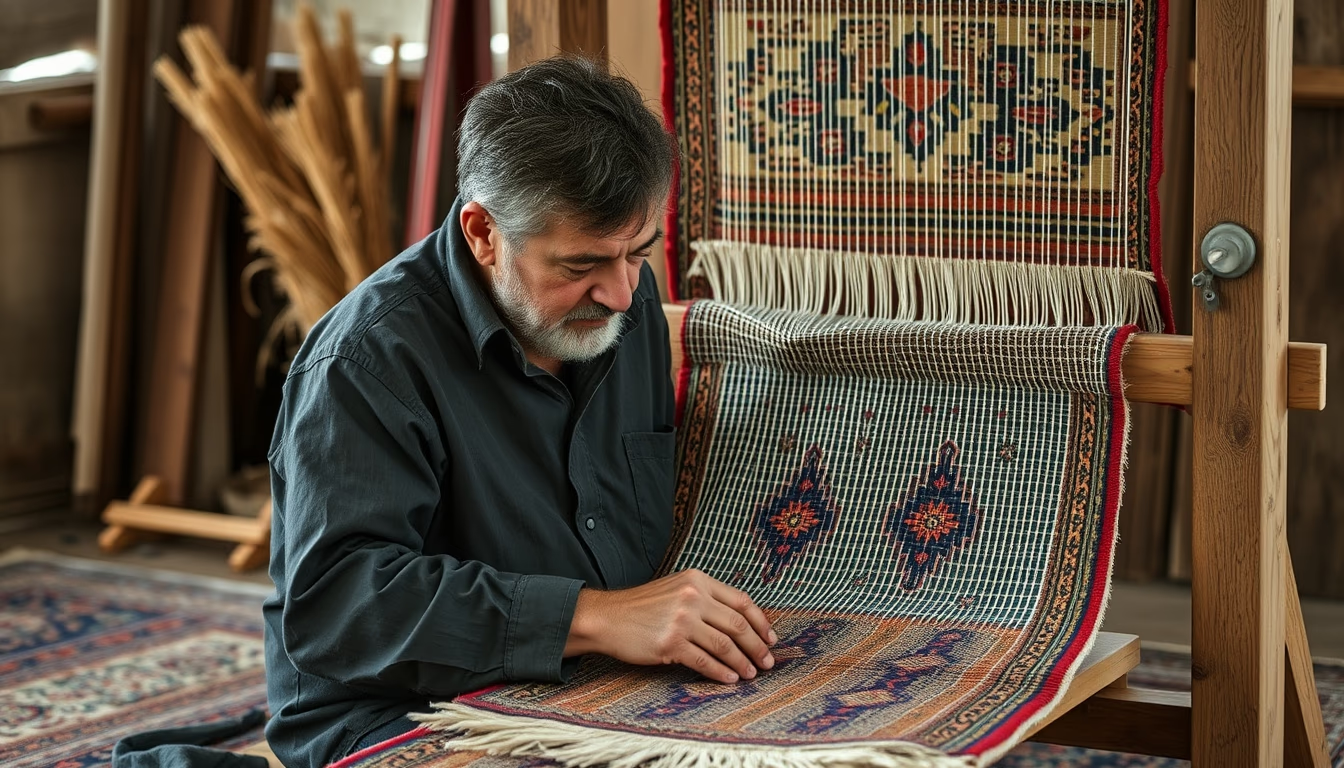
Hand-knotting Persian rugs, a millennia-old Iranian tradition, combines intricate knots, naturally dyed wool, and designs that tell cultural stories.
About this subject
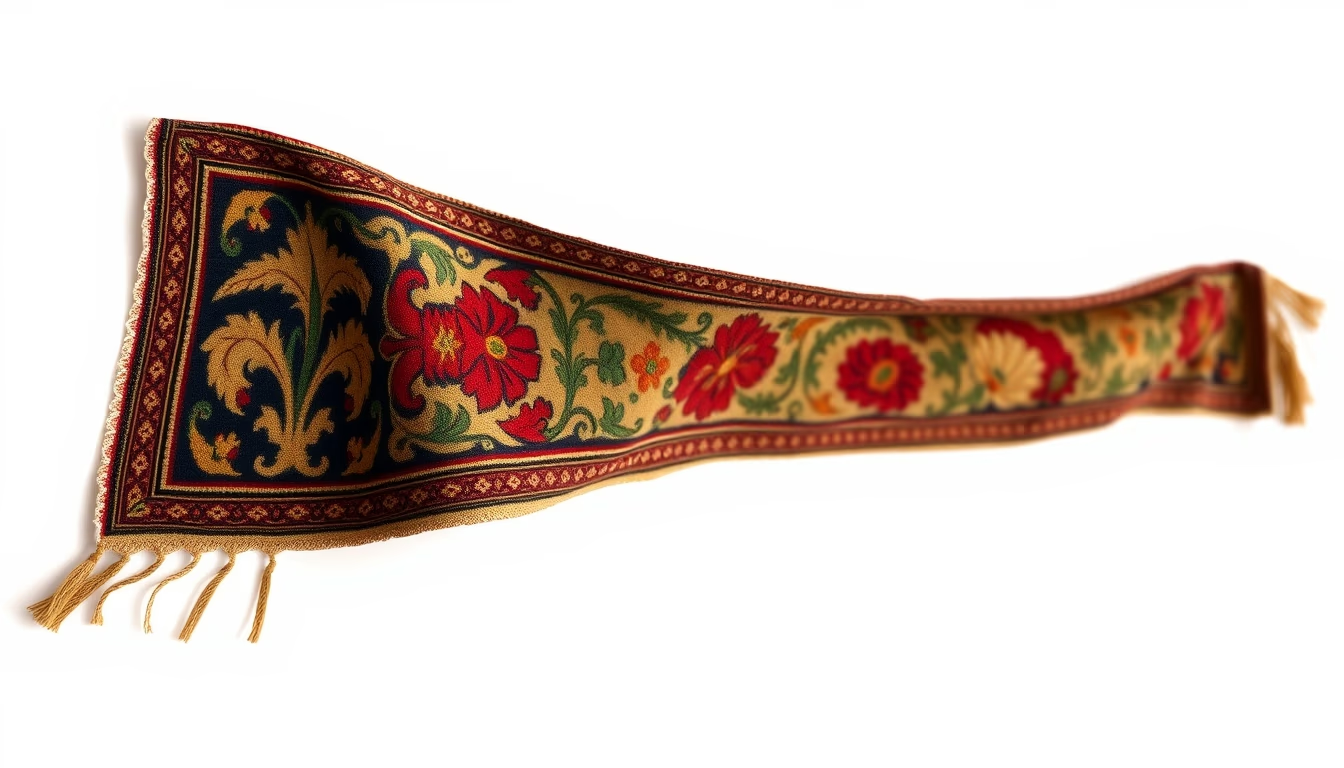
Persian rug weaving is among the oldest textile arts, with origins dating back to the Achaemenid Empire (550, 330 BCE). The Persian knot, also known as the asymmetrical or senneh knot, is the hallmark technique that enables detailed patterns and smooth curves. Each rug is hand-knotted on a vertical or horizontal loom using sheep wool, silk, or cotton, dyed with natural colorants such as indigo, carmine, and saffron. Cities like Tabriz, Isfahan, Kashan, and Qom are renowned for their regional styles, which include floral motifs, medallions, and garden scenes inspired by Persian paradises. UNESCO recognized the art of carpet weaving in Iran as Intangible Cultural Heritage in 2010. A single rug can take months or years to complete, depending on complexity and knot density, which can exceed 500 knots per square inch. Historically, the Persian rug trade was a vital economic route connecting the Middle East to Europe and Asia. Despite competition from machine-made rugs, authentic Persian rugs remain symbols of luxury and craftsmanship, with antique pieces fetching tens of thousands of dollars at auction. The tradition is passed down through generations, often in families that have mastered the craft for centuries.
Frequently Asked Questions
How is a Persian rug hand-knotted?
The process involves stretching warp threads on a loom, then weaving weft threads and tying individual knots with colored yarns. The Persian knot is tied around two warp threads, allowing detailed patterns. After each row of knots, a weft thread is beaten firmly to compact the rug.
What distinguishes an authentic Persian rug from a machine-made one?
Authentic Persian rugs have irregular knots on the back, slightly varied colors due to natural dyeing, and a cotton or wool foundation. Machine-made rugs have regular, uniform knots, homogeneous colors, and often use synthetic fibers.
Why are some Persian rugs so expensive?
The price depends on knot density (higher means more detail and durability), materials (silk is more expensive than wool), age, rarity of the design, and the reputation of the region of origin. Antique, high-quality pieces can be considered investments.
Direct URL
https://pub-c7d6a6ea828543ac903a74a341ccb2e1.r2.dev/imagens/persian-rug-weaving-rembrandt-lighting-dramatic-shadows-fresh8.avifHow to credit
Include a visible link back to UtilizAí. Copy one of the snippets below:
<a href="https://xn--utiliza-eza.com/en/midia/imagens/persian-rug-weaving-rembrandt-lighting-dramatic-shadows-fresh8">Persian rug weaving</a> by <a href="https://xn--utiliza-eza.com">UtilizAí</a>, licensed under <a href="https://creativecommons.org/licenses/by/4.0/">CC BY 4.0</a>.
[Persian rug weaving](https://xn--utiliza-eza.com/en/midia/imagens/persian-rug-weaving-rembrandt-lighting-dramatic-shadows-fresh8) by [UtilizAí](https://xn--utiliza-eza.com), CC BY 4.0
License: CC-BY-4.0