Tapestry medieval flemish
1344×768 · AVIF · CC BY 4.0
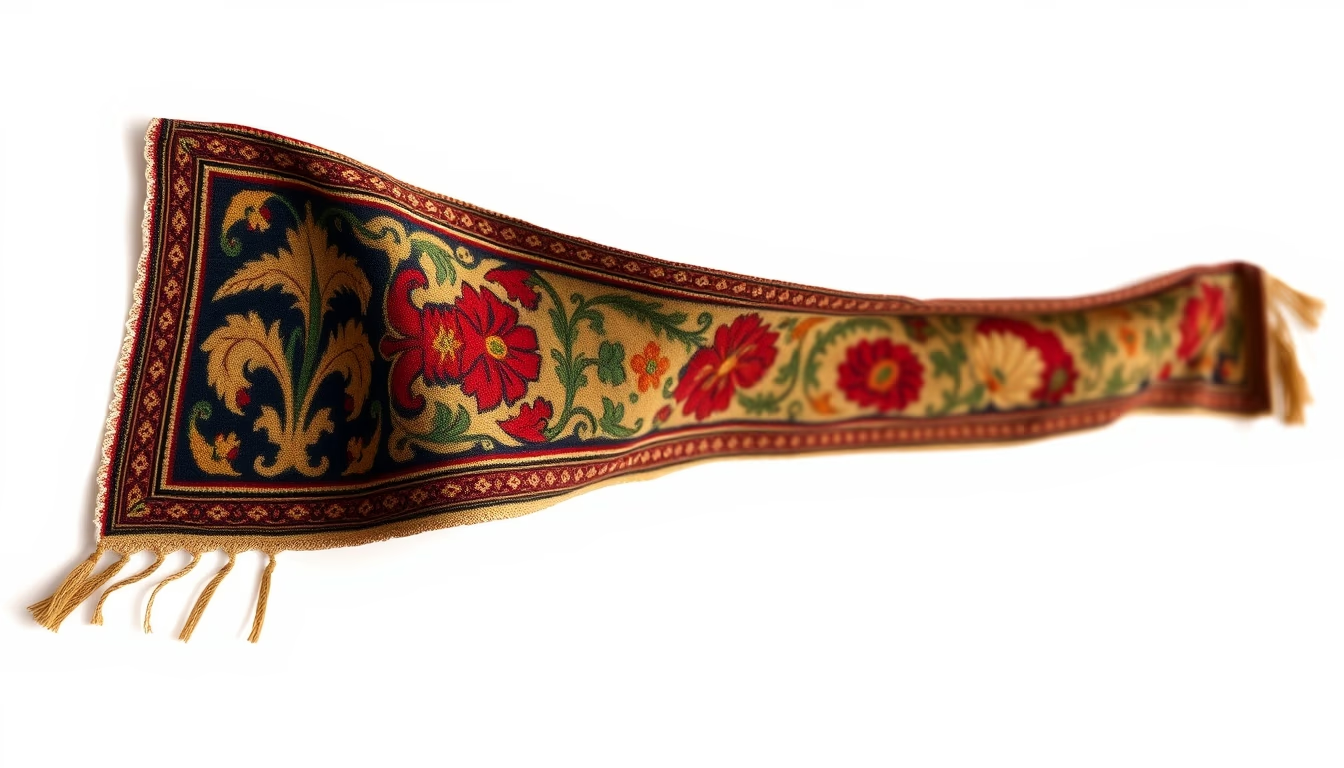
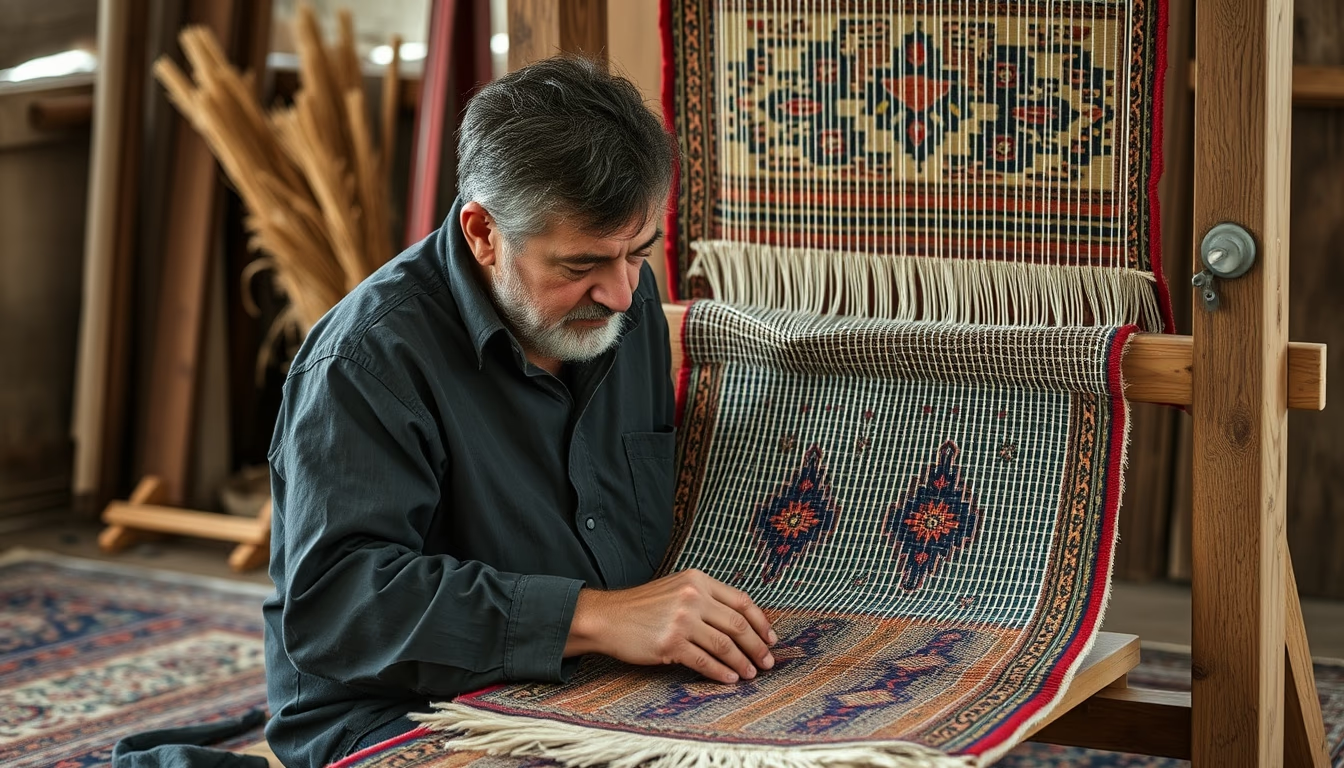
Flemish medieval tapestry, woven with wool and silk threads, is an icon of luxury and 15th-century art.
About this subject
Flemish medieval tapestry is one of the most refined products of European textile art, produced mainly in Flemish urban centers such as Brussels, Ghent, Tournai, and Bruges between the 14th and 16th centuries. These works were woven on high-warp looms using wool dyed in vibrant colors, silk, and often gold and silver threads for noble details. The process was extremely time-consuming: a single large tapestry could take years to complete by a team of specialized craftsmen, the tapissiers.
Themes ranged from religious and mythological scenes to allegories and depictions of courtly life, such as hunts and battles. Often, commissions came from kings, dukes, and high clergy who displayed tapestries as symbols of power and wealth. The series The Hunt of the Unicorn (1495-1505), now at the Metropolitan Museum of Art, is a celebrated example of the technical virtuosity and narrative complexity of these pieces. Each tapestry told a detailed story, with elaborate costumes and meticulous landscapes.
The historical importance of Flemish tapestries goes beyond aesthetics. They were high-value commercial goods, exported throughout Europe, especially to Italy, France, and England. Their trade boosted the region's economy and influenced local artistic development. However, from the 17th century onward, competition from French tapestry and economic crisis led to the decline of Flemish production. Today, surviving pieces are treasures in museums and private collections, admired for their unparalleled technique and wealth of detail.
Interestingly, many medieval tapestries were cut or reduced to fit new spaces, making their original reconstruction difficult. Flemish tapestry not only decorated but also thermally insulated castle interiors, functioning as precious wall coverings.
Frequently Asked Questions
How were Flemish medieval tapestries made?
They were woven on high-warp looms using wool, silk, and precious metal threads. The process required specialized craftsmen and could take years to complete.
What themes were common in Flemish tapestries?
Religious scenes, mythology, allegories, hunts, battles, and courtly life. They often told complex stories with human and animal figures.
Why are Flemish tapestries historically valuable?
They represent the pinnacle of medieval textile art, were symbols of power and wealth, and drove a vital export economy for the Flanders region.
Direct URL
https://pub-c7d6a6ea828543ac903a74a341ccb2e1.r2.dev/imagens/tapestry-medieval-flemish-commercial-product-photography-fresh18.avifHow to credit
Include a visible link back to UtilizAí. Copy one of the snippets below:
<a href="https://xn--utiliza-eza.com/en/midia/imagens/tapestry-medieval-flemish-commercial-product-photography-fresh18">Tapestry medieval flemish</a> by <a href="https://xn--utiliza-eza.com">UtilizAí</a>, licensed under <a href="https://creativecommons.org/licenses/by/4.0/">CC BY 4.0</a>.
[Tapestry medieval flemish](https://xn--utiliza-eza.com/en/midia/imagens/tapestry-medieval-flemish-commercial-product-photography-fresh18) by [UtilizAí](https://xn--utiliza-eza.com), CC BY 4.0
License: CC-BY-4.0