Penguins on ice antarctica
1344×768 · AVIF · CC BY 4.0
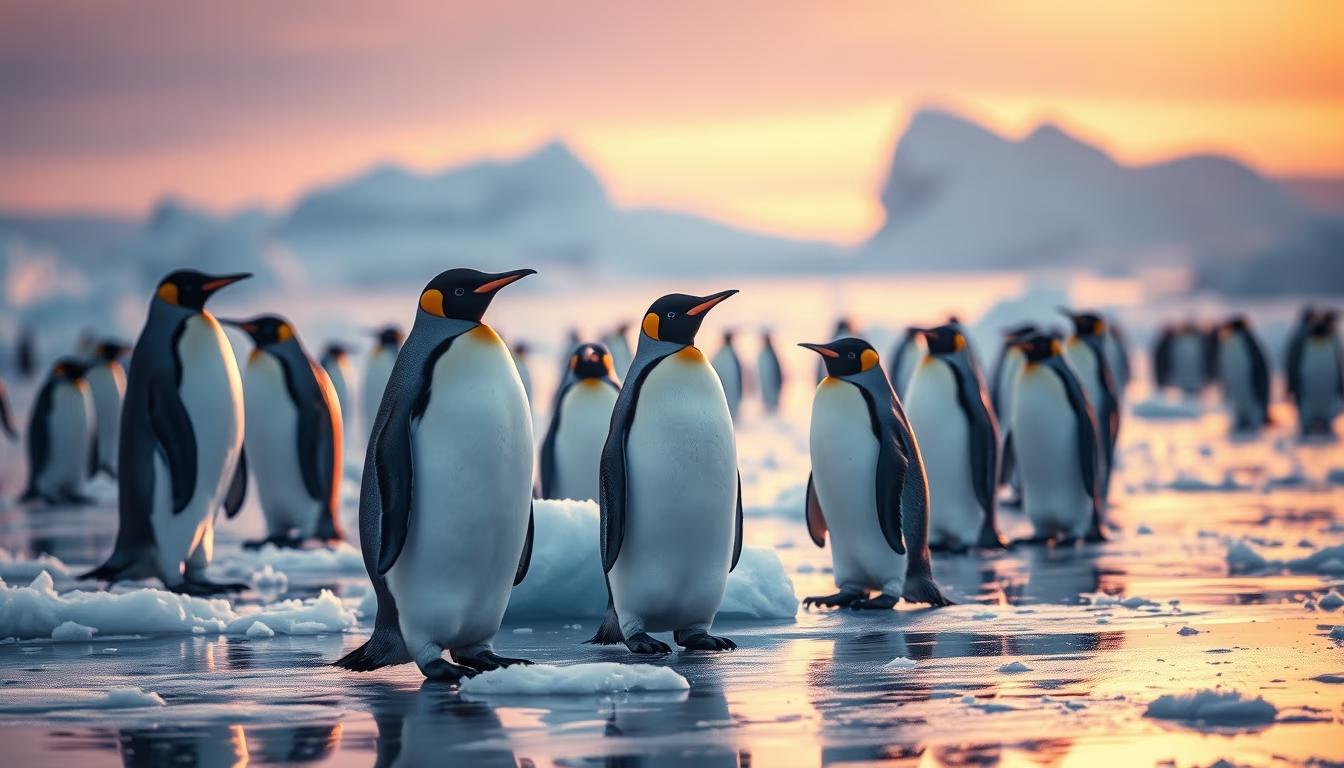
Emperor penguins glide across Antarctic ice in a landscape of extremes, where cold shapes life.
About this subject
Antarctica, the coldest, driest, and windiest continent on Earth, hosts wildlife uniquely adapted to harsh conditions. Among its most iconic inhabitants are emperor penguins (Aptenodytes forsteri), the largest penguin species, standing up to 1.2 meters tall and weighing up to 45 kilograms. They are renowned for their remarkable breeding cycle: after mating, females lay a single egg and then head to sea to feed, while males incubate the egg on their feet, covered by a brood pouch, through the brutal Antarctic winter when temperatures can drop below -60°C.
The sea ice landscape where these penguins live is constantly changing. Drift ice, formed by freezing seawater, serves as a platform for breeding, feeding, and resting. However, climate change is reducing the extent and thickness of Antarctic sea ice, threatening emperor penguin habitat. Studies indicate that if greenhouse gas emissions continue at current rates, the species could face drastic population declines by the end of the century.
Emperor penguins are exceptional divers, capable of reaching depths over 500 meters and holding their breath for up to 20 minutes. Their dense plumage and fat layer insulate them from the cold, while huddling behavior helps conserve heat during storms. Despite their resilience, their reliance on sea ice makes them vulnerable to rapid environmental changes.
Antarctica is protected by the Antarctic Treaty, which designates the region as a natural reserve devoted to peace and science. Researchers monitor emperor penguin colonies via satellite, as their guano contrasts with the ice and is visible from space. These studies are crucial for understanding climate change impacts and guiding conservation efforts.
Frequently Asked Questions
Why do emperor penguins depend on sea ice?
They use sea ice as a platform for breeding, feeding, and resting. Stable ice is essential for egg incubation and chick rearing.
How do emperor penguins survive extreme cold?
They have dense plumage, insulating fat layers, and huddling behavior to conserve heat. They also reduce metabolism and peripheral circulation.
What is the impact of climate change on emperor penguins?
Melting sea ice reduces available habitat, affecting reproduction and food availability. Studies predict population declines if carbon emissions remain high.
Direct URL
https://pub-c7d6a6ea828543ac903a74a341ccb2e1.r2.dev/imagens/penguins-on-ice-antarctica-cinematic-wide-shot-v2.avifHow to credit
Include a visible link back to UtilizAí. Copy one of the snippets below:
<a href="https://xn--utiliza-eza.com/en/midia/imagens/penguins-on-ice-antarctica-cinematic-wide-shot-v2">Penguins on ice antarctica</a> by <a href="https://xn--utiliza-eza.com">UtilizAí</a>, licensed under <a href="https://creativecommons.org/licenses/by/4.0/">CC BY 4.0</a>.
[Penguins on ice antarctica](https://xn--utiliza-eza.com/en/midia/imagens/penguins-on-ice-antarctica-cinematic-wide-shot-v2) by [UtilizAí](https://xn--utiliza-eza.com), CC BY 4.0
License: CC-BY-4.0