Pcr machine running cycle
1344×768 · AVIF · CC BY 4.0
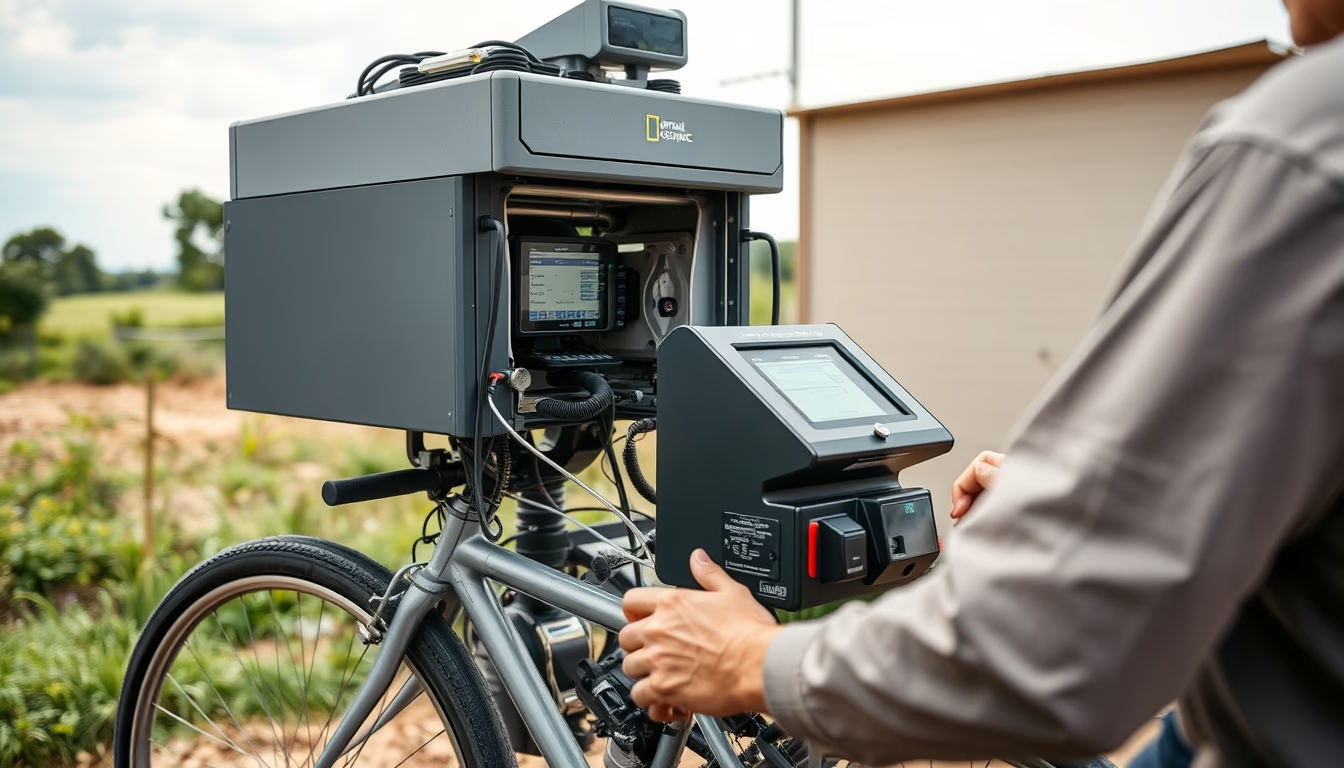
PCR machine running a cycle of DNA amplification, a fundamental technique for molecular diagnostics and genetic research.
About this subject
The PCR machine, or thermal cycler, is a core instrument in molecular biology laboratories. It performs repeated temperature cycles to amplify specific DNA fragments through the polymerase chain reaction (PCR). Each cycle includes three steps: denaturation (94-98°C), annealing (50-65°C), and extension (72°C). These cycles repeat 25 to 40 times, generating millions of copies of the target sequence.
Invented by Kary Mullis in 1983, PCR revolutionized biology and earned him the Nobel Prize in Chemistry in 1993. Modern thermal cyclers use Peltier-effect heating blocks and software to program precise thermal profiles. Popular models include the Applied Biosystems QuantStudio and Bio-Rad CFX series.
Clinically, PCR is the gold standard for detecting viral infections such as SARS-CoV-2, HIV, and hepatitis. It is also essential for identifying genetic mutations, paternity testing, and gene expression analysis via real-time PCR (qPCR). Temperature accuracy is critical: deviations can reduce amplification efficiency.
An interesting fact: PCR can amplify DNA from minimal samples, like a single hair or ancient bone fragment, enabling forensic and archaeological analyses. Portable devices like the Biomeme Franklin allow on-field rapid diagnostics. Despite automation, cycle design (times and temperatures) still requires operator expertise to avoid non-specific products.
Frequently Asked Questions
What is the difference between conventional PCR and real-time PCR (qPCR)?
Conventional PCR detects the product after the reaction ends, while qPCR monitors amplification in real time with fluorescence, allowing precise quantification of the target DNA.
How long does a typical PCR cycle take?
Each cycle lasts 30 seconds to 2 minutes, depending on the enzyme and equipment. A full run of 30 to 40 cycles takes 1 to 3 hours.
Can samples be reused after PCR?
No, because the polymerase enzyme is denatured during cycles and the amplified DNA loses integrity. Original samples can be stored separately for further analysis.
Direct URL
https://pub-c7d6a6ea828543ac903a74a341ccb2e1.r2.dev/imagens/pcr-machine-running-cycle-national-geographic-style-p12.avifHow to credit
Include a visible link back to UtilizAí. Copy one of the snippets below:
<a href="https://xn--utiliza-eza.com/en/midia/imagens/pcr-machine-running-cycle-national-geographic-style-p12">Pcr machine running cycle</a> by <a href="https://xn--utiliza-eza.com">UtilizAí</a>, licensed under <a href="https://creativecommons.org/licenses/by/4.0/">CC BY 4.0</a>.
[Pcr machine running cycle](https://xn--utiliza-eza.com/en/midia/imagens/pcr-machine-running-cycle-national-geographic-style-p12) by [UtilizAí](https://xn--utiliza-eza.com), CC BY 4.0
License: CC-BY-4.0