Parthenon marbles
1344×768 · AVIF · CC BY 4.0
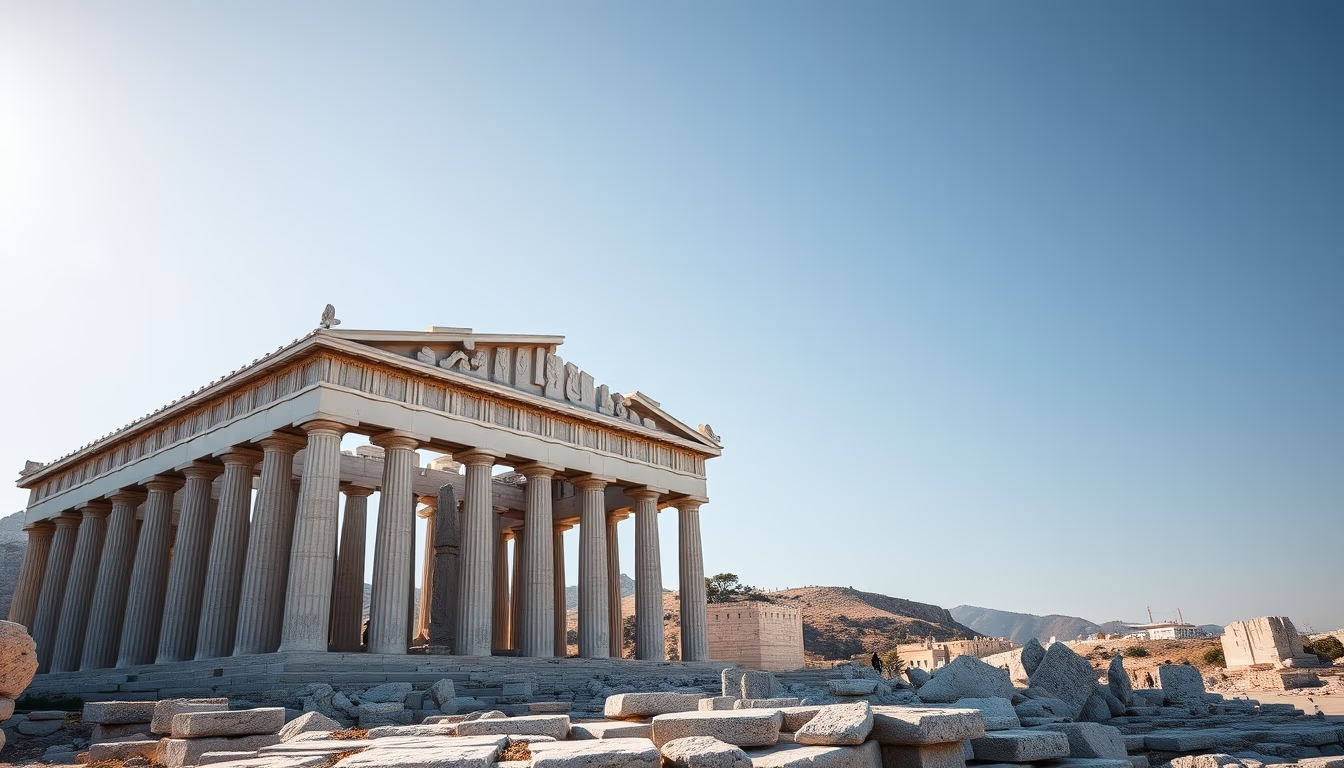
The Parthenon Marbles are a collection of classical Greek sculptures removed from the Parthenon in Athens by Lord Elgin in the early 19th century and now housed in the British Museum.
About this subject
The Parthenon Marbles, also known as the Elgin Marbles, are a collection of 17 figures of gods and heroes, 15 metopes, and 56 panels of the frieze that adorned the Parthenon, a temple dedicated to the goddess Athena atop the Acropolis of Athens. They were sculpted under the supervision of Phidias between 447 and 432 BCE, during the Golden Age of Pericles. The sculptures depict mythological scenes, such as the Panathenaic procession and the battle between the centaurs and the Lapiths.
In 1801, Thomas Bruce, the 7th Earl of Elgin, obtained a permit (firman) from the Ottoman Empire, which then controlled Greece, to remove about half of the surviving sculptures from the Parthenon. They were shipped to Britain and, in 1816, sold to the British Museum, where they have been displayed ever since. The legality of the firman is disputed, and Greece has demanded the return of the marbles since its independence.
The repatriation debate is intense. The Greek government argues that the sculptures are an essential part of Greek heritage and that their display in the Acropolis Museum, built to house them, would allow them to be seen in their original context. The British Museum maintains that the marbles were legally acquired and are part of a global collection accessible to all. A 2022 poll indicated that 59% of Britons support their return.
The Parthenon Marbles are one of the most emblematic cases of cultural property dispute. In 2023, Greek Prime Minister Kyriakos Mitsotakis compared the situation to having the Mona Lisa cut in half. Although no agreement has been reached, diplomatic discussions continue, and temporary loans have been suggested as an intermediate solution.
Frequently Asked Questions
What are the Parthenon Marbles?
They are a collection of classical Greek sculptures that originally decorated the Parthenon, a temple on the Acropolis of Athens. They include figures of gods, metopes, and frieze panels, carved by Phidias in the 5th century BCE.
Why are the Marbles in the British Museum and not in Greece?
They were removed by Lord Elgin in the early 19th century with permission from the Ottoman Empire. He sold them to the British Museum in 1816. Greece disputes the legality of the removal and demands their return.
What is Greece's main argument for repatriation?
Greece argues that the sculptures are an essential part of its cultural heritage and should be reunited at the Acropolis Museum, where they can be appreciated in their original historical context.
Direct URL
https://pub-c7d6a6ea828543ac903a74a341ccb2e1.r2.dev/imagens/parthenon-marbles-magazine-editorial-p7.avifHow to credit
Include a visible link back to UtilizAí. Copy one of the snippets below:
<a href="https://xn--utiliza-eza.com/en/midia/imagens/parthenon-marbles-magazine-editorial-p7">Parthenon marbles</a> by <a href="https://xn--utiliza-eza.com">UtilizAí</a>, licensed under <a href="https://creativecommons.org/licenses/by/4.0/">CC BY 4.0</a>.
[Parthenon marbles](https://xn--utiliza-eza.com/en/midia/imagens/parthenon-marbles-magazine-editorial-p7) by [UtilizAí](https://xn--utiliza-eza.com), CC BY 4.0
License: CC-BY-4.0