Parthenon marbles
1344×768 · AVIF · CC BY 4.0
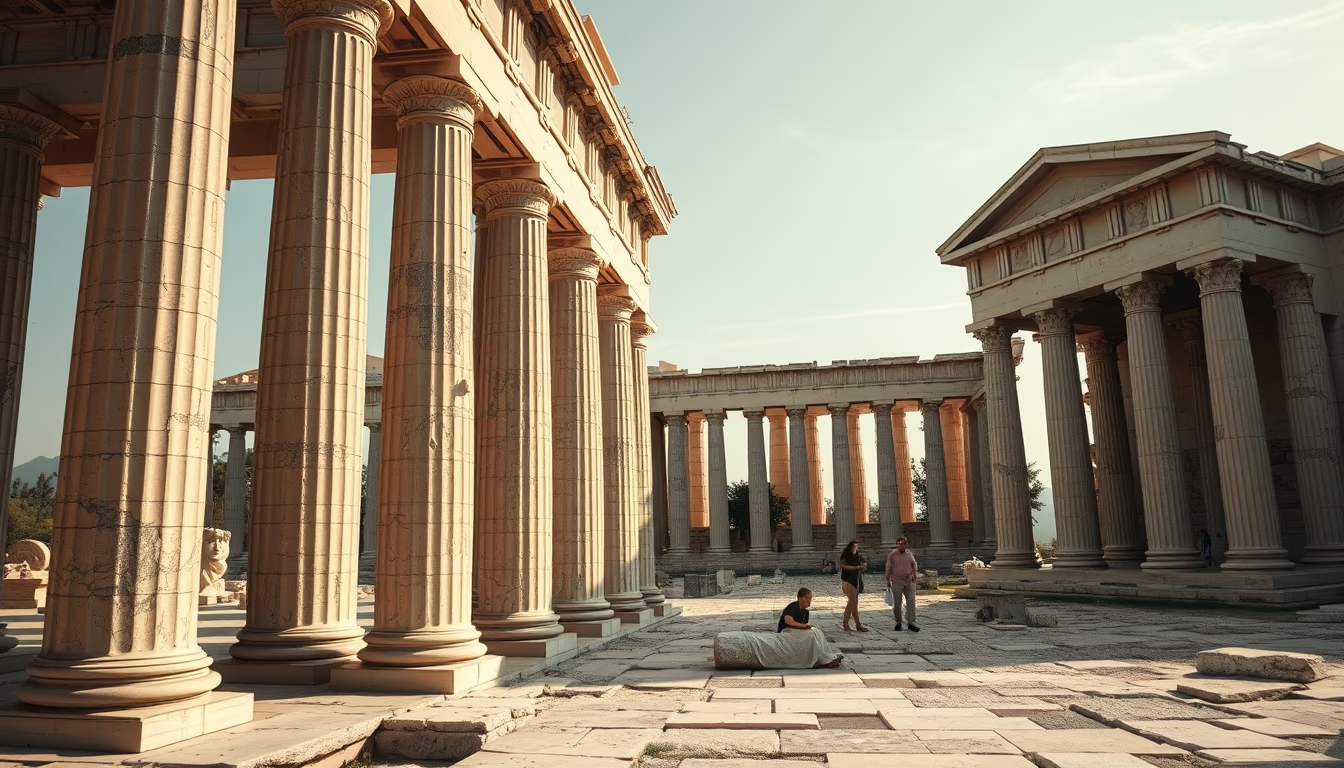
The Parthenon marbles, ancient Greek sculptures removed by Lord Elgin, are disputed between Greece and the United Kingdom.
About this subject
The Parthenon marbles, also known as the Elgin Marbles, are a collection of classical Greek sculptures that originally adorned the Parthenon and other buildings on the Acropolis of Athens. Dating from the 5th century BC, they were created under the supervision of the sculptor Phidias and depict mythological scenes such as the Panathenaic procession and the battle between gods and giants. In 1801, Thomas Bruce, 7th Earl of Elgin, obtained a controversial permit from the Ottoman Empire (then in control of Greece) to remove about half of the surviving sculptures. The pieces were shipped to England and sold to the British government in 1816, and have since been displayed at the British Museum in London.
The removal and ownership of the marbles have sparked one of the longest-running debates over cultural heritage. Greece argues that the sculptures were looted during a period of foreign occupation and demands their return to the new Acropolis Museum, opened in 2009, which has a dedicated empty space awaiting them. The United Kingdom, in turn, claims that the acquisition was legal and that the marbles are part of a universal collection accessible to all. International organizations such as UNESCO have mediated discussions, but no definitive agreement has been reached.
Beyond the legal and diplomatic aspects, the marbles are masterpieces of classical art. They display sophisticated realism and technical mastery that have influenced generations of artists. Each fragment tells a story: from the metopes depicting the Centauromachy to the continuous frieze showing the procession of offerings to the goddess Athena. Their deterioration over centuries, aggravated by pollution and handling, makes proper preservation urgent, whether in Athens or London.
The marbles controversy also raises questions about the role of Western museums in the post-colonial era. Many countries demand the return of objects acquired under imperial contexts, and the Parthenon case has become a symbol of this movement. Meanwhile, plaster casts and digital projections try to fill the gap, but the physical presence of the original pieces remains a matter of passion and disagreement.
Frequently Asked Questions
Why are the Parthenon marbles also called the Elgin Marbles?
They are named after Lord Elgin, who removed them from the Acropolis and brought them to England in the early 19th century. The term 'Elgin Marbles' is common in the UK, while Greece prefers 'Parthenon Marbles'.
Does Greece have any legal claim to the marbles today?
Legal ownership is disputed. Greece bases its repatriation claim on the argument that the removal was illegal, as the Ottoman permit was questionable. The UK maintains the purchase was legitimate and the marbles are property of the British Museum.
What would happen if the marbles were returned to Greece?
They would be displayed in the Acropolis Museum, which has a specially designed space with ideal preservation conditions and natural lighting reminiscent of the original Parthenon context.
Direct URL
https://pub-c7d6a6ea828543ac903a74a341ccb2e1.r2.dev/imagens/parthenon-marbles-documentary-photography-p0.avifHow to credit
Include a visible link back to UtilizAí. Copy one of the snippets below:
<a href="https://xn--utiliza-eza.com/en/midia/imagens/parthenon-marbles-documentary-photography-p0">Parthenon marbles</a> by <a href="https://xn--utiliza-eza.com">UtilizAí</a>, licensed under <a href="https://creativecommons.org/licenses/by/4.0/">CC BY 4.0</a>.
[Parthenon marbles](https://xn--utiliza-eza.com/en/midia/imagens/parthenon-marbles-documentary-photography-p0) by [UtilizAí](https://xn--utiliza-eza.com), CC BY 4.0
License: CC-BY-4.0