Parthenon athens columns
1344×768 · AVIF · CC BY 4.0
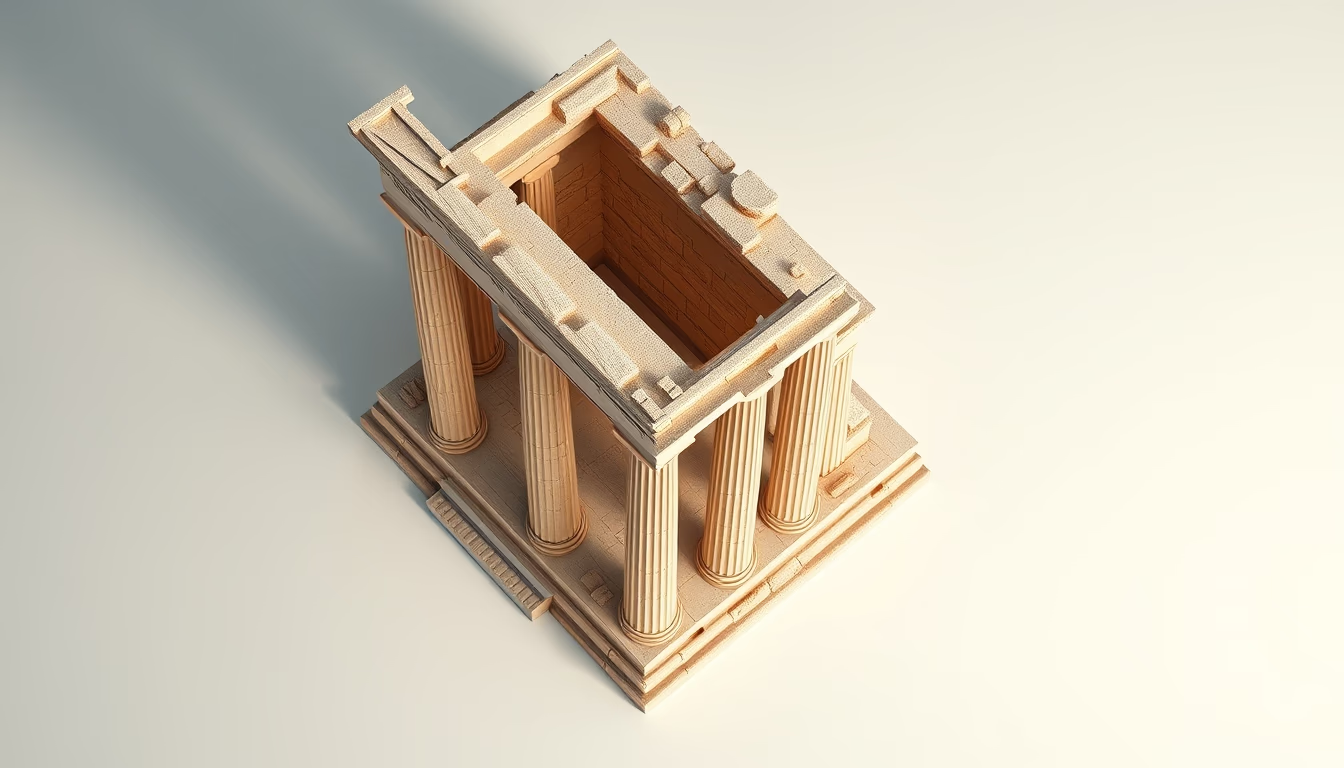
The Parthenon, a temple dedicated to the goddess Athena atop the Acropolis of Athens, is one of the most iconic monuments of Ancient Greece, famous for its Doric columns and architectural refinements.
About this subject
The Parthenon was built between 447 and 432 BC during the age of Pericles as part of a reconstruction program after the Greco-Persian Wars. Designed by architects Ictinus and Callicrates under the supervision of sculptor Phidias, the temple replaced an earlier one destroyed by the Persians. It was erected at the highest point of the Acropolis, a rocky hill overlooking the city of Athens. The main structure is an octastyle peripteros, with eight columns on the facade and seventeen on the sides, totaling 46 external Doric columns. Inside, there was a cella housing a colossal chryselephantine (gold and ivory) statue of Athena Parthenos, crafted by Phidias, which stood about 12 meters tall and was lost in antiquity.
The columns of the Parthenon are exemplary of the Doric order but feature unique refinements, such as slight curvature of horizontal lines and entasis (a slight bulge in the middle of the column) to correct optical illusions. These optical corrections, known as refinements, give the temple a visual perfection. Each column is 10.43 meters high and has a diameter of 1.9 meters at the base. The marble came from Mount Pentelicus, about 16 km from Athens, famous for its white color and fine grains that gleam in the sun.
The Parthenon has suffered severe damage over the centuries. In 1687, during the Venetian siege of Athens, a projectile struck the temple, which was being used as a gunpowder magazine by the Ottomans, causing an explosion that destroyed the roof and many columns. In the 19th century, Lord Elgin removed many of the sculpted marbles, now in the British Museum. Today, the Parthenon undergoes a long restoration process led by the Acropolis Restoration Service, aiming to rebuild parts of the monument using original techniques and materials. The structure remains a symbol of Athenian democracy and classical architecture, attracting millions of visitors annually.
Frequently Asked Questions
How many columns does the Parthenon originally have?
The Parthenon has 46 external Doric columns: eight on the facade and seventeen on each side. There were also smaller internal columns supporting the roof.
What was the Parthenon used for in Ancient Greece?
It was a temple dedicated to the goddess Athena, patron of Athens. It housed the chryselephantine statue of Athena Parthenos and served as the city's treasury, storing offerings and funds.
Why is the Parthenon partially ruined?
The major destruction occurred in 1687 when an explosion during the Venetian siege collapsed the roof and many columns. Centuries of looting and earthquakes also contributed to its current state.
Direct URL
https://pub-c7d6a6ea828543ac903a74a341ccb2e1.r2.dev/imagens/parthenon-athens-columns-isometric-flat-lay-p5.avifHow to credit
Include a visible link back to UtilizAí. Copy one of the snippets below:
<a href="https://xn--utiliza-eza.com/en/midia/imagens/parthenon-athens-columns-isometric-flat-lay-p5">Parthenon athens columns</a> by <a href="https://xn--utiliza-eza.com">UtilizAí</a>, licensed under <a href="https://creativecommons.org/licenses/by/4.0/">CC BY 4.0</a>.
[Parthenon athens columns](https://xn--utiliza-eza.com/en/midia/imagens/parthenon-athens-columns-isometric-flat-lay-p5) by [UtilizAí](https://xn--utiliza-eza.com), CC BY 4.0
License: CC-BY-4.0