Paramotor flight
1344×768 · AVIF · CC BY 4.0
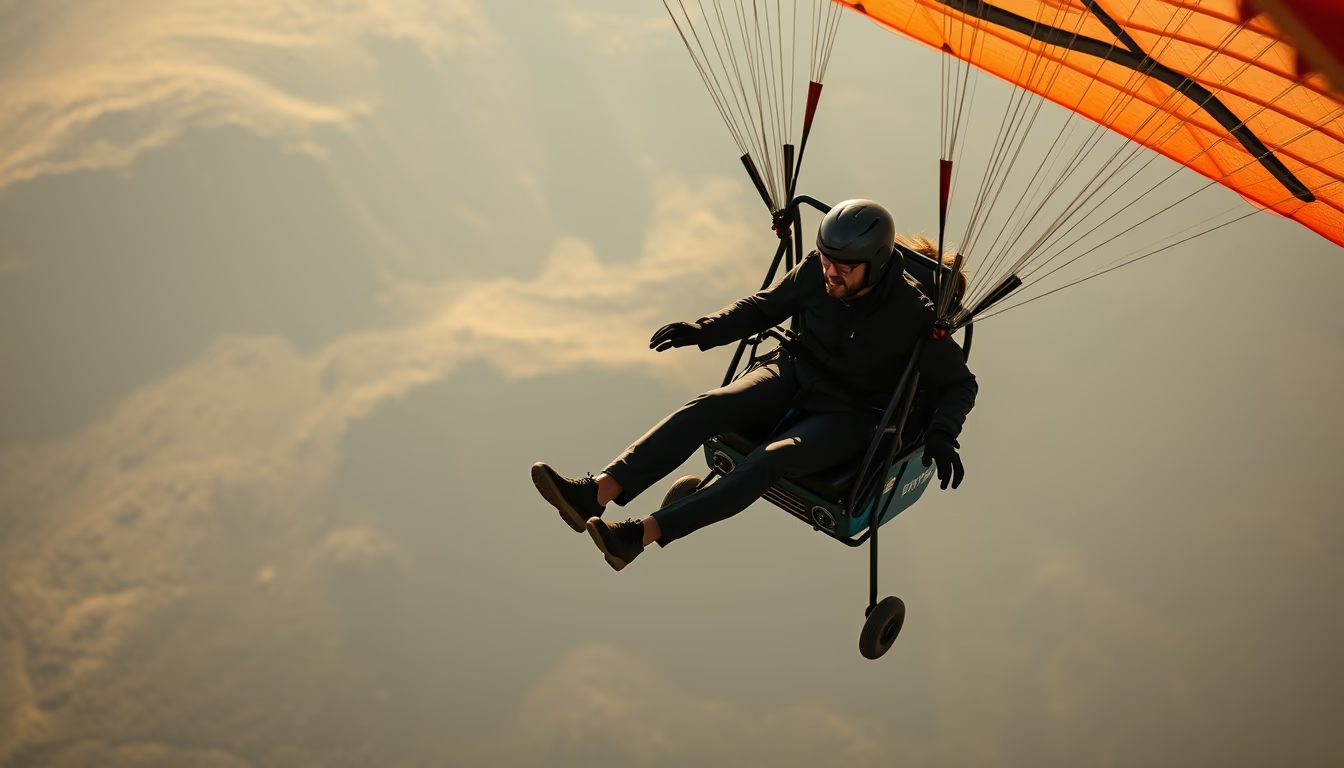
Paramotor flight combines a motorized paraglider with a lightweight combustion engine, enabling short takeoffs and low-altitude scenic flights.
About this subject
A paramotor, also known as a powered paraglider, is a flexible-wing aircraft consisting of a paraglider and a propulsion engine worn on the pilot's back. Unlike traditional paragliding, which relies solely on thermal currents to stay aloft, the paramotor offers flight autonomy of up to 3 hours, depending on fuel tank size and weather conditions. The most common engines are two-stroke gasoline types, with power ranging from 15 to 30 horsepower, and fixed-pitch or variable-pitch propellers.
The sport originated in France in the late 1980s, when pioneer LaMouette adapted a lawnmower engine to a paraglider. Since then, it has gained popularity worldwide, especially in flat terrain areas with mild winds. In Brazil, locations like São Sebastião (SP), Governador Valadares (MG), and Arujá (SP) are training and flight hubs, with schools certified by the Brazilian Hang Gliding and Paragliding Association (ABVL). Typical cruising altitude ranges from 150 to 500 meters, though experienced pilots can reach up to 1,200 meters.
Safety in paramotoring requires rigorous training, preventive engine maintenance, and attention to weather conditions. Accidents are usually linked to mechanical failures, strong winds, or pilot error. Modern equipment includes emergency parachutes and communication radios. In Brazil, paramotor flight is regulated by the National Civil Aviation Agency (ANAC), which requires a specific license (CAE) and insurance for commercial operations, such as aerial advertising and filming.
Interestingly, paramotoring is one of the most accessible forms of motorized flight, with entry costs starting around R$ 15,000 for used equipment. International competitions like the World Paramotor Championship test landing precision and fuel efficiency. The sport is also used for low-cost aerial photography, rural tourism, and even by law enforcement for environmental patrol.
Frequently Asked Questions
What is the difference between a paramotor and a paraglider?
A paraglider relies on thermal updrafts to stay aloft, while a paramotor has an engine that provides constant thrust, allowing takeoff from level ground without wind or slopes.
Is paramotoring safe?
Yes, when practiced with proper training, well-maintained equipment, and favorable weather. Main risks are engine failure and strong winds, but emergency parachutes and radios enhance safety.
Do I need a license to fly a paramotor in Brazil?
Yes. ANAC requires a Special Airworthiness Certificate (CAE) and a paramotor pilot license. Commercial flights require specific insurance and operational authorization.
Direct URL
https://pub-c7d6a6ea828543ac903a74a341ccb2e1.r2.dev/imagens/paramotor-flight-magazine-editorial-fresh14.avifHow to credit
Include a visible link back to UtilizAí. Copy one of the snippets below:
<a href="https://xn--utiliza-eza.com/en/midia/imagens/paramotor-flight-magazine-editorial-fresh14">Paramotor flight</a> by <a href="https://xn--utiliza-eza.com">UtilizAí</a>, licensed under <a href="https://creativecommons.org/licenses/by/4.0/">CC BY 4.0</a>.
[Paramotor flight](https://xn--utiliza-eza.com/en/midia/imagens/paramotor-flight-magazine-editorial-fresh14) by [UtilizAí](https://xn--utiliza-eza.com), CC BY 4.0
License: CC-BY-4.0