Flying boat catalina
1344×768 · AVIF · CC BY 4.0
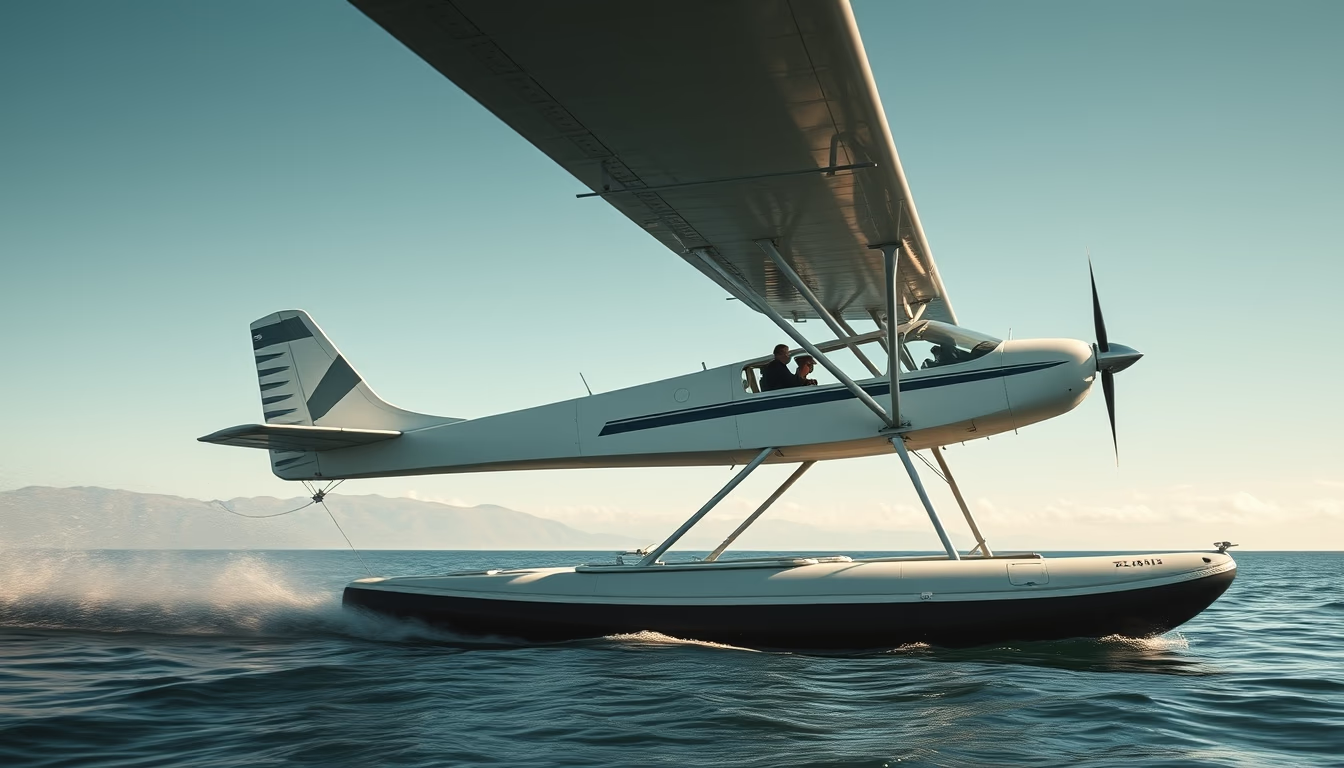
The Consolidated PBY Catalina was one of the most versatile amphibious aircraft of World War II, used for maritime patrol, rescue, and transport.
About this subject
The Consolidated PBY Catalina, often simply called the Catalina, is an amphibious flying boat designed by the Consolidated Aircraft Corporation in the United States. Its first flight took place in 1935, and it quickly became one of the most iconic naval aircraft in history. The Catalina was widely used during World War II for maritime patrol, reconnaissance, anti-submarine warfare, and search and rescue missions. Its ability to land on both water and land made it extremely versatile in the Pacific, Atlantic, and Mediterranean theaters.
Brazil also operated the Catalina. The Brazilian Air Force (FAB) received units of this model between the 1940s and 1950s, employing them mainly for coastal patrol along the northeastern coast during the war. Brazilian aircraft participated in convoy escort and submarine hunting missions against Axis forces. After the conflict, some Catalinas continued in FAB service for search and rescue and transporting authorities to remote areas of the Amazon rainforest, where their amphibious capability was essential.
Technical highlights of the Catalina include two Pratt & Whitney R-1830 Twin Wasp radial engines, giving it a range of up to 4,096 km and a maximum speed of about 314 km/h. Its standard crew consisted of 7 to 9 men. A notable feature was its early adoption of ASV (Anti-Surface Vessel) radar, which increased its effectiveness in detecting submarines. Its rugged airframe allowed operations in adverse weather, making it a frequent choice for rescuing downed pilots at sea.
The Catalina's legacy endures, with preserved examples in museums worldwide and a few still flying at airshows. Its contribution to military and civil aviation is undeniable, influencing later amphibious aircraft designs. In Brazil, the Catalina is remembered as a symbol of the country's participation in Allied aviation during World War II.
Frequently Asked Questions
What was the main use of the PBY Catalina in World War II?
The Catalina was primarily used for maritime patrol, reconnaissance, anti-submarine warfare, and search and rescue missions. Its amphibious capability allowed operations in coastal and oceanic areas.
Did Brazil operate the Catalina?
Yes, the Brazilian Air Force operated Catalinas between the 1940s and 1950s, employing them for coastal patrol, convoy escort, and search and rescue, especially along the northeastern coast and in the Amazon.
How many crew members did the Catalina carry?
The standard crew of the Catalina was 7 to 9 men, including pilot, co-pilot, navigator, radio operator, and gunners.
Direct URL
https://pub-c7d6a6ea828543ac903a74a341ccb2e1.r2.dev/imagens/flying-boat-catalina-documentary-nature-style-fresh18.avifHow to credit
Include a visible link back to UtilizAí. Copy one of the snippets below:
<a href="https://xn--utiliza-eza.com/en/midia/imagens/flying-boat-catalina-documentary-nature-style-fresh18">Flying boat catalina</a> by <a href="https://xn--utiliza-eza.com">UtilizAí</a>, licensed under <a href="https://creativecommons.org/licenses/by/4.0/">CC BY 4.0</a>.
[Flying boat catalina](https://xn--utiliza-eza.com/en/midia/imagens/flying-boat-catalina-documentary-nature-style-fresh18) by [UtilizAí](https://xn--utiliza-eza.com), CC BY 4.0
License: CC-BY-4.0