Paramotor flight
1344×768 · AVIF · CC BY 4.0
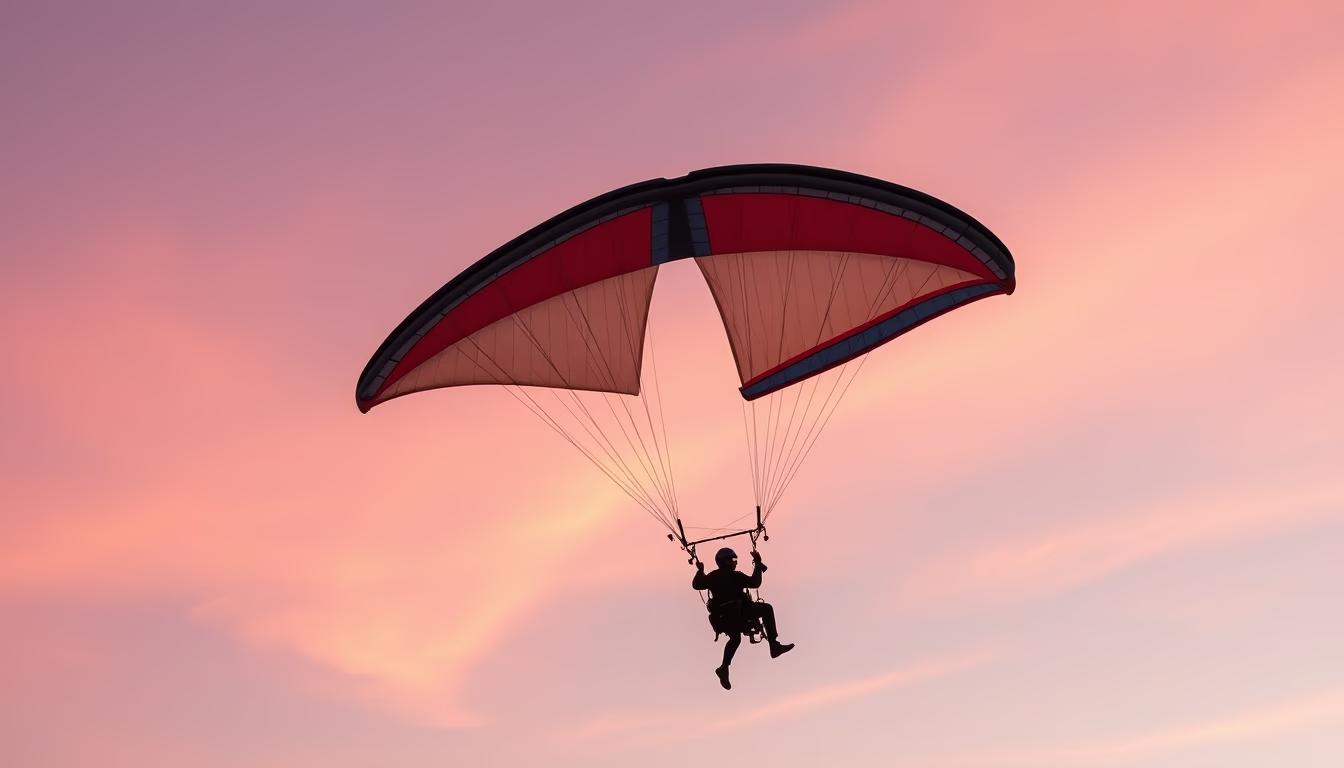
Paramotoring is a form of free flight with a motor on the back, combining paragliding and propulsion for short takeoffs and long flights.
About this subject
Paramotoring, also known as powered paragliding, is a type of ultralight aviation that consists of a paraglider wing and a motor backpack (power unit) providing thrust. Unlike classic paragliding, which relies on thermal currents to stay aloft, paramotoring allows takeoffs from flat ground and flights independent of wind conditions. This technology emerged in the 1980s, with early prototypes developed in France and the United States, and quickly gained popularity due to its affordability and low operational costs compared to other light aircraft.
Practicing paramotoring requires specific training and certification, as it involves knowledge of aerodynamics, meteorology, and safety. Basic equipment includes the paraglider (canopy), engine (usually gasoline), fuel tank, and an emergency parachute system. Flights can last from 30 minutes to several hours, with a range of up to 300 km, depending on the engine model and wind conditions. In Brazil, the activity is regulated by the Brazilian Free Flight Association (ABVL) and the National Civil Aviation Agency (ANAC), which require registration and a specific pilot license.
Beyond leisure, paramotoring is used for aerial mapping, environmental monitoring, search and rescue, and even sporting competitions. Its popularity has grown with lighter and more efficient engines, such as two-stroke with electronic injection. However, safety is a critical concern: accidents are often linked to engine failure, adverse weather, or pilot error. Thus, rigorous maintenance and continuous training are essential. Interestingly, the world distance record in paramotoring is 1,015 km, set by a Brazilian pilot in 2019, showcasing the modality's potential.
Frequently Asked Questions
What is the difference between paramotoring and paragliding?
Paramotoring uses a backpack motor that provides thrust, allowing takeoff from flat ground and flight independent of wind. Classic paragliding relies solely on thermal or slope lift.
Do I need a license to fly a paramotor in Brazil?
Yes, ANAC requires paramotors to be registered and pilots to hold a specific license (PPC, Private Paramotor Pilot), along with training approved by ABVL.
How much does a paramotor cost on average?
A complete kit (wing and motor) can range from $6,000 to $15,000 USD, depending on brand, model, and safety features. Training courses cost between $600 and $1,200 USD.
Direct URL
https://pub-c7d6a6ea828543ac903a74a341ccb2e1.r2.dev/imagens/paramotor-flight-long-exposure-fresh2.avifHow to credit
Include a visible link back to UtilizAí. Copy one of the snippets below:
<a href="https://xn--utiliza-eza.com/en/midia/imagens/paramotor-flight-long-exposure-fresh2">Paramotor flight</a> by <a href="https://xn--utiliza-eza.com">UtilizAí</a>, licensed under <a href="https://creativecommons.org/licenses/by/4.0/">CC BY 4.0</a>.
[Paramotor flight](https://xn--utiliza-eza.com/en/midia/imagens/paramotor-flight-long-exposure-fresh2) by [UtilizAí](https://xn--utiliza-eza.com), CC BY 4.0
License: CC-BY-4.0